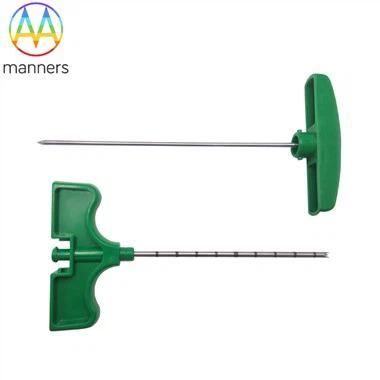
Cerebral Herniation Prevention Technology Of Disposable Spinal Needles Manufacturer
Aug 09, 2026
Cerebral herniation induced by lumbar puncture is the most fatal severe complication in spinal anesthesia, bringing extreme safety risks to clinical surgery and exposing prominent industry pain points in product manufacturing and clinical matching. For patients with elevated intracranial pressure, especially those with posterior fossa and temporal space-occupying lesions, rapid and excessive release of cerebrospinal fluid during or after puncture will trigger sharp intracranial pressure imbalance, leading to fatal cerebral herniation. Many non-standard manufacturers only produce single thick-gauge products with poor flow control performance, unable to adapt to high-risk patient scenarios. Inferior needle body structures cause unregulated CSF outflow speed, and low-precision puncture technology easily leads to sudden intracranial pressure drop. In addition, ungraded product design fails to support individualized risk avoidance, resulting in high-risk patients lacking targeted puncture equipment, which greatly increases the probability of intraoperative and postoperative cerebral herniation accidents and restricts the safe development of high-risk spinal anesthesia surgery.
Professional 16G-27G disposable sterile spinal needles manufacturers rely on precise flow control manufacturing principles and risk-oriented structural design to build a safety barrier for cerebral herniation prevention. Qualified manufacturers optimize the needle lumen diameter and tip opening structure of full-gauge products based on intracranial pressure biomechanics, realizing graded control of cerebrospinal fluid outflow speed. Ultra-fine 24G-27G products adopt micro-lumen design to ensure slow and stable CSF exudation, avoiding sudden intracranial pressure drop. High-precision stainless steel processing ensures uniform needle wall thickness and stable puncture attitude, preventing excessive fluid release caused by needle body deflection. The disposable sterile design avoids secondary intracranial infection-induced pressure elevation, and standardized dimensional calibration ensures accurate puncture positioning, reducing repeated puncture stimulation. The core manufacturing logic is to control CSF release volume and speed precisely through product structural optimization, maintain intracranial pressure balance, and fundamentally block cerebral herniation inducement.
Manufacturers form a risk-graded product classification system for cerebral herniation prevention, covering all high-risk and conventional scenarios. High-risk targeted products focus on 23G-27G ultra-fine and medium-fine specifications, with micro-lumen slow-flow structure, specially designed for patients with intracranial hypertension and posterior fossa lesions, supporting trace and slow CSF discharge for laboratory examination. Conventional safe products include 16G-22G full specifications, adopting optimized flow-limiting lumen design, suitable for ordinary patients with normal intracranial pressure to ensure anesthesia efficiency while avoiding excessive fluid loss. Both Quincke and pencil-point tip types are equipped with flow-control optimization: pencil-point tips are preferred for high-risk patients for stable slow outflow, while Quincke tips are used for conventional high-efficiency surgery. All products adopt standardized color coding for rapid risk grading selection, and customizable length adapts to different patient depths to ensure accurate positioning and safe puncture.
Standardized high-risk operational guidelines based on manufacturer's product characteristics realize whole-process cerebral herniation prevention. Preoperative evaluation is mandatory for all patients with suspected intracranial hypertension: screen space-occupying lesions in posterior fossa and temporal region, and implement preoperative dehydration intervention with 20% mannitol 250ml intravenous infusion as required. Select matched slow-flow ultra-fine needles from 23G to 27G for high-risk patients, strictly avoiding thick-gauge needles with large lumen and fast flow. During puncture, adopt fine needle slow puncture technique, only release a few drops of cerebrospinal fluid for laboratory test, prohibit massive and rapid fluid drainage, and maintain stable intracranial pressure balance. Intraoperatively monitor vital signs in real time to capture early herniation signs. Once herniation occurs, start emergency rescue immediately, including rapid intravenous infusion of 200-400ml 20% mannitol and hypertonic diuretics, combined with spinal canal normal saline reinfusion and ventricular puncture decompression as supplementary rescue measures.
Clinical practical experience fully proves that graded products from professional manufacturers significantly reduce cerebral herniation risks in high-risk anesthesia surgery. The micro-lumen slow-flow design of ultra-fine needles effectively avoids sharp intracranial pressure fluctuation caused by excessive CSF release, reducing the incidence of puncture-induced cerebral herniation to nearly zero in standardized operations. Accurate gauge grading and color-coded rapid selection improve the efficiency of high-risk patient preoperative preparation, avoiding wrong needle selection risks. High-precision puncture structure ensures one-time successful positioning, eliminating intracranial pressure disturbance caused by repeated puncture. Matched preoperative dehydration intervention and intraoperative slow-release operation form a complete risk prevention system, which can effectively control early abnormal symptoms and avoid fatal deterioration of high-risk complications, greatly improving the safety of intracranial hypertension patient anesthesia.
In conclusion, professional 16G-27G disposable sterile spinal needles manufacturers solve the industry pain point of insufficient risk prevention capacity of traditional puncture equipment for high-risk patients through graded flow-control product design and precise structural optimization. The full-specification risk-matched product system realizes individualized safety protection for different intracranial pressure states, and standardized high-risk operation guidelines give full play to product safety advantages, providing reliable equipment support for high-difficulty and high-risk spinal anesthesia surgery.
In future industrial development, manufacturers should continue to upgrade high-risk targeted product technology, optimize micro-lumen flow control accuracy of ultra-fine needles, and develop special anti-herniation puncture products for critical patients. Strengthen technical cooperation with critical anesthesiology departments to iterate product parameters based on clinical rescue experience. Industry associations should formulate unified high-risk patient needle selection standards, popularize graded slow-flow products, and comprehensively improve the industry's overall capability of severe complication prevention.