Material Mechanics Perspective | The Significance Of The Needle Body
Apr 11, 2026
Material Mechanics Perspective | The Significance of the Needle Body: A Mechanical Gambit Between "Flexible Delivery" and "Rigid Puncture"
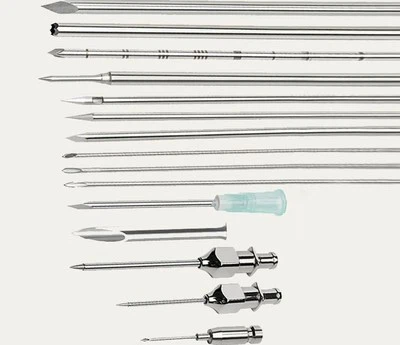
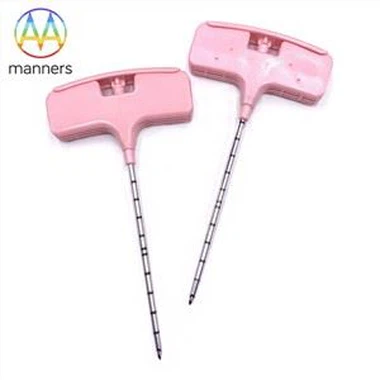
In high-load interventional surgeries like Vacuum-Assisted Breast Biopsy (VABB), the needle body is more than just a conduit connecting the biopsy gun to the lesion; it is a mechanically interfaced surface precisely calibrated at the sub-millimeter scale. Its "significance" lies in maintaining a perfect mechanical equilibrium between extremely tortuous delivery paths and high-intensity cutting actions. This needle body is, in essence, a crystallization of material mechanics, fluid dynamics, and surgical requirements.
I. The "Golden Hardness Range" of Material Selection
The text explicitly states that VABB needles utilize 316 Stainless Steel (SS316) with a hardness strictly controlled between 70–90 HRB. This numerical range is not arbitrarily set; it represents a profound engineering trade-off with deep mechanical implications.
The Peril of Excessive Softness (<70 HRB): When needle body hardness is insufficient, the lumen is highly susceptible to "collapse" under vacuum negative pressure (typically ranging from -650mmHg to -750mmHg). This structural instability not only crushes internal tissue samples-destroying histological architecture-but also leads to plastic bending during passage through curved biopsy gun sheaths, resulting in "needle jamming" or failed retraction.
The Hazards of Excessive Hardness (>90 HRB): While increased hardness raises bending stiffness, material toughness decreases proportionally, leading to increased brittleness. Under the mechanical stress of high-frequency reciprocating cutting, microscopic cracks (Micro-cracks) easily initiate at the needle tip root. If undetected, this fatigue damage can lead to needle breakage within the body, causing catastrophic medical disputes.
Where Significance Lies: The 70–90 HRB range ensures the needle possesses sufficient "push stiffness" to maintain straightness while retaining essential "spring-back toughness" to withstand complex breast parenchyma resistance and repetitive mechanical shocks.
II. Fluid-Structure Interaction Challenges Under Vacuum Dynamics
A core function of the VABB needle is establishing an efficient negative pressure flow field, involving complex Fluid-Structure Interaction (FSI) issues.
Structural Stability Under Differential Pressure: At the instant of vacuum aspiration, a massive pressure differential exists between the needle's interior and exterior. High-strength SS316, leveraging its superior yield strength, maintains constant cross-sectional geometry under this load. If the material undergoes creep or elastic deformation, flow rate drops, rendering tissue sampling ineffective.
Fluid Dynamic Significance of Surface Finish: Following electropolishing, the inner wall surface roughness (Ra) can be reduced to below 0.1 μm. This eliminates microscopic eddies and "dead space" effects in fluid mechanics, allowing tissue cells to pass through the needle with minimal shear force. This not only preserves sample viability but also satisfies the stringent diagnostic requirements of modern pathology departments for an intact "Histological Core."
III. Fatigue Resistance and Long-Term Service Performance
Beyond static hardness, the VABB needle body must endure tens of thousands of reciprocating motions and alternating stresses.
High-Cycle Fatigue Resistance: The excellent fatigue limit of SS316 ensures the needle body will not suffer stress fractures after long-term use.
Corrosion Fatigue: In the corrosive environment of blood and tissue fluid, the passive film formed on the material surface effectively prevents pitting corrosion (Pitting Corrosion), inhibiting the initiation of fatigue cracks from corrosion pits.
IV. Conclusion
From a material mechanics perspective, the "significance" of the VABB needle body is that of a micro-tube maintaining geometric stability under high-pressure differentials, high curvature, and high-fatigue environments. Every successful sampling event is proof of the perfect matching of material hardness, fatigue resistance, and fluid dynamics-representing robust industrial manufacturing supporting life sciences.