Material Innovation And Technological Advancement: Future Directions For Subcutaneous Injection Needles
Apr 16, 2026
Material Innovation and Technological Advancement: Future Directions for Subcutaneous Injection Needles
In 2026, material innovation and technological advancement in subcutaneous injection needles are driving this traditional medical consumable toward greater safety, comfort, and environmental sustainability. Driven by the diversification of medical needs and heightened patient experience requirements, the R&D focus of subcutaneous injection needles is shifting from basic functionality toward intelligence, humanization, and sustainability.
Diversified Development of Material Innovation
Material selection for subcutaneous injection needles is showing a trend toward diversification. Stainless steel remains the primary material due to its excellent strength, durability, and corrosion resistance. However, with technological progress and rising environmental requirements, new materials are constantly emerging.
The application of medical-grade plastics in disposable injection needles is gradually increasing, particularly driven by the need to reduce the risk of cross-contamination. These plastic materials offer good biocompatibility, processability, and cost advantages, making them suitable for mass production. Meanwhile, glass needles are primarily used in specialized scenarios requiring inert materials.
Silicone-coated or coated needle technologies are also advancing. Some needles are coated with materials like silicone to reduce friction during insertion and improve patient comfort. This coating technology not only enhances the injection experience but also minimizes tissue damage and pain.
Technological Breakthroughs in Manufacturing Processes
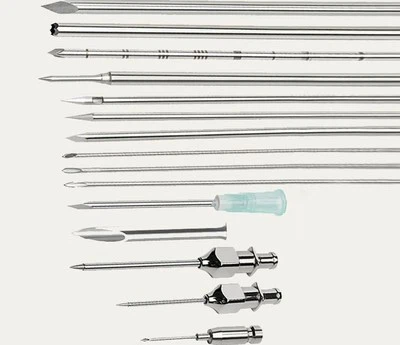
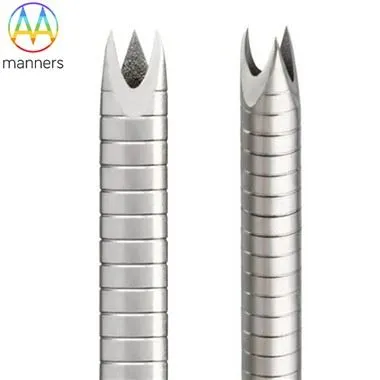
The manufacturing processes for subcutaneous injection needles are undergoing significant technological breakthroughs. Needle tip grinding technology is continuously optimized, with multi-bevel tip design becoming a trend. Advanced multi-bevel needles feature tips with multiple precisely cut surfaces, enabling smoother insertion, less pain, and improved user comfort.
The application of micromachining technology allows for thinner needle walls and smaller inner diameters while maintaining sufficient strength. This technological progress makes ultra-fine needles (e.g., 33G) possible, effectively reducing injection pain and improving patient compliance. Short needle technology (e.g., 4mm) is also evolving to suit different patient groups and injection sites.
Integration of Intelligent Technologies
Subcutaneous injection needles are deeply converging with intelligent technologies. Smart safety needles utilize sensors and microprocessors to monitor the injection process and record data. This technology captures information such as injection time, dosage, and site, providing data support for chronic disease treatments like diabetes management.
Some innovative products integrate smart functions such as real-time temperature monitoring, energy feedback regulation, and skin impedance detection to ensure treatment safety and efficacy. Certain high-end devices also incorporate AI skin analysis systems capable of automatically adjusting treatment parameters based on individual skin conditions, achieving personalized precision therapy.
Continuous Improvement in Safety Technology
Safety technology is a crucial direction for innovation in injection needles. The safety syringe and needle market is projected to grow from 10.9billionUSDin2024to12.4 billion USD in 2034, with a CAGR of approximately 1.3%. Safety injection needles are specially designed to prevent needlestick injuries and enhance the safety of healthcare workers; these products feature retractable needles or protective shields to reduce the risk of exposure to bloodborne pathogens.
Retractable safety syringes represent the best-performing segment, primarily attributed to their efficacy in reducing the risk of contact with contaminated needles. Passive safety syringes follow closely, favored for their user-friendly design and automatic safety activation compliant with safety regulations. Within the safety needle segment, subcutaneous safety needles dominate due to their widespread use in various medical applications and enhanced safety features.
Environmental Sustainability
Environmental protection and sustainability have become significant considerations in subcutaneous injection needle innovation. Manufacturers are committed to developing cost-effective and eco-friendly products to achieve sustainability goals. Biodegradable materials, recyclable materials, and environmentally friendly production processes are receiving increasing attention.
Some enterprises are beginning to use plant-based plastics, biodegradable polymers, and other eco-friendly materials to reduce reliance on traditional petroleum-based plastics. Simultaneously, energy consumption, water resource utilization, and waste disposal in production processes are being optimized to drive the green transformation of the entire industrial chain.
Personalization and Customization Trends
Personalization and customization are emerging as new trends in the subcutaneous injection needle market. With the popularization of precision medicine concepts, customized products tailored to different patient groups, disease types, and treatment needs are constantly emerging. For instance, needle designs for special populations such as children, the elderly, and obese patients consider their physiological characteristics and treatment requirements.
The application of 3D printing technology provides possibilities for manufacturing personalized products. Through 3D printing, needles conforming to individual anatomical structures can be rapidly produced, improving injection accuracy and comfort. This technology is particularly suitable for special cases and complex treatment scenarios.
Future Directions for Technological Development
Looking ahead, subcutaneous injection needle technology will evolve in the following directions: the application of nanomaterials will enhance needle biocompatibility and functionality; smart sensing technology will enable real-time monitoring and feedback during injection; biodegradable materials will drive product environmentalization; microfluidic technology will achieve precise drug control and release; and artificial intelligence will optimize injection protocols and therapeutic outcomes.
With advancements in material science, manufacturing processes, and smart technologies, subcutaneous injection needles will transform from simple medical tools into intelligent medical devices integrating treatment, monitoring, and management. This shift will not only improve treatment efficacy and patient experience but also provide more comprehensive solutions for chronic disease management and personalized healthcare.
Meanwhile, interdisciplinary collaboration will become a significant driver of technological innovation. Experts from medicine, material science, electronic engineering, computer science, and other fields will work together to develop more advanced, intelligent, and humanized subcutaneous injection needle products. This collaborative model will accelerate technological innovation and product iteration, propelling the upgrading and development of the entire industry.
In the foreseeable future, subcutaneous injection needles will continue to play a vital role in the medical field, while their technological innovations will constantly expand application boundaries, making greater contributions to global healthcare.