Analysis Of The 2026 Top 10 Intraosseous Access Needle Products And Manufacturer Market Landscape
Apr 16, 2026
Analysis of the 2026 Top 10 Intraosseous Access Needle Products and Manufacturer Market Landscape
In 2026, Intraosseous Access Needles (IO needles), as critical devices in emergency medicine and critical care, are undergoing a pivotal phase of technological innovation and market expansion. An intraosseous access needle is a medical device specifically designed for rapid entry into the bone marrow cavity. By establishing a channel in specific bones (such as the proximal tibia, humerus, or sternum), it provides life support for patients in whom establishing peripheral venous access is difficult or impossible. This technology plays an irreplaceable role in emergencies such as cardiac arrest, severe trauma, shock, and burns.
Global Market Size and Growth Trends
According to the latest industry analysis, the global intraosseous access needle market is expected to reach a significant scale in 2026, maintaining a steady growth trajectory. Key drivers of market growth include the refinement of global emergency medical service (EMS) systems, enhancements in pre-hospital emergency capabilities, developments in military and disaster medicine, and increasing awareness and acceptance of IO technology among healthcare professionals. Particularly following the COVID-19 pandemic, global demand for devices enabling rapid vascular access has further increased, propelling the expansion of the IO needle market.
Regionally, North America and Europe constitute the primary markets for IO needles, benefiting from well-established emergency medical systems and high healthcare expenditures. The Asia-Pacific region is the fastest-growing market, driven by improvements in medical infrastructure and heightened emergency awareness. Emerging economies like China and India are rapidly catching up to developed nation levels in the adoption and application of IO needles.
Competitive Landscape of Major Manufacturers
The global IO needle market exhibits a highly specialized competitive landscape, with key manufacturers including:
Teleflex Incorporated: As the market leader, Teleflex's Arrow EZ-IO system is one of the world's most widely used powered intraosseous access devices. Utilizing a battery-powered driver mechanism, it is simple to operate and boasts high success rates in both adult and pediatric patients.
Pyng Medical Corp: Renowned for its FAST (First Access for Shock and Trauma) series, particularly the FAST1 sternal IO system, which provides an innovative solution for sternal bone marrow access.
PerSys Medical: Offers a range of intraosseous access devices, including both manual and powered systems, with product lines covering diverse clinical scenarios and patient groups.
Becton, Dickinson and Company (BD): As a global medical technology giant, BD continues to expand its IO portfolio through acquisitions and innovation.
Vidacare Corporation: Now part of the Teleflex Group, its EZ-IO technology has become an industry standard.
Cook Medical: Provides various intraosseous access solutions, particularly within interventional radiology and emergency medicine.
Smiths Medical: Offers comprehensive emergency and critical care products, including intraosseous access devices.
Rocket Medical: Specializes in emergency and critical care equipment, holding a significant position in the European market with its IO products.
Beijing Aeon Medical Co., Ltd.: As a leading Chinese manufacturer of emergency equipment, Aeon is actively establishing its presence in the intraosseous access needle field.
Shenzhen Mindray Bio-Medical Electronics Co., Ltd.: One of China's largest medical device manufacturers, Mindray is accelerating the R&D and market promotion of intraosseous access products.
Product Types and Technical Characteristics
Intraosseous access needles are primarily categorized into manual and powered types:
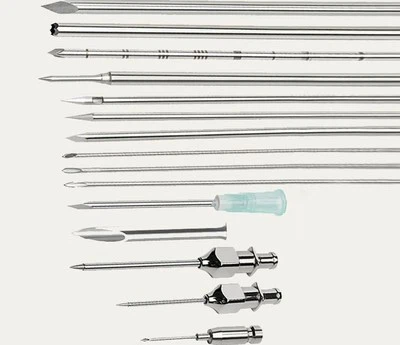
Manual IO Needles: Employ traditional puncture techniques, relying on the operator's force and skill to penetrate the cortical bone and enter the marrow cavity. These devices feature simple structures and lower costs but demand a higher level of operator expertise. Representative products include Jamshidi-type bone marrow biopsy needles and modified manual IO needles.
Powered IO Needles: Utilize battery-powered driver mechanisms to precisely control rotation speed and penetration depth, thereby increasing success rates and safety. These devices are easy to operate and highly standardized, making them particularly suitable for pre-hospital emergency and crisis situations. The Arrow EZ-IO system is a typical representative of powered devices, featuring intelligent drivers that automatically recognize bone density and adjust drilling parameters.
By insertion site, IO needles are classified as proximal tibial needles, humeral needles, sternal needles, etc. Different sites are suitable for various age groups and clinical scenarios; for instance, the proximal tibia is most common in adults, the humerus is suitable for children, and the sternum provides an alternative central venous access route.
Application Fields and Clinical Value
Intraosseous access needles demonstrate significant value across multiple clinical domains:
Emergency Medicine: The IO access serves as a "lifeline" crucial in cardiac arrest resuscitation. Studies show that compared to traditional venous access, establishing IO access reduces the time by 60–80%, significantly decreasing the time for medications to reach the central circulation in cardiac arrest patients. Guidelines from the American Heart Association (AHA) list IO access as a first-line vascular access option for cardiac arrest.
Trauma Care: Severely injured patients often present with hypovolemic shock, causing peripheral veins to collapse and making venous access difficult. IO access can be established in 30–60 seconds, providing a conduit for rapid fluid resuscitation. In military medicine, IO technology has become a standard component of combat casualty care, saving numerous lives on the battlefield.
Pediatric Emergency: Establishing venous access in children is particularly challenging due to small vessels and abundant subcutaneous fat. IO access provides a reliable option for critically ill pediatric patients. During neonatal resuscitation, when umbilical venous access is limited, IO access becomes a vital alternative.
Special Clinical Scenarios: IO access demonstrates unique advantages in cases such as severe burns (where skin integrity is compromised), obesity (where venous location is difficult), and status epilepticus (requiring rapid drug administration).
Market Drivers and Challenges
Key drivers of the IO needle market growth include the continuous improvement of global EMS systems, sustained enhancement of pre-hospital emergency capabilities, clinical guidelines incorporating IO access as a standard procedure, the proliferation of healthcare worker training, improvements in usability through product innovation, and an aging population leading to rising incidence of cardiovascular emergencies.
However, the market also faces challenges: insufficient awareness of IO technology in some medical institutions and deep-rooted preferences for traditional venous access; high equipment costs hindering adoption in resource-limited regions; risks of complications (such as infection, fracture, or extravasation) requiring strict prevention; and significant anatomical variations among different patient groups necessitating personalized puncture strategies.
Future Development Trends
Looking ahead, the IO needle market will exhibit the following trends: a continuing increase in the proportion of powered and intelligent devices; improved puncture accuracy through auxiliary technologies like ultrasound guidance; advancements in material science enhancing needle design and biocompatibility; wider adoption of simulation training systems to elevate operator skills; integrated designs combining IO access with monitoring and drug delivery systems; and further release of growth potential in emerging markets.
With the evolution of global emergency medical systems and advances in resuscitation techniques, the importance of intraosseous access needles as key tools in critical rescue will become increasingly prominent. Technological innovation, accumulation of clinical evidence, and standardized training will serve as the core drivers of market growth, providing technical assurance for saving more lives.