Market Competition And Landscape Evolution — Panoramic Scan Of Global Microneedle And Puncture Biopsy Needle Manufacturers
Apr 17, 2026
Market Competition and Landscape Evolution - Panoramic Scan of Global Microneedle and Puncture Biopsy Needle Manufacturers
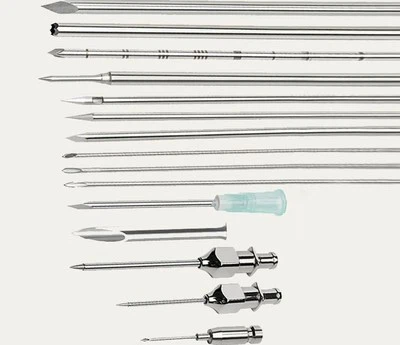
Riding the dual waves of precision medicine and minimally invasive diagnostics and treatment, the puncture needle market has diverged into two main tracks: the traditional puncture biopsy needle, centered on tissue sampling, and the innovative microneedle (Microneedle), focused on transdermal drug delivery. While these two fields employ vastly different technological paths, they both converge on a medical future characterized by greater safety, precision, and humanity. The market landscape is dominated by a cohort of technology-driven manufacturers, presenting a scenario where global competition coexists with distinct regional characteristics.
In the traditional puncture biopsy needle market, particularly within the multi-billion-dollar disposable segment, a highly concentrated oligopolistic competition has taken shape. Multinational medical device giants represented by BD (Becton, Dickinson and Company), Medtronic, Boston Scientific, and Cook Medical hold an absolutely dominant position. For instance, BD commands a 25.38% share of the Chinese disposable puncture biopsy needle market, firmly maintaining its leadership. These giants have constructed deep moats through their powerful brand influence, global sales networks, and integrated system ecosystems that link endoscopes and imaging equipment. Their product lines span automatic, semi-automatic, and manual types, catering to the diverse needs of public and private hospitals. Meanwhile, Olympus, the reigning monarch of endoscopic systems, possesses a unique advantage in digestive and bronchoscopic biopsy due to the seamless compatibility of its biopsy needles with its own endoscopes.
Conversely, the innovative microneedle field presents a more fragmented and dynamic landscape, teeming with emerging challengers. This domain features extremely high technical barriers, intersecting material science, pharmaceutics, and precision microfabrication. International leaders include specialists in transdermal delivery technologies like Kindeva and Corium Inc. In the Chinese market, a cohort of innovative biotechnology companies is rising rapidly. For example, Shenzhen Qinglan Biotechnology specializes in soluble microneedle drug delivery platforms and already has mature cases collaborating with listed pharmaceutical companies on microneedle formulations for genetic and protein polypeptide drugs. Zhongke Microneedle is renowned for its proprietary "RT-SMP® Room Temperature Printing" mass-production process, resolving industry challenges related to room-temperature polymer microneedle formation and the preservation of active ingredients. Youwei (Zhuhai) Biotechnology and its subsidiary, Kerui Micro-medicine, have established a full-process platform-from R&D to cGMP production-based on their "Micro-nano Droplet Filling Process."
Furthermore, companies like WCC Biomedical demonstrate breakthroughs in high-precision molds, accurate drug loading, and scalable production through their innovative WINMAP™ platform. Cross-industry collaboration is also a rising trend; for instance, the partnership between Langqi Medical and precision manufacturer Dayun Precision aims to combine drug release design with high-precision micro-structure manufacturing to co-develop cutting-edge products like GLP-1 microneedle patches.
Overall, the traditional puncture biopsy needle market exhibits a stable landscape, with innovation concentrating on automation and imaging compatibility. In contrast, the microneedle market stands on the eve of explosion, characterized by diverse technological routes where emerging manufacturers are vying for dominance over the future of drug delivery. Manufacturers in both fields are continuously translating material science and precision engineering into clinical value through persistent R&D, relentlessly pushing the boundaries of minimally invasive diagnostic and therapeutic technologies.