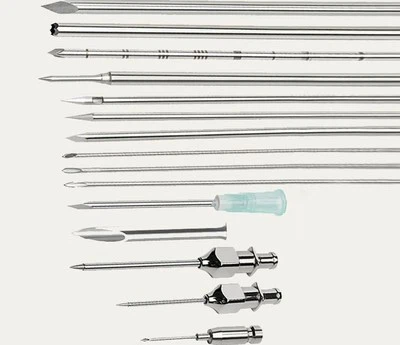
Track Competition And Future Insights — Manufacturer Landscape And Technological Evolution in The Endoscopic Biopsy Needle Market
Apr 17, 2026
Track Competition and Future Insights - Manufacturer Landscape and Technological Evolution in the Endoscopic Biopsy Needle Market
The endoscopic biopsy needle market is a technologically driven, highly specialized, and fiercely competitive field. Its landscape not only reflects the current technical strength and market share of key manufacturers but also signals the future direction of minimally invasive diagnostic technology.
Currently, the global market is characterized by an oligopolistic competition coexisting with niche specialization. The first tier is dominated by comprehensive medical device giants such as Olympus, Boston Scientific, and Medtronic. Leveraging powerful brand influence, a complete ecosystem of endoscopic systems (consoles, scopes, and consumables), and global sales networks, they command the majority market share. Their advantage lies in offering "one-stop" hospital solutions and sustaining massive R&D investments for platform-based innovation.
The second tier includes companies like Cook Medical and Conmed, which possess distinct characteristics in specific technological paths or application fields. For instance, Cook Medical has deep roots in interventional radiology and digestive interventions, with its biopsy needles often lauded for exceptional trackability and unique tip designs. These companies carve out solid positions in specific clinical departments or regional markets through differentiated competition.
Furthermore, numerous innovative SMEs (Small and Medium-sized Enterprises) exist. These firms often focus on disruptive technologies or unmet clinical needs, such as developing dedicated cytology brushes or smart biopsy needles integrated with micro-sensors, attempting to create market gaps through "single-point breakthroughs."
Future technological evolution trends are clearly visible:
Intelligence and Integration: Next-generation biopsy needles may integrate micro-pressure sensors to provide real-time feedback on tissue resistance, assisting in determining puncture depth and lesion nature. They could also interface with AI-powered image recognition systems to automatically plan the optimal puncture path.
Molecular Diagnostics Compatibility: With the growth of precision medicine, the quality requirements for biopsy samples extend beyond morphology to meet the demands of genetic sequencing and proteomics. Manufacturers are optimizing needle designs to minimize tissue crushing and thermal injury, while exploring technologies for built-in micro-preservation fluids to ensure the viability of macromolecules.
Single-Use and Cost Control: Driven by infection control regulations, single-use biopsy needles have become the absolute mainstream. The competitive focus for manufacturers is shifting towards extreme cost optimization-balancing high performance with cost-efficiency through optimized design, scaled production, and automated assembly.
Robotics Compatibility: With the proliferation of surgical robots, biopsy needles designed specifically for robotic arm interfaces will emerge. Their actuation methods and connection interfaces will be standardized to adapt to automated and remote-controlled operational modes.
Conclusion
In summary, the endoscopic biopsy needle market is a vibrant arena of technological competition. The future leaders will be those manufacturers capable of deeply understanding clinical evolution trends and seamlessly fusing material science, precision engineering, digital technology, and biological insights. Their products will cease to be mere sampling tools and will instead become intelligent diagnostic terminals bridging the physical world and the biological information world.