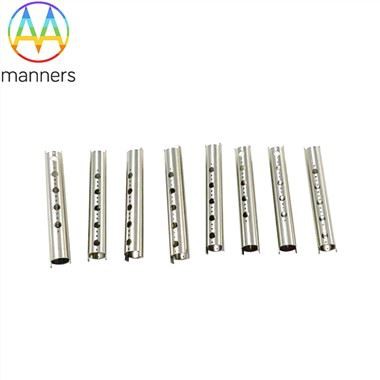
Manufacturing Excellence: Parylene Coated Hypotubes From Prototype To Mass Production
Sep 04, 2026
Introduction: The Scalability Pain Point
Transitioning from a prototype to mass production of Parylene coated hypotubes presents significant challenges. The pain point is maintaining the same level of precision and quality across thousands of units. Variations in coating thickness or laser cut consistency can lead to batch failures, causing delays and increased costs. This is a common hurdle for medical device startups and established manufacturers alike.
Principle: Process Standardization and Control
The principle of overcoming this lies in rigorous process standardization. Every step, from tube selection (stainless steel, Niti, etc.) to laser cutting and coating, must be documented and controlled. Statistical process control (SPC) is applied to monitor critical parameters like kerf width (minimum 0.012mm) and coating thickness. By adhering to ISO 9001:2015 and ISO 13485 standards, manufacturers can ensure that each Parylene coated hypotube meets the exact specifications repeatedly.
Equipment Classification for High-Volume Production
High-volume production requires automated laser cutting systems with load/unload robots. Parylene coaters are equipped with large chambers and automated powder handling systems. In-line inspection systems, such as laser micrometers and vision systems, are integrated to provide real-time feedback. This classification of equipment ensures high throughput without compromising on the quality required for medical applications.
Practical Guide: Scaling Up Successfully
To scale up, manufacturers should first optimize the process on a small scale, then gradually increase batch sizes. Design of Experiments (DOE) is used to identify critical process parameters. The coating process must be validated for different tube sizes and materials. A robust quality management system is essential, with traceability from raw material to finished product. Regular audits and employee training ensure that standards are maintained.
Real-World Experience: Lessons in Volume
Our factory has scaled production from 100 to 10,000 units per month. We learned that the coating uniformity can vary with chamber loading; thus, we developed standardized rack designs. Another lesson was the importance of preventive maintenance on lasers to avoid drifts in cut quality. By implementing these measures, we achieved a yield rate of over 98%, satisfying our clients' demands for high-volume orders.
Conclusion and Sublimation
Achieving manufacturing excellence in Parylene coated hypotubes is a testament to human ingenuity and discipline. It demonstrates that even the most complex medical components can be produced reliably at scale, bringing life-saving technologies to a broader patient population. This scalability is the bridge between innovation and global impact.
Prospects and Recommendations
As the market grows, manufacturers should explore Industry 4.0 technologies, such as IoT-enabled machines for predictive maintenance. Collaborations with material scientists could lead to faster-depositing Parylene processes, reducing cycle times. The focus should remain on quality, as the medical field cannot tolerate compromises. Continuous improvement is the key to staying competitive.