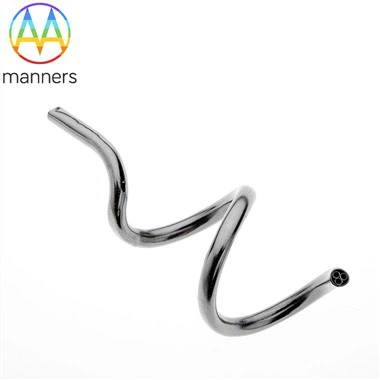
Advanced Laser Cutting Patterns On Parylene Coated Hypotubes For Peripheral Vascular Interventions
Sep 04, 2026
Introduction: The Complexity Pain Point
Peripheral vascular interventions involve navigating tortuous vessels in the limbs, which require hypotubes with varying flexibility profiles. The pain point is achieving a seamless transition from stiff proximal sections to highly flexible distal ends. Standard laser cut patterns may not suffice, and the addition of a coating must not interfere with these complex designs.
Principle: Tailored Flexibility via Pattern and Coating
The principle here is the combination of bespoke laser cut patterns with Parylene coating. By varying the cut spacing and geometry along the tube, engineers can program the flexibility. The Parylene coating then acts as a lubricant that enhances the performance of these patterns. For instance, a continuous spiral cut can be made more flexible with a thin Parylene layer, while an interrupted spiral can maintain torque. The coating ensures that the cuts do not bind, allowing the tube to bend smoothly.
Equipment Classification for Complex Geometries
Laser cutting machines with 5-axis capabilities are employed to create these complex patterns. The Parylene deposition systems must have programmable masking to coat only specific sections if needed. Metrology equipment, such as micro-CT scanners, is used to analyze the internal cut structures and coating distribution. This ensures that the design intent is realized without any coating-induced artifacts.
Practical Guide: Designing for Performance
Engineers should use finite element analysis (FEA) to simulate the tube's behavior before cutting. The laser parameters are adjusted based on the material-Nitinol requires different settings than 304 stainless steel. After cutting, the tube is cleaned and coated. The coating thickness is varied along the length to match the flexibility profile: thinner at the distal end, slightly thicker at the proximal for durability. Testing involves bending and torque tests to validate the design.
Real-World Experience: Custom Solutions
We have produced custom hypotubes with up to five different cut patterns on a single tube. One challenge was ensuring the coating did not fill the cuts, which we overcame by using a lower molecular weight Parylene dimer. Clients have successfully used these tubes in peripheral vascular interventions, reporting improved navigation around tight bends. The key lesson is that communication between the designer and coater is vital to achieve the desired outcome.
Conclusion and Sublimation
The fusion of advanced laser cutting and Parylene coating represents the pinnacle of customized medical devices. It allows for the creation of hypotubes that are essentially "smart" structures, adapting to the anatomy they traverse. This level of customization is revolutionizing peripheral interventions, making them safer and more effective.
Prospects and Recommendations
The trend towards patient-specific devices will drive demand for such tailored hypotubes. We recommend investing in AI-driven design tools that can optimize cut patterns based on patient scans. Additionally, developing Parylene coatings with embedded sensors could open new avenues for smart catheters. The future is bright for these highly engineered components.