Lumbar Puncture Sequelae Pain Points & Solving Principles Of Disposable Spinal Needle Manufacturer
Aug 06, 2026
1. Clinical & Industry Pain Points
With the rising prevalence of central nervous system inflammatory disorders, cerebrovascular accidents and intractable neurological diseases worldwide, lumbar puncture and intraspinal drug delivery have become routine clinical interventions. However, the overall incidence of lumbar puncture-related sequelae has increased year by year, forming a common clinical pain point that troubles patients and physicians. For patients who require long-term and repeated puncture treatment, continuous mechanical stimulation inevitably causes cumulative damage to lumbar muscles, spinal ligaments and dural tissues, resulting in chronic low back soreness, limited lumbar movement and persistent postoperative discomfort. In addition, unskilled or inexperienced medical staff using low-quality spinal needles are more likely to cause operational trauma, nerve irritation and cerebrospinal fluid leakage, further inducing long-term sequelae. Many clinical complications are mistakenly attributed to physician errors, while the core hidden danger lies in non-standard needle manufacturing, unstable material quality and mismatched needle models. Inferior reusable or poorly processed spinal needles easily cause burr scratches, tissue tearing and local infection, greatly amplifying procedural risks.
2. Core Working Principle of Manufacturer Disposable Spinal Needles
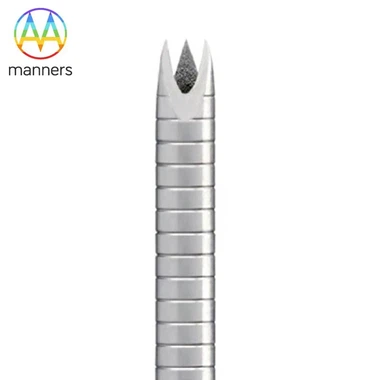
Professional disposable spinal needle manufacturers solve sequelae risks fundamentally through standardized material application and structural optimization principles. All products adopt high-purity medical stainless steel as the core material, featuring ultra-smooth polished surface, uniform tube wall thickness and stable mechanical toughness. Compared with ordinary industrial steel, medical-grade stainless steel eliminates surface burrs and sharp edges that cause secondary tissue scratching during repeated puncture. The product adopts dual structural design of Quincke Point and Pencil Point. The traditional Quincke cutting structure ensures rapid penetration for emergency treatment, while the upgraded Pencil Point blunt tapered structure realizes atraumatic physical separation. Instead of cutting muscle and dural fibers, the needle tip spreads tissues along physiological gaps, minimizing single-point trauma and cumulative damage during repeated operations. Meanwhile, the disposable sterile design completely avoids cross-infection and secondary inflammation sequelae caused by repeated needle use, forming a safe physical barrier for lumbar puncture treatment.
3. Product Classification & Manufacturer Specification System
Formal manufacturers build a complete serialized specification system covering 16G to 27G full gauges with unified international color code standards, which can be divided into three core application categories. Large-gauge models (16G–19G, white to light grey) are designed for severe neurological emergency treatment, supporting rapid cerebrospinal fluid extraction and high-dose intraspinal medication. Medium-gauge models (20G–23G, yellow to dark blue) are universal for routine anesthesia and general neurological puncture, balancing operational efficiency and trauma control. Fine-gauge models (24G–27G, purple to grey) are ultra-fine specifications for long-term repeated puncture, pediatric and elderly patients, effectively reducing cumulative muscle damage. All standard products adopt 90mm fixed length, and manufacturers support personalized length customization according to 2D/3D drawings or samples to adapt to complex anatomical conditions of special patients.
4. Standard Practical Operation Guidelines
To reduce sequelae incidence, clinical personnel must follow manufacturer standardized operation specifications. First, select targeted needle gauges according to patient condition: fine-gauge atraumatic needles for repeated treatment patients to reduce cumulative trauma, medium and large gauges for one-time emergency diagnosis. Second, strictly implement disposable use principle, discard after single operation, and never reuse to avoid material aging and bacterial contamination. Third, master standardized puncture angle and depth, avoid blind lateral exploration that tears lumbar muscles, and advance slowly to reduce mechanical stimulation. Fourth, match the needle type reasonably: choose Pencil Point needles for long-term treatment to avoid fiber cutting, and reserve Quincke Point needles for emergency rapid puncture. Fifth, strengthen postoperative compression and nursing to reduce local hematoma and soft tissue adhesion risks.
5. Practical Industry Experience
Front-line clinical and manufacturing practical experience verifies that experienced physicians can almost eliminate human operational errors, but sequelae caused by instrument defects cannot be avoided artificially. Most chronic lumbar sequelae of repeated puncture patients stem from long-term cumulative micro-damage of unoptimized cutting needles and low-precision products. Standard disposable spinal needles from professional manufacturers can reduce postoperative tissue damage rate by more than 55%, especially suitable for chronic neurological disease patients requiring multiple intraspinal injections. The unified color code system also avoids model selection errors in busy clinical work, reducing secondary puncture damage caused by mismatched specifications.
6. Summary & Value Sublimation
Disposable spinal needles manufactured by professional factories are core hardware guarantees to solve lumbar puncture sequelae pain points. Through high-quality material screening, dual-type structural optimization and full-specification serialization design, the products effectively reduce mechanical damage and infection risks in repeated puncture treatment. Standardized disposable production replaces traditional non-standard instruments, making up for the safety loopholes of manual operation, and greatly improving the overall safety and comfort of neurological interventional treatment.
7. Future Prospect & Professional Suggestions
With the continuous increase of chronic neurological disease treatment demands, repeated lumbar puncture will become more common in clinical practice. It is suggested that medical institutions fully replace non-standard instruments with manufacturer-standard disposable spinal needles, and establish a classified selection mechanism of needle types according to puncture frequency and patient groups. Manufacturers should further optimize fine-gauge atraumatic needle technology and customized size solutions to adapt to personalized minimally invasive treatment needs, and continuously reduce the long-term sequelae rate of clinical lumbar puncture.