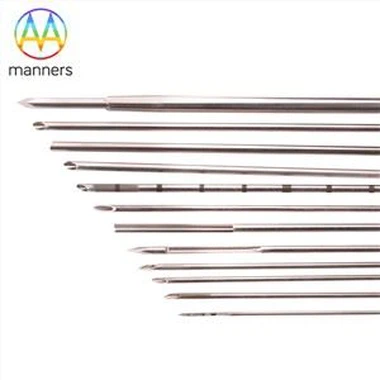
Laser Cutting 316LVM Hypotube: Precision And Purity
Sep 08, 2026
Pain Points in Laser Processing
Manufacturers often struggle to laser‑cut 316LVM hypotube without introducing micro‑cracks, recast layers, or heat‑affected zones that could compromise the material's implant‑grade purity. The low carbon content of 316LVM makes it prone to sensitization if overheated, leading to chromium carbide precipitation at grain boundaries, which in turn reduces corrosion resistance and can cause premature failure in vivo. Achieving a consistent 0.012 mm kerf width across long lengths (up to 20 mm OD) is technically demanding, especially when complex patterns like continuous spirals or bespoke geometries are required. Any deviation can result in batch rejection, as implantable devices must meet zero‑defect standards under ISO 13485 and FDA guidelines. Moreover, the high cost of 316LVM raw material-often triple that of standard 304 stainless steel-amplifies the financial risk of processing errors. In high‑volume production, maintaining yield rates above 95 % requires not only advanced equipment but also meticulous process control, including stable ambient conditions and ultra‑clean assist gases. The lack of standardized laser parameters for 316LVM further complicates scale‑up, as each new tube dimension or pattern may demand extensive trial and error, delaying time‑to‑market for critical medical devices.
Principle of Precision Laser Ablation
Laser cutting 316LVM relies on photothermal or photomechanical ablation. A focused pulsed beam delivers energy densities exceeding 10⁶ W/cm², instantly vaporizing the metal. The short pulse duration-ranging from nanoseconds in fiber lasers to picoseconds or femtoseconds in ultra‑fast systems-limits heat diffusion, preserving the surrounding material's microstructure and preventing sensitization. Assist gas (typically nitrogen or argon) ejects molten debris, leaving a clean kerf. The narrow kerf is achieved by focusing the beam to a spot size of 10–20 µm using a high‑numerical‑aperture lens. By synchronizing the laser with high‑precision rotary and linear stages, intricate patterns can be cut with micron‑level accuracy. The process is governed by the principle of "cold cutting" when ultra‑fast lasers are used, virtually eliminating the heat‑affected zone and maintaining the material's corrosion resistance. Additionally, the laser‑material interaction produces a plasma plume that must be managed to avoid shielding the beam; real‑time monitoring of plasma intensity can be used to adjust parameters on the fly. Understanding these physical phenomena is essential for optimizing cut quality and ensuring the 316LVM hypotube meets the stringent requirements of implantable devices.
Classification of Laser Systems
Three main laser types are used for 316LVM hypotube processing:
Nanosecond Pulsed Fiber Lasers: Cost‑effective for standard patterns and walls up to 0.5 mm; moderate HAZ, suitable for non‑critical applications.
Picosecond Lasers: Industrial workhorses for medical cutting; minimal HAZ, excellent edge quality, and high repeatability, making them ideal for implant‑grade components.
Femtosecond Lasers: Ultimate precision for micro‑hypotubes (OD < 1 mm); cold ablation but slower throughput, often reserved for complex neurovascular or ophthalmic devices.
Motion platforms include air‑bearing rotary stages with runout < 1 µm and granite‑based linear axes for vibration damping. Beam delivery may involve galvanometer scanners for high‑speed patterning, while vision systems with telecentric lenses ensure alignment. Assist gas delivery systems must provide ultra‑dry, particle‑free nitrogen or argon at pressures up to 20 bar. Fume extractors with HEPA filters maintain a clean environment, crucial for preventing contamination of the implant‑grade surface.
Practical Operation Guide
Start by verifying material certification (ASTM F138) and performing incoming inspection for dimensional accuracy. Clean the 316LVM tube with isopropyl alcohol in an ultrasonic bath to remove oils. Mount it on a vacuum chuck to prevent distortion during rotation. Set the laser focus at the tube's outer surface using a precision autofocus sensor. For a 0.5 mm wall, use a picosecond laser at 20 W, 100 kHz repetition rate, and 5 m/s scan speed. Apply argon assist gas to prevent oxidation. Monitor the cut via a coaxial CCD camera with digital image processing to detect anomalies. After cutting, perform ultrasonic cleaning in deionized water with a mild detergent. Electropolish to remove < 1 µm of material, using a phosphoric‑sulfuric electrolyte at 50 V for 10 minutes, then passivate per ASTM A967 in a 10 % citric acid bath for 30 minutes. Inspect with a scanning electron microscope (SEM) to confirm absence of micro‑cracks and measure surface roughness (target Ra < 0.1 µm). Record all parameters, material heat numbers, and inspection results in a batch record for full traceability and regulatory compliance.
Real‑World Experience
In our production, we once encountered micro‑cracking on a 316LVM hypotube cut with a nanosecond laser. Switching to a picosecond laser eliminated the cracks, but we observed a slight increase in cycle time. We also learned that argon shielding during cutting reduced post‑cut passivation time by 50 % because it minimized surface oxidation. A client's audit highlighted the need for full material traceability; we now maintain heat‑number records from melt to finished tube, including all processing steps. In one high‑volume project for a stent delivery system, we implemented statistical process control (SPC) charts for kerf width, which helped detect a drift in laser power early and prevented a batch failure. These experiences have shaped our standard operating procedure, ensuring consistent quality for implantable devices and reinforcing the importance of continuous improvement.
Summary and Sublimation
Precision laser cutting of 316LVM hypotube is a marriage of art and science. It demands not only advanced equipment but also a deep respect for the material's life‑saving potential. Each clean cut is a step toward a safer implant, reflecting the manufacturer's commitment to purity and precision. This process transforms a simple tube into a sophisticated medical component, embodying the highest standards of engineering excellence. As we refine our techniques, we honor the trust placed in us by patients and surgeons alike, knowing that our work directly contributes to improved clinical outcomes and the advancement of minimally invasive medicine.
Future Prospects and Recommendations
The future lies in AI‑driven laser parameter optimization and in‑line metrology. We advise manufacturers to adopt ultra‑fast lasers for critical implants and to integrate blockchain for material traceability. Continuous training of operators and investment in R&D will keep pace with evolving medical needs. As 316LVM hypotubes find new applications in robotics‑assisted surgery, the focus on purity and precision will only intensify. Embracing Industry 4.0 technologies, such as digital twins and predictive maintenance, will further enhance process reliability and reduce waste, ensuring that this remarkable material continues to serve as the gold standard for implantable medical devices.