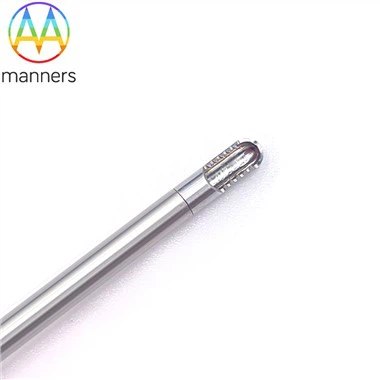
Custom Cut Patterns On 316LVM Hypotube For Cardiovascular Interventions
Sep 08, 2026
Pain Points in Cardiovascular Device Design
Cardiovascular interventions demand catheters that can navigate tortuous coronary arteries with exceptional torque control and flexibility. Standard stainless steel shafts often fail to provide the necessary trackability, leading to prolonged procedures and increased patient risk. Designers need a hypotube that can be customized to offer a stiff proximal section for pushability and a highly flexible distal section for atraumatic navigation. Off‑the‑shelf solutions rarely meet these specific anatomical requirements, and the use of non‑implantable materials can cause complications in long‑term implants. Additionally, the trend toward transradial access (through the wrist) requires even smaller profiles and sharper curves, pushing existing hypotube designs to their limits. The lack of a reliable, implant‑grade material that can be laser‑cut into complex patterns without losing structural integrity has become a bottleneck in the development of next‑generation cardiovascular devices.
Principle of Pattern‑Driven Flexibility
316LVM hypotube allows engineers to create a flexibility gradient by selectively removing material. Laser‑cut patterns such as continuous spiral, interrupted spiral, radial, or bespoke geometries alter the local bending stiffness and torsion. The uncut sections act as stress‑bearing members, ensuring kink resistance. By adjusting the cut density along the tube's length, designers can engineer a shaft that behaves like a multi‑material composite, perfectly tailored to the vasculature's demands. Finite element analysis (FEA) is routinely used to simulate the mechanical response, enabling optimization of strut width, pitch, and angle before cutting. The principle of "engineered compliance" transforms the continuous metal tube into a compliant mechanism, where flexibility is achieved through elastic deformation of the remaining struts rather than material compliance alone. This approach also allows for the integration of radiopaque markers or drug‑eluting coatings on the uncut surfaces, further enhancing device functionality.
Classification of Cutting Patterns
Continuous Spiral: Uniform omnidirectional bending; ideal for guide catheters that need to follow winding vessels.
Interrupted Spiral: Periodic uncut rings enhance torque transmission; used in stent delivery systems where pushability is critical.
Radial Cuts: Transverse slots increase flexibility in one plane; suited for steerable devices that require directional control.
Bespoke Patterns: Custom geometries for specific anatomical challenges, such as variable pitch or alternating shapes that combine the benefits of multiple patterns.
Each pattern is cut using pulsed fiber or ultra‑fast lasers, with kerf widths as narrow as 0.012 mm. Hybrid patterns that merge interrupted spirals proximally with continuous spirals distally are increasingly popular for complex interventions, offering a seamless transition from stiffness to flexibility.
Practical Operation Guide
Define mechanical requirements via FEA, considering factors like bending radius, torsion angle, and column strength. Convert the pattern to vector format compatible with the laser cutter's software. Select a 316LVM hypotube (OD 0.20–20 mm) with wall thickness appropriate for the application. Set laser parameters: pulse energy 0.2 mJ, repetition rate 80 kHz, speed 300 mm/s for a picosecond system. Secure the tube in a precision collet and perform a test cut on a short segment. Evaluate under a microscope for kerf consistency and absence of dross. After full production, electropolish to remove micro‑burrs and passivate to restore the chromium oxide layer. Document the design history, including simulation results and verification tests, for regulatory submission under ISO 13485. Finally, conduct mechanical testing to validate that the prototype meets all performance criteria before scaling to production.
Real‑World Experience
We developed a 316LVM hypotube with an interrupted spiral for a coronary stent delivery system. The pattern increased torque transmission by 40 % while maintaining flexibility, as confirmed by bench testing. A challenge arose when the cut edges showed slight burrs; we resolved it by fine‑tuning the assist gas pressure and pulse overlap. Clinician feedback confirmed smoother navigation and reduced procedure time in preclinical trials. In another project, a bespoke pattern with variable pitch was used for a transcatheter aortic valve delivery sheath, enabling it to navigate the aortic arch with unprecedented ease. These experiences highlight the importance of iterative prototyping and close collaboration with clinicians to translate theoretical designs into practical, life‑saving devices.
Summary and Sublimation
Custom laser‑cut 316LVM hypotube empowers cardiovascular innovation. It transforms a homogeneous tube into a dynamic structure that mimics biological flexibility, enabling life‑saving interventions with unprecedented precision. This is engineering at its finest, where each cut is a deliberate act of healing. The ability to tailor the mechanical properties along a single tube eliminates the need for multiple components, simplifying device construction and reducing failure points. As we continue to push the boundaries of what is possible, we remain committed to improving patient outcomes through the relentless pursuit of excellence in medical device design.
Future Prospects and Recommendations
Generative design algorithms could automate pattern optimization based on patient‑specific anatomical data. Integrating sensors into the hypotube during cutting may yield smart catheters that provide real‑time feedback on vessel wall contact forces. Collaboration between clinicians and engineers will drive the next generation of cardiovascular devices. Manufacturers should invest in simulation software and rapid prototyping capabilities to stay ahead of the curve. Additionally, exploring hybrid manufacturing that combines laser cutting with additive processes could open new avenues for multifunctional implants, further solidifying the role of 316LVM hypotube in the future of cardiovascular care.