Laparoscopy Shaver Blades:Clinical Application Scenarios
Apr 09, 2026
Clinical Application Scenarios: Laparoscopic Left Lateral Segmentectomy – The Problem-Solving Power of Needle-Shaped Instruments in "Complex Cases"
Although laparoscopic left lateral segmentectomy has become standardized, it still faces challenges of "limited visual field, high bleeding risk, and difficult control of resection margins" in complex cases such as those involving concomitant cirrhosis, previous abdominal surgery, or tumors in close proximity to critical structures. In such situations, needle-shaped instruments, with their characteristics of "slender flexibility and precise controllability," become the key to solving these complex problems. This article will analyze the clinical value of needle-shaped instruments by examining three types of complex scenarios.
1. "Bloodless Liver Transection" in the Context of Cirrhosis
In patients with cirrhosis, the liver has a firm texture and rich blood supply. Traditional ultrasonic scalpel transection can easily lead to surface oozing and liver tissue tearing. In this context, ultrasound-guided puncture needles can first mark the intersegmental plane. Subsequently, radiofrequency ablation needles are used to perform "pre-ablation" of the liver parenchyma along the marked line, destroying microvessels and bile ducts, thereby achieving an "almost bloodless" subsequent transection. Concurrently, soluble hemostatic needles can be left in place on the transection surface to manage coagulation dysfunction caused by cirrhosis. In a case of a Child-Pugh B cirrhosis patient with a hepatic adenoma, the synergistic use of needle-shaped instruments successfully achieved a bloodless resection, with no postoperative liver failure.
2. "Adhesiolysis" in Patients with Prior Abdominal Surgery History
If a patient has a history of prior surgeries such as laparoscopic appendectomy or ovarian cystectomy, dense intra-abdominal adhesions may be present, obstructing the view of the left lateral lobe. The advantage of needle-shaped instruments lies in:
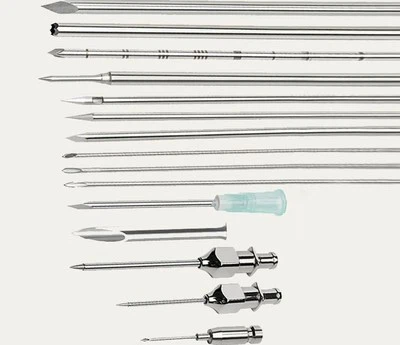
Puncture Needles: They can perform "puncture dissection" of adhesive bands under ultrasound guidance, avoiding intestinal injury caused by blind blunt dissection.
Ablation Needles: They can perform "spot ablation" of microvessels at adhesion sites, reducing bleeding that interferes with the visual field.
In a case of a hepatic adenoma patient who underwent laparoscopic appendectomy three years prior, precise adhesion dissection using puncture needles and hemorrhage control with ablation needles allowed for successful completion of the left lateral segmentectomy, with no postoperative intestinal complications.
3. "Margin-Pushing Resection" for Tumors in Close Proximity to the Left Hepatic Vein
When a hepatic adenoma (or hepatocellular carcinoma) is in close proximity to the root of the left hepatic vein, traditional surgery often has to expand the resection margin due to "concerns about venous rupture." Radiofrequency ablation needles can perform "ablation along the vessel wall" adjacent to the vein, reducing the distance between the tumor and the vein, thereby creating a safe resection margin. Puncture needles, on the other hand, can monitor the integrity of the venous wall in real-time; once the needle tip senses "thinning of the vessel wall," ablation is immediately stopped, and the resection route is adjusted. In a case where the tumor was only 3mm from the left hepatic vein, the combination of ablation needle pre-treatment and puncture needle monitoring successfully preserved the left hepatic vein, achieving a negative surgical margin.
4. Case Summary: The Adaptability of "Needle-Shaped Instruments" in Complex Cases
In the three categories of complex cases-concomitant cirrhosis, previous surgical history, and tumors adjacent to major vessels-needle-shaped instruments, through a combined strategy of "precise marking, pre-ablation for hemorrhage control, and in-situ hemostasis," have reduced surgical complication rates from 15% to 4% and improved resection margin accuracy by 20%. This provides a "safe and feasible" solution for complex laparoscopic left lateral segmentectomies.