Key Points For Complication Prevention Based On PTC Needle Characteristics
Jul 06, 2026
and Manufacturers' Risk Mitigation Contributions in Product Design
https://admin1.seo.com.cn/CustomerAdmin/S_News/Create?ru=%2FCustomerAdmin%2FS_News%2F%3Fpage%3D2
Although the Chiba-type PTC needle (20–23G) has reduced major complication rates to below 3%, the liver's rich blood supply and the close proximity of bile ducts to blood vessels mean complication prevention remains a shared concern for interventional physicians and PTC needle manufacturers alike. Manufacturers can indirectly reduce procedure-related risks through thoughtful product design details and clear labeling instructions.
Major Complication Types and Causes:
Biliary bleeding / hemobilia:Needle tip inadvertently punctures a hepatic artery or portal vein branch, or creates a fistulous tract. Mostly self-limiting; a few cases require embolization or surgery.
Bile leakage / bile peritonitis:Tract fails to close (more common with multiple punctures or high-pressure bile ducts); frequent in the coarse-needle era, greatly reduced by fine Chiba needles.
Cholangitis / sepsis:Bile in obstructive jaundice patients is often infected; forceful contrast injection pushes bacteria retrogradely into the bloodstream. Preoperative antibiotics + low-pressure slow injection are key.
Pneumothorax / hemothorax:Right mid-axillary puncture too high (>7th intercostal space) injures the right pleural cavity; strict intercostal limits and ultrasound confirmation of diaphragm position are mandatory.
Guidewire-related issues:Forcing a 0.035″ guidewire through a 22G needle lumen causes blockage or wire knotting-an operator error. IFU must explicitly state compatible guidewire specifications.
Manufacturers' Design-Level Risk Mitigation:
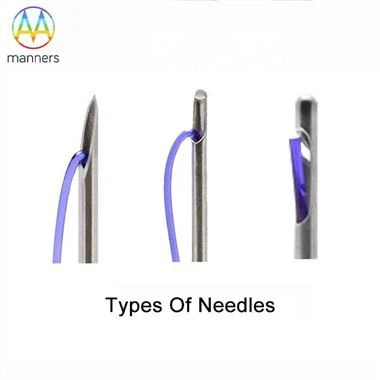
Tip Sharpness and Bevel Angle Optimization:Overly dull tips require excessive force → risk of uncontrolled deep penetration; overly sharp or excessively long bevels may deflect. Mature manufacturers determine the optimal edge angle (typically 30° short bevel or compound grinding) through biomimetic tissue penetration tests, enabling the operator to clearly sense the breakthrough and avoid over-advancement.
Internal Lumen Smoothness and Explicit Guidewire Compatibility Labels:Internal tube wall Ra values are controlled to ultra-low ranges; the hub or packaging is molded/printed with "0.018″ Guidewire Only" to prevent misuse of larger wires that could clog the lumen or cause wire entrapment.
Ultrasound Visibility Markers:Assist operators in confirming tip position in real time, avoiding blind deep punctures when the "needle tip is lost"-a crucial auxiliary design for reducing inadvertent vascular injury.
Perfect Stylet Fit:Prevents small tissue fragments from lodging in the needle tip bevel, maintaining smooth aspiration/injection, and reducing unnecessary repeat punctures triggered by "no bile return."
IFU Warning Content Recommendations: Manufacturers should clearly state in the Instructions for Use (IFU): single-use only, do not reuse; do not use for unintended purposes; maximum compatible guidewire diameter; recommended maximum insertion depth not exceeding scale range; avoid forceful contrast injection; postoperative monitoring reminders. Though seemingly minor, these texts are vital components of the risk management file (ISO 14971) and safeguards against legal disputes.
In summary, PTC needle manufacturers are not merely hardware providers; their diligence in sharpness control, internal lumen design, visibility markers, and IFU standardization directly contributes to the patient safety network-a significant manifestation of brand professionalism.