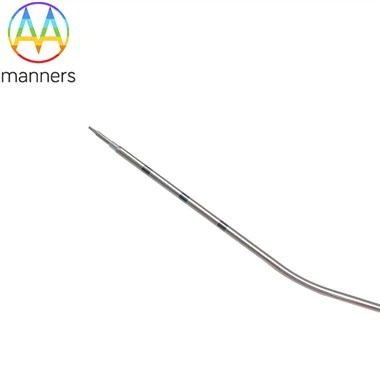
In-Depth Exploration Of Clinical Applications: Redefining The Value Of Dual-Function FNA/FNB Needles In Multidisciplinary Care
May 02, 2026
In the era of precision medicine, the "gold standard" for diagnosis increasingly relies on high-quality tissue specimens. Endoscopic ultrasound-guided fine-needle aspiration/biopsy (EUS-FNA/FNB) has become the core minimally invasive modality for obtaining tissue from lesions in the gastrointestinal tract and adjacent organs (e.g., pancreas, mediastinum, retroperitoneum). The emergence of dual-function puncture needles-capable of both cytological (FNA) and histological (FNB) sampling-has profoundly transformed multidisciplinary diagnostic and therapeutic pathways, offering clinical value far beyond the convenience of "one needle for two uses."
Value in Pancreatic Disease (Especially Pancreatic Cancer)
In pancreatic disease, particularly pancreatic cancer, the dual-function needle delivers irreplaceable value. Pancreatic cancer is characterized by marked tissue fibrosis (desmoplasia). Conventional FNA often yields only a small number of shed cells, leading to diagnostic uncertainty or insufficient tissue for essential immunohistochemistry (e.g., detection of CK7, CK20, MUC1) and molecular testing (e.g., KRAS, TP53 mutations).
Needles with FNB capability retrieve small tissue cores with preserved architectural integrity. This allows pathologists to make confident adenocarcinoma diagnoses, avoiding equivocal reports such as "atypical cells" or "suspicious malignant cells." Critically, the tissue obtained is sufficient for next-generation sequencing (NGS), enabling patient selection for targeted therapy or clinical trials. For pancreatic cystic neoplasms, FNB of solid nodules or septations within the cyst wall enables more accurate differentiation between mucinous and non-mucinous cysts than cyst fluid aspiration alone, guiding surgical decision-making.
Diagnosis of Gastrointestinal Submucosal Tumors (SMTs)
In the diagnosis of gastrointestinal submucosal tumors (SMTs), dual-function needles provide unprecedented diagnostic clarity. SMTs include a diverse spectrum of lesions-gastrointestinal stromal tumors (GISTs), leiomyomas, neuroendocrine tumors, lipomas, etc.-each requiring distinct management strategies. Conventional FNA cytology often fails to distinguish these spindle cell neoplasms.
FNB-acquired tissue cores allow immunohistochemical staining for key markers such as c-Kit (CD117), DOG-1, and CD34, enabling definitive GIST diagnosis and assessment of malignant potential. For SMTs located in the esophagus or gastric fundus, a definitive histological diagnosis is critical before deciding between endoscopic resection or open surgery. The dual-function needle serves as an essential diagnostic scout in this process.
Mediastinal and Pulmonary Lesions
In the management of mediastinal and pulmonary lesions, EUS-guided puncture is a minimally invasive alternative to surgical mediastinoscopy. For mediastinal lymph node staging in lung cancer (e.g., stations 7, 8, 9), obtaining sufficient tissue for histological subtyping and PD-L1 biomarker testing is a prerequisite for designing personalized immune-combination therapies.
In a single procedure, the dual-function needle enables both:
Cytological smear preparation for rapid on-site evaluation (ROSE), confirming the presence of malignant cells;
Tissue core acquisition for comprehensive histological and genomic analysis.
This efficiency reduces the likelihood of repeated punctures or the need for more invasive procedures.
Synergy Between ROSE and FNB: Elevating Diagnostic Efficiency
The integration of rapid on-site evaluation (ROSE) with FNB advances diagnostic efficiency to new heights. ROSE acts as a "navigator" during FNA: a cytopathologist or technologist performs immediate staining and microscopy to assess sample adequacy (presence of sufficient lesional cells) and preliminary diagnosis.
With a dual-function needle, the operator can:
Perform FNA sampling for ROSE;
Upon confirming accurate targeting, immediately switch to FNB mode using the same needle.
This ensures that all diagnostic requirements are met in a single intervention. The strategy of ROSE-guided targeted FNB significantly improves first-pass diagnostic yield, reduces repeat punctures due to inadequate samples, shortens diagnostic time, and alleviates patient physical and psychological burden.
Health Economics: Cost-Effectiveness of "One Needle, Dual Function"
From a health economics perspective, the dual-function needle offers substantial cost advantages. Although the unit cost may be higher than a conventional FNA needle, it eliminates expenses associated with repeat punctures or needle changes due to inconclusive initial FNA results. It also reduces additional imaging or hospitalization costs caused by diagnostic delays.
More importantly, by improving first-diagnosis success, it enables patients to enter appropriate treatment pathways faster, enhancing overall healthcare resource utilization.
Conclusion: Redefining EUS Intervention Logic
The clinical value of dual-function puncture needles like the AccuSteel™ lies in redefining the logic of EUS intervention: shifting from "obtaining as many cells as possible" to "systematically acquiring diagnostic material that meets all modern pathological requirements."
A single minimally invasive EUS puncture can now provide a complete pathological profile-from cellular morphology and tissue architecture to molecular signatures-truly achieving maximum diagnostic information with minimal trauma. This paves the way for precise tumor diagnosis and personalized therapy. It represents not only technological progress but also an essential tool enabling the deep implementation of patient-centered multidisciplinary care.