Human Factors Engineering And Patient Experience - Pain Management And Psychological Care In AVF Needle Design
May 16, 2026
Announcement of the Results
Manners Technology, in collaboration with the International Pain Research Association, has released the clinical research results of its "ComfortTec™ painless puncture system." This system consists of a series of AVF needles that have been deeply optimized through human factors engineering. Its features include "gradual bipolar inclined needle tip," "pressure feedback visual handle," and "micro-vibration distraction module." A double-blind randomized controlled trial involving over 1,000 dialysis patients showed that patients using this system had an average reduction of 2.5 points in the numerical rating scale (NRS) for acute pain during the puncture process, a 40% reduction in puncture-related anxiety scores, and a first-puncture success rate of 99.5%, significantly improving the quality of life and treatment compliance of long-term dialysis patients.
Research and Development Background and Challenges
Puncture pain and fear are among the greatest psychological and physiological burdens for long-term dialysis patients. Traditional AVF needle designs mainly focus on functionality while severely neglecting the experience:
Cutting pain and swelling pain: The poor geometric shape of the needle tip causes high resistance during puncture, resulting in sharp pain; the thick diameter of the needle body causes continuous swelling pain when entering the tissue.
Uncertainty of puncture depth: Operators mainly rely on the "feeling of failure" to determine the entry into the vascular cavity, with a vague sense of touch that can easily lead to repeated probing, increasing pain and vascular damage.
Visual and psychological fear: Patients directly face the sharp needle and bleeding scene, generating intense anticipatory anxiety, which may cause vascular spasm, making the puncture more difficult.
Operator fatigue and decreased hand feel: The traditional handle design does not conform to ergonomics, and long-term operation can easily lead to hand fatigue for nurses, affecting the stability and accuracy of the puncture.
Core Technological Innovation
The manufacturer innovates from multiple dimensions including neuroscience, psychology, and industrial design:
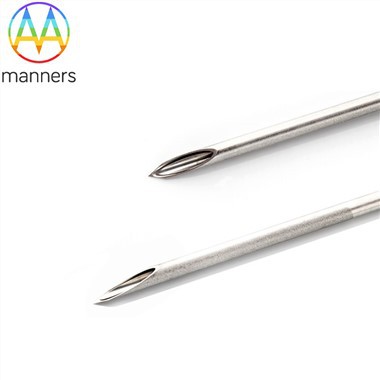
Progressive bipolar inclined needle tip: The needle tip undergoes two levels of grinding. The first level is a super-elongated inclined surface (with an angle of approximately 12°) used to cut through the epidermis almost painlessly; the subsequent second level is a short and slightly steep inclined surface, which optimizes the efficiency of penetrating the tough vessel wall and provides tactile feedback. There is a smooth transition between the two inclined surfaces, simulating the ideal puncture path of "cutting first, then spreading open," significantly reducing tissue deformation and tearing pain.
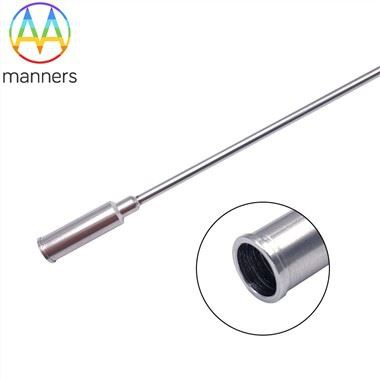
Pressure feedback visual handle: A micro-MEMS pressure sensor and a three-color LED ring are integrated inside the handle. When the needle tip touches the skin, penetrates the tissue, and enters the vascular cavity, the resistance changes sensed by the handle will be reflected to the operator in real time through the LED color (white-yellow-green). This provides objective visual depth guidance, eliminating uncertainty. At the same time, the handle is wrapped with anti-slip silicone and designed with an asymmetrical weight distribution, adapting to different grip postures and reducing hand burden.
Integrated micro-vibration dispersion module: A touch-activated micro-vibration motor is integrated at the end of the handle. Before puncturing, the patient can hold it with the other hand or have the nurse place it near the puncture point on the skin. According to the "pain gating theory," the gentle vibration sensation can stimulate the coarse nerve fibers, interfere with and inhibit the transmission of pain signals to the brain, effectively distracting attention and reducing pain.
Mechanism of Action
Innovative design works by intervening in the physical, neural, and psychological pathways that generate pain sensations:
The progressive bipolar needle tip achieves this by optimizing the puncture force curve. The slender first inclined plane rapidly passes through the densely packed epidermis of the nerve endings with the least pressure (pressure/surface area), achieving a "painless" penetration. The second inclined plane works in the deeper tissues with fewer high-pressure receptors, using its steep angle to quickly complete the puncture of the blood vessel wall, shortening the overall pain stimulation time.
The pressure feedback visualization system transforms the "blind operation" relying on hand feel into a data-assisted "visual operation." The LED light changes are based on real-time algorithms of puncture force and tissue impedance, providing the operator with clear and shareable decision support, significantly reducing additional trauma and pain caused by hesitation and repeated attempts.
The micro-vibration dispersion therapy is a classic application of the pain gating theory. The vibration stimulation activates the Aβ coarse fibers responsible for touch-pressure sensation, and its incoming signal inhibits the signal transmission of the Aδ and C fine fibers responsible for pain perception at the level of the spinal cord dorsal horn, as if closing the "door" of pain. At the same time, as an active cognitive intervention, it shifts the patient's excessive attention to the puncture, reducing anxiety levels.
Efficacy Verification
The "ComfortTec™ System" has undergone rigorous clinical validation in multiple dialysis centers.
Puncture mechanical test: On the simulated tissue material, the peak puncture force of the new needle tip was 35% lower than that of the traditional needle tip, and the puncture force curve was smoother without sharp fluctuations.
Pain and anxiety scale assessment: The assessment was conducted using the visual analogue scale and the state-trait anxiety scale. The results showed that after using the new system, the immediate puncture pain NRS score of patients decreased from an average of 5.8 points to 3.3 points; the state anxiety score 5 minutes before the puncture dropped by 40%.
Operator efficiency study: The participating hemodialysis nurses generally reported that after using the handle with visual feedback, their confidence in puncture depth increased, especially when puncturing obese, edematous, or patients with a deeper internal fistula. The success rate of novice nurses' first independent puncture reached over 95% within one week after training.
Research and Development Strategy and Philosophy
Manners Technology's research and development strategy in this field is "to take the experiences of patients and healthcare providers as the core driving force for technological innovation." They established the "User Experience Joint Laboratory," inviting long-term dialysis patients, hemodialysis specialist nurses, pain doctors, and psychologists to jointly participate in the design. Their concept goes beyond the traditional "alleviating pain," evolving into "creating a dignified and predictable treatment experience." They believe that a good puncture experience not only improves the comfort of the current treatment but also breaks the vicious cycle of "pain - anxiety - vascular spasm - more difficult puncture," protecting the long-term health of the internal fistula, and fundamentally enhancing the treatment compliance and life happiness of patients. This is a paradigm shift from "disease treatment" to "holistic care."
Future Outlook
The future painless puncture experience will evolve towards "immersive virtual reality intervention" and "personalized pain management." Manufacturers are exploring the integration of AVF puncture with VR headsets: During the puncture process, patients can wear VR devices and enter an immersive relaxation scene (such as a beach, a forest), through a multi-sensory immersive experience, to maximize the distraction of attention from the pain. Further, based on the individual pain sensitivity genes of patients and their past pain history, through AI algorithmic determination, personalized comprehensive analgesic plans can be customized. For example, for highly sensitive patients, the system may recommend the combined use of specific parameters of micro-vibrations, local cold sprays, and specific interactive narratives in the VR. The puncture mechanical data collected by the handle sensors can also be used to build a "digital puncture archive," helping healthcare providers continuously optimize the best puncture strategy for each patient and achieving truly precise and comfortable medical care.