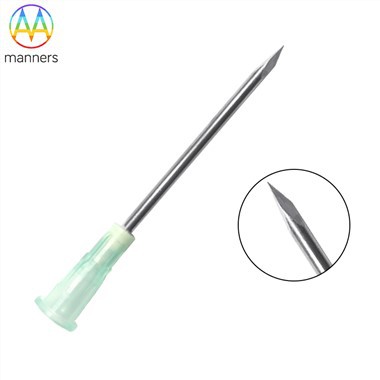
From Single‑Point Product To Intelligent System — The Evolution Of AVF Needles In Digital Dialysis Access Management
May 16, 2026
Official Release of Achievements
Manners Technology has officially launched its FistulaGuard Intelligent Dialysis Access Management System, marking the evolution of AVF needles from standalone puncture devices into key sensing nodes within the dialysis data ecosystem. Seamlessly integrating intelligent AVF needles embedded with miniature biosensors, bedside data acquisition terminals and a cloud‑based analysis platform, the system achieved real‑time monitoring of puncture‑site oozing, instant blood‑flow velocity measurement during puncture, and trend analysis of fistula function throughout treatment in initial clinical trials. It advances early warning of puncture‑related complications from post‑event detection to real‑time alerts and improves the time efficiency of fistula assessment by medical staff by 50 %.
R&D Background and Clinical Pain Points
In current haemodialysis practice, AVF needles function merely as "tubes", with their massive potential data value completely overlooked, while fistula management faces systemic challenges:
Post‑hoc assessment of puncture outcomes: Success of puncture, presence of oozing, and adequacy of blood flow are only determined after puncture completion or a period into treatment, lacking real‑time feedback.
Fragmented and delayed monitoring of fistula function: Key parameters such as fistula blood flow and recirculation rate rely on periodic ultrasound or indirect estimation via dialysis machines, yielding discontinuous data that hinders detection of acute changes.
Heavy documentation burden: Recording of puncture conditions and complications depends on manual entry, prone to errors and low efficiency, with data difficult to analyse in depth.
Monitoring gap during patients' home stay: Fistula conditions remain unsupervised after patients leave dialysis centres. Stenosis or thrombosis often leads to missed optimal intervention windows.
Core Technological Innovations
By integrating Internet of Things (IoT), miniature sensors and artificial intelligence (AI) into AVF needles, the manufacturer has built a three‑in‑one system:
Intelligent needles with integrated multi‑mode sensors: Ultra‑miniature fibre‑optic pressure sensors and bioimpedance measurement modules are embedded within AVF needle hubs. Pressure sensors detect tissue and intravascular pressure; impedance modules judge needle‑tip position (intravascular or not) and monitor local tissue water content (early signs of oozing) by measuring changes in electrical properties between the needle tip and surrounding tissues.
Wireless data synchronisation and bedside intelligent terminals: Intelligent needles connect to thin wearable patches fixed on patients' arms or bedside terminals via near‑field communication for real‑time wireless data transmission. Terminal screens intuitively display puncture pressure curves, real‑time impedance values and AI‑interpreted results such as "intraluminal position confirmed", "good tissue contact" and "alert for micro‑oozing".
Cloud‑based fistula health data platform: Puncture data collected during each dialysis session, initial blood‑flow velocity and dynamic venous pressure are automatically uploaded to an encrypted cloud platform. Using machine‑learning algorithms, the platform establishes individualised baseline function models for each patient's fistula, continuously tracks trend changes, and automatically generates fistula health scores and abnormality warning reports.
Mechanism of Action
The intelligent system forms a closed‑loop management workflow through real‑time data collection, edge computing and cloud‑based intelligent analysis:
Fibre‑optic pressure sensing: Characteristic waveforms of pressure‑time curves are precisely recorded during puncture. Intraluminal pressure waveforms differ significantly from those in tissue, enabling automatic identification and confirmation of successful puncture to avoid blind insertion. Minor fluctuations in pressure data during treatment may signal early‑stage tip‑wall contact or oozing.
Bioimpedance monitoring: Based on varying electrical conductivity across different tissues (blood, vascular walls, subcutaneous tissue). Impedance remains low and stable when the tip is within the vessel lumen; oozing causes blood to enter subcutaneous tissue with different conductivity, triggering characteristic impedance shifts that enable early warning of invisible micro‑oozing minutes to tens of minutes in advance.
Cloud‑based machine‑learning models: By accumulating massive datasets of pre‑treatment puncture data, intra‑treatment haemodynamic data and subsequent ultrasound results, models identify subtle early digital signatures of declining fistula function. For instance, gradually rising puncture resistance over years may indicate proliferative vascular stenosis; increasing pre‑pump negative pressure required to achieve target blood flow may signal inflow‑tract issues. The platform issues "suggested ultrasound review" alerts weeks in advance to enable predictive maintenance.
Efficacy Validation
A six‑month prospective pilot study of the FistulaGuard system was conducted across three dialysis centres.
Puncture safety and precision: Among 1 000 punctures using intelligent needles, the system achieved a 99.8 % accuracy rate for real‑time intraluminal position judgement. It successfully warned of 15 cases of clinically undetected micro‑oozing, all prevented from developing into haematomas via minor tip repositioning or local compression.
Predictive value for fistula events: During the study, the system issued early warnings (averaging four weeks in advance) for two cases of significant fistula stenosis (> 50 %) later confirmed by ultrasound. Early warnings were generated for all five puncture‑related small haematomas (> 2 cm).
Work‑efficiency improvement: Nurses spent an average of 3 fewer minutes per session assessing and documenting puncture conditions. Physicians saved 70 % of the time spent evaluating fistula status by reviewing digital, graphical long‑term trend reports compared with traditional paper records.
R&D Strategy and Philosophy
Manners Technology's system‑level strategy is to redefine product boundaries: from hardware to data services. In the era of value‑based and digital healthcare, it recognises that manufacturers' core value lies not only in delivering higher‑quality devices but also in solving systemic clinical pain points and improving overall healthcare quality and efficiency. AVF needles are regarded as ideal, natural, high‑frequency data collection access points. Its R&D philosophy is to enable silent devices to "speak" and connect discrete data into actionable insights. Through close collaboration with nephrology specialists and data scientists, clinical experience is translated into computable algorithms, upgrading fistula management from an experience‑driven, reactive model to a data‑driven, predictive and preventive new paradigm.
Future Outlook
Future intelligent dialysis access management systems will realise full‑domain perception and autonomous decision support. Moving forward, intelligent needles will integrate more diverse sensors such as miniature ultrasound probes to image vascular wall structure and blood flow prior to puncture, assisting optimal puncture‑site selection. The system will be deeply interconnected with wearable devices (e.g., smart bracelets) to continuously monitor fistula thrill and skin temperature during patients' home stay, delivering 24/7 round‑the‑clock surveillance. Cloud‑based AI platforms will evolve into regional fistula health management networks, enabling cross‑centre and cross‑regional data comparison to provide population‑level fistula survival analysis and quality‑control benchmarks for health authorities. Ultimately, the system aims to become an intelligent hub connecting patients, dialysis centres, interventional physicians and insurance payers. By extending fistula lifespan and reducing associated complications, it will improve patients' quality of life while significantly lowering the overall social disease burden of end‑stage renal disease.