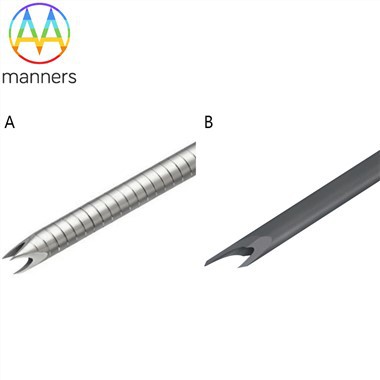
How The Tuohy Epidural Needle Changed The History Of Neuraxial Anesthesia
Jun 22, 2026
In the century-long river of anesthesiology, few inventions have reshaped the landscape of neuraxial anesthesia like the Tuohy needle. From its conception in the 1920s to its status as a global standard today, its story is an epic of serendipity and engineering wisdom.
1. Birth: An Accidental "Curve"
In the 1920s, American surgeon Edward B. Tuohy at the Mayo Clinic sought a better method for continuous spinal anesthesia. Straight needles frequently pierced the dura during catheter placement, causing severe CSF leaks and headaches. Tuohy discovered that by slightly curving the needle tip, the catheter would slide along the curve into the subarachnoid space rather than piercing straight through. This simple "curve" solved the catheterization dilemma. He published his findings in 1944, and the Tuohy needle was born.
2. Evolution: From Spinal to Epidural
Initially for spinal anesthesia, the Tuohy needle truly shined with the rise of epidural anesthesia in the 1950s. Anesthesiologists realized the curved tip perfectly matched the epidural anatomy: it directed the catheter cephalad or caudad along the longitudinal axis for multisegmental blockade. In contrast, the straight Crawford needle ejected catheters perpendicularly, leading to kinking or exiting the space. The Tuohy became the undisputed standard.
3. Design Iteration: Engineering for Safety
Early Tuohy needles were hand-filed. Modern manufacturing brought leaps forward:
- Standardized Back-Eye: The catheter exit was engineered as an oval port for optimal exit angles.
- Bevel Optimization: A 15° bevel was found to balance cutting power with reduced dural puncture risk. Steeper angles (30°) increased "bounce" and perforation risk.
- Ergonomic Hubs: Metal hubs gave way to transparent plastic with wings, allowing visualization of reflux and better grip.
4. Impact: Catalyst for Regional Anesthesia
The Tuohy needle's success catalyzed three pillars of modern regional anesthesia:
- Continuous Epidural Analgesia: Enabled prolonged surgery and labor analgesia.
- Postoperative Pain Management: Shifted from PRN boluses to continuous infusions.
- Complex Nerve Blocks: Established the principle of using a needle as a "conduit" for deep interventions (e.g., plexus blocks).
5. Contemporary Challenges: Will Tuohy Be Replaced?
Despite ultrasound and pressure monitoring, the Tuohy's physical form remains unchallenged. Innovations like the Pajunk needle or disposable kits are refinements, not replacements. The future lies in integrating micro-sensors (e.g., pressure transducers) into the tip. Regardless, the core philosophy of "conforming to anatomy and evading risk" embodied in that classic curve will forever remain the soul of regional anesthesia.