How Different Breast Biopsy Needles Shape Patients' Recovery Curves
Jun 13, 2026
https://www.mayoclinic.org/tests-procedures/breast-biopsy/about/pac-20384812
Key Words
Recovery TimePuncture Needle TechnologyMinimally InvasiveTissue Trauma
The advancement of breast biopsy techniques aims to continuously shorten patients' recovery time and enhance the diagnostic experience. The key to achieving this goal lies in the design and material innovation of the biopsy needles.
Traditional Thick Needle Puncture vs. Modern Vacuum-Assisted Biopsy: Fundamental Differences in Recovery Time
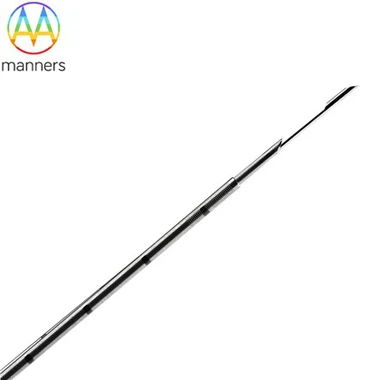
In the past, although fine needle aspiration biopsy caused less trauma, the insufficient sample volume often led to unclear diagnoses. The core needle biopsy (CNB), using 14G to 18G stainless steel or titanium alloy puncture needles, could obtain sufficient tissue strips. However, this "one-in-one-out" single-cutting method often required multiple punctures for deep or uneven lesions, increasing repeated damage to the surrounding normal glandular tissue. Therefore, patients typically experienced significant pain and bruising for 1-2 days after the procedure, and it often took 3-5 days for them to fully resume daily activities (such as lifting heavy objects, engaging in vigorous exercise), etc.
In contrast, the modern vacuum-assisted biopsy (VAB) system, such as using 8G to 11G probes, can collect multiple samples continuously and rapidly through a single puncture. Its working principle is to use vacuum negative pressure to suck the tissue into the cutting slot and then perform rotational cutting. This design significantly reduces the number of punctures and the tearing of breast tissue. More importantly, the incision of VAB is extremely small (about 3-5 millimeters), and it is usually precisely located under ultrasound or mammography guidance, avoiding "miswounding" of healthy tissue. This significantly shortens the postoperative recovery time. Most patients who received VAB reported only mild discomfort within 24 hours after the procedure, and they could basically return to normal work and life within 48 hours, with only a few requiring more than a week to relieve deep pain.
The Impact of Material Science on Recovery Time: Stainless Steel, Titanium Alloy, and Polymer
The material selection you mentioned also indirectly affects the recovery process. Stainless steel needles have high hardness and low cost, but the edge wear after multiple uses may increase tissue resistance; titanium alloy needles, due to their higher strength-to-weight ratio and excellent biocompatibility, puncture more smoothly, theoretically exerting less instantaneous impact on the tissue, which helps reduce postoperative inflammatory reactions. And the disposable puncture needles made of medical-grade polymer, although slightly less rigid overall, have a lower surface friction coefficient and avoid the rare allergic reactions that metal needles may trigger, which may mean less local redness and faster healing speed for patients with sensitive constitutions.
Conclusion
From the perspective of recovery time, vacuum-assisted biopsy combined with advanced materials in puncture needles has become the industry benchmark for shortening patients' recovery cycles. The future direction will be to further reduce the outer diameter of the puncture needle (such as developing 12G or even thinner VAB needles), while maintaining efficient sampling capabilities, allowing breast biopsy to truly achieve an "immediate operation, immediate departure" painless experience.