Full-Scenario Clinical Application System Of Hypodermic Needles
Oct 10, 2026
1. Scenario Mismatch Pain Points of Traditional Single-specification Needles
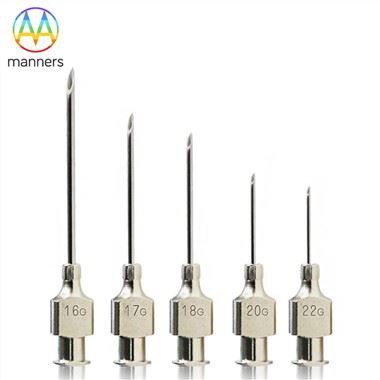
Traditional hypodermic needles have long adopted single-specification and single-performance product design, resulting in serious scenario mismatch pain points in clinical application. A large number of low-end traditional needles have fixed thickness, single tip structure and undifferentiated performance, which cannot adapt to the differentiated technical requirements of multiple clinical diagnosis and treatment scenarios. In practical clinical application, thick ordinary needles are used for pediatric fine puncture, which is prone to excessive trauma and obvious pain; thin needles are used for high-dose rapid drug delivery and venous transfusion, which leads to slow liquid delivery and low treatment efficiency.
In addition, traditional single-function needles cannot distinguish the application differences of vaccination, blood collection, intravenous therapy and intramuscular injection. The same type of needle is used for all scenarios, resulting in low treatment accuracy and poor adaptability. For special scenarios such as special drug delivery and precision biological detection, traditional ordinary needles have material inertness defects, which are easy to cause drug contamination and detection interference. The lack of full-scene differentiated product system makes clinical needle selection rely entirely on empirical judgment, with low standardization, frequent operational errors, unguaranteed treatment effect, and seriously restricts the refined development of modern clinical diagnosis and treatment.
2. Core Principle of Full-scene Adaptive Application
The full-scene clinical application system of modern hypodermic needles adheres to the core principle of "scenario demand orientation and precise adaptive matching", and realizes the one-to-one accurate matching of product material, specification, performance and clinical diagnosis and treatment scenarios. The core logic is to classify clinical diagnosis and treatment scenes according to puncture depth, tissue type, drug characteristics, patient group and treatment precision requirements, and configure targeted needle specifications, materials and functional designs to ensure that each scenario has exclusive adaptive needle products.
Through the differentiated design of needle thickness, tip sharpness, surface coating and material inertness, the system realizes the organic unity of minimal trauma, high efficiency, high precision and high safety in different scenarios. It breaks the empirical and random state of traditional needle selection, forms standardized and unified scenario matching specifications, improves the standardization and refinement level of clinical diagnosis and treatment, and meets the diversified and personalized medical needs of modern hospitals at all levels.
3. Classification and Scenario Matching of Core Clinical Applications
Modern hypodermic needles form five major core clinical application scenarios with exclusive product matching, covering all mainstream medical links. First, medication administration scenario: adopt stainless steel siliconized coated needles with moderate specification and smooth inner wall, suitable for subcutaneous and intramuscular injection of conventional drugs. The smooth needle body ensures uniform and rapid drug delivery, improves drug absorption efficiency, and avoids drug residue waste.
Second, vaccination scenario: select ultra-smooth thin-gauge coated needles, with small puncture trauma and low pain, suitable for mass vaccination of adults and children, ensuring safe and efficient large-scale public health prevention work. Third, blood collection scenario: configure high-precision smooth inner wall needles, which can quickly and smoothly collect blood samples, avoid hemolysis and sample contamination, and ensure the accuracy of clinical laboratory diagnosis data. Fourth, intravenous therapy scenario: match thick-gauge high-toughness stainless steel needles, support rapid liquid transfusion and long-term indwelling use, adapt to clinical rehydration and drug continuous treatment needs. Fifth, special precision diagnosis and treatment scenario: adopt nickel-chromium alloy and glass high-inert needles, suitable for special corrosive drug delivery and high-precision biological detection, avoiding material reaction interference.
4. Full-scene Standardized Selection and Operation Guidelines
To standardize the full-scene application of hypodermic needles and avoid scenario mismatch errors, medical institutions need to formulate unified selection and operation guidelines. First, establish a scenario classification selection system: clarify the corresponding relationship between needle material, specification, coating and five core application scenarios, and form a fixed matching standard for daily clinical reference.
Second, classify and standardize operational processes: for intramuscular and subcutaneous injection, use conventional coated needles with standard puncture depth; for venous blood collection and transfusion, use special vascular adaptive needles to ensure unobstructed liquid flow; for pediatric vaccination, use ultra-fine minimally invasive needles to reduce trauma; for special drug and detection scenarios, use high-inert special needles. Third, strengthen preoperative scenario assessment, select the most adaptive needle type according to patient age, physical condition and treatment purpose, and eliminate blind selection. Fourth, standardize postoperative needle disposal and instrument cleaning according to different scenario use characteristics to ensure medical safety and standardized operation.
5. Practical Experience of Full-scene Clinical Application
Clinical practical data prove that the full-scene adaptive application system of hypodermic needles significantly improves the overall level of clinical diagnosis and treatment. The standardized matching of exclusive needles for different scenarios solves the various problems of traditional single-specification needle mismatch, effectively reduces puncture trauma, improves drug delivery efficiency and blood sample qualification rate, and reduces clinical operational errors by more than 40%.
In public health vaccination and routine physical examination scenarios, the popularization of special adaptive needles improves the efficiency of large-scale medical operations and ensures the uniformity and standardization of diagnosis and treatment quality. In chronic disease intravenous therapy and special precision treatment scenarios, high-performance exclusive needles improve the stability and accuracy of treatment, reduce the incidence of adverse reactions, and effectively guarantee the treatment effect of patients. The full-scene matching system realizes the refined management of clinical basic medical consumables, making basic diagnosis and treatment work more standardized, efficient and safe.
6. Application System Value Summary and Sublimation
The construction of full-scene clinical application system is an important symbol of the refined and standardized development of hypodermic needle clinical application. It breaks the technical limitation of traditional single-specification and single-function products, realizes the full coverage and precise adaptation of all mainstream clinical diagnosis and treatment scenarios, and solves the long-standing problem of random and empirical needle selection in clinical work.
This systematic application mode not only optimizes clinical treatment efficiency and patient medical experience, but also improves the standardization and accuracy of basic medical operations, reduces medical safety risks and operational errors, and provides a standardized and replicable application system for the popularization of high-quality hypodermic needle products in medical institutions at all levels.
7. Scenario Expansion and System Optimization Suggestions
In the future, the industry should further expand the scenario coverage of hypodermic needles and optimize the adaptive matching system. First, develop exclusive needle products for special scenarios such as minimally invasive cosmetic injection, animal medical treatment and emergency first aid, and enrich the full-scene product matrix.
Second, refine the scenario matching standards for special groups such as premature infants, severe edema patients and vascular malformation patients, and improve the personalized adaptation capability of the system. Third, promote the intelligent matching system construction, realize the automatic matching of needle types according to clinical diagnosis and treatment needs, and further improve the standardization and intelligence of clinical application. Fourth, strengthen industry-university-clinical cooperation, continuously optimize product performance and scenario adaptation according to clinical feedback, and build a more perfect full-scene hypodermic needle clinical application system.