Honed Lumen Seed Delivery
Oct 01, 2026
The complaint surfaces quietly in debrief: "The spacing looked right on plan, but the seeds bunched." Cold spots appear at the periphery; V100 dips below threshold. Investigators first suspect source strength or plan optimization, yet the recurring physical cause is lumen friction. A ground-only cannula leaves micro-grooves along the inner wall. As the seed is pushed, it decelerates unpredictably, and two seeds may arrive in the same 2 mm segment while another gap opens elsewhere.
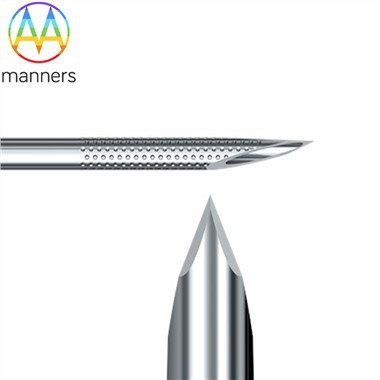
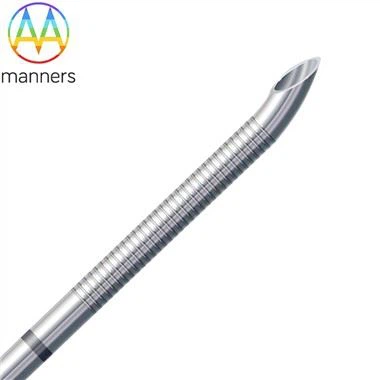
Honing is the answer the best manufacturers return to. After grinding the lumen to size, a honing pass abrades the wall to a controlled roundness and smoothness; electropolishing then removes the last micro-burrs and passivates the surface. The result is a near-constant deployment force: a seed leaving the applicator arrives in tissue with the same spacing the planner intended. Friction, in brachytherapy, is a dosimetric variable.
Finishes vary by tier. Ground-only needles are the economy option and the riskiest. Electropolished needles improve slide and corrosion resistance. Hone-plus-electropolish is the clinical premium, the choice for high-volume LDR centers. Siliconized inner lumens reduce friction further but require documented biocompatibility, since any coating must not shed or react in tissue. Each tier has its place, but only the honed options reliably support sub-millimeter spacing discipline.
Operational guidance is conservative by design. Needles are single-patient use in most protocols; a kinked or previously stressed lumen is retired. Before loading, the lumen is visually inspected under magnification for nicks at the mouth. Seed serials are logged for audit. Deployment force is felt, not rushed - a sudden "grab" is a signal to stop and inspect rather than push through. Post-implant CT then verifies that planned spacing survived delivery.
The field wisdom is blunt: most community-center "dosimetry failures" are delivery failures wearing a dosimetry mask. Senior physicists keep a simple demonstration for trainees - three seeds dropped through a rough lumen versus a honed one - to show how spacing distorts without any planner error. It changes how young operators think about the instrument.
Elevating the idea: a brachytherapy needle is a dosage device. Its inner wall is part of the prescription. Treating it as a disposable commodity rather than a precision channel quietly erodes plan quality.
Going forward, surface metrology will become a purchasable specification: Ra values, lumen roundness tolerances, and seed-pass force curves attached to each lot. Buyers who ask for these numbers today will be the ones with stable V100 tomorrow.