Historical Heritage And Technological Innovation — The Evolutionary Journey Of The Menghini Liver Biopsy Needle
Apr 25, 2026
Historical Heritage and Technological Innovation - The Evolutionary Journey of the Menghini Liver Biopsy Needle
On the milestones of liver disease diagnosis, the year 1958 stands out brilliantly. Italian pathologist Giorgio Menghini first reported and utilized the needle that bears his name-the Menghini needle-to perform the revolutionary "one-second percutaneous liver biopsy." This innovation did not emerge in a vacuum; its roots can be traced back to Paul Ehrlich's first percutaneous liver biopsy in 1883, as well as the fundamental methods established by Roholm and Iversen in 1939. However, early techniques were time-consuming, often lasting 6 to 15 minutes, and were complex and high-risk. Dr. Menghini's genius lay in his ingenious combination of negative pressure suction principles with precision needle design, creating a method that was extremely rapid and significantly less traumatic. This quickly established it as the global clinical gold standard for liver biopsy.
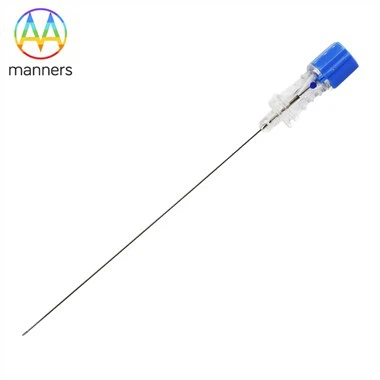
The core technical principle of the Menghini needle lies in its unique integrated "cutting-aspiration" design. The needle features a thin-walled, hollow structure with a sharp, lancet-style beveled tip. During the procedure, once the needle reaches the target liver tissue, the operator rapidly retracts the syringe plunger to create instantaneous negative pressure within the lumen. This suction draws the liver tissue into the needle bore, where the sharp cutting edge severs the tissue sample, retaining it inside the cannula. Completed in a matter of seconds, this process drastically shortens the needle's dwell time within the highly vascularized liver, effectively mitigating the risk of bleeding. Particularly for friable tissues like cirrhotic livers, this gentle aspiration approach yields longer and more intact tissue cores compared to traditional "cutting-type" needles (such as the Tru-Cut needle), reducing fragmentation and enhancing diagnostic accuracy.
Over more than half a century later, the evolution of the Menghini needle has not stopped at its original principle; it has deeply integrated into the currents of modern precision manufacturing and materials science. Advanced manufacturers, represented by Manners Technology, have introduced cutting-edge equipment such as 5-axis laser cutting machines while preserving the classic design. This non-contact machining technique can cut complex geometries at the needle tip (such as specific bevel angles and internal dovetail structures) with micron-level precision. This maximizes material utilization while minimizing thermal distortion, ensuring that every needle tip delivers极致 sharpness and consistent cutting performance. Furthermore, post-processing procedures like automated grinding, electropolishing, and ultrasonic cleaning guarantee the smoothness of the needle lumen, free from burrs, and thoroughly remove processing residues, meeting the highest standards for cleanliness and biocompatibility required of medical devices.
From the pioneering tool in Dr. Menghini's hands to today's high-precision medical devices produced in ISO 13485-certified cleanrooms by enterprises like Manners Technology, the history of the Menghini liver biopsy needle is an epic of innovation. It begins with clinical inspiration and continuously integrates mechanical engineering, materials science, and manufacturing craftsmanship. It bears witness to the deep-rooted philosophy of minimally invasive diagnostics and continues to propel liver disease diagnosis and treatment toward greater safety and precision.