Hematoma Formation After Breast Core Needle Biopsy From A Materials Science Perspective
Jul 18, 2026
https://www.mayoclinic.org/tests-procedures/breast-biopsy/about/pac-20384812
Breast core needle biopsy is a critical modality for the early diagnosis of breast cancer. Postoperative hematoma, one of the most common complications, is closely related to the material properties of the biopsy needle. Clinically, common biopsy needle materials include medical-grade stainless steel, titanium alloys, and polymer composites. Differences in hardness, surface friction coefficients, and biocompatibility among these materials directly influence tissue damage severity and hematoma risk.
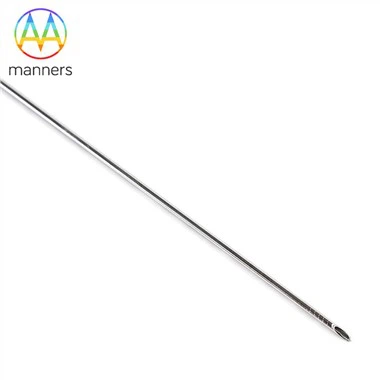
Medical stainless steel has long been the preferred material for reusable biopsy needles due to its excellent corrosion resistance and mechanical strength. However, its high density results in heavier needles; operational hand tremors can increase tissue cutting amplitude, particularly during vacuum-assisted biopsy (VAB), where high-speed rotation of stainless steel stylets may lacerate small vessels. Furthermore, if the microscopic surface roughness fails to meet mirror-polish standards, tissue adhesion increases significantly, potentially causing traction-induced bleeding from vascular stumps upon needle withdrawal. In contrast, titanium alloys have a density only 60% that of stainless steel; their lightweight design reduces operator fatigue. The naturally formed titanium oxide film on the surface is smoother, decreasing tissue friction and lowering the risk of vascular wall injury. Studies indicate that patients undergoing biopsy with titanium alloy needles exhibit an average 32% reduction in postoperative hematoma volume compared to those treated with stainless steel needles.
Disposable polymer biopsy needles (e.g., polyetheretherketone [PEEK]) offer new strategies for mitigating hematoma risk. These materials possess exceptional biological inertness, preventing host rejection, and their elastic modulus approximates that of soft tissue, allowing slight deformation during penetration to buffer impact on vessels. However, caution is warranted: some low-cost plastic needles lack sufficient rigidity, bending when traversing dense breast tissue, leading to trajectory deviation and inadvertent injury to deep vessels. Therefore, selecting medical-grade polymers that balance toughness and hardness, coupled with precision molding techniques, is crucial for optimizing product safety.
In clinical practice, physicians should select needle materials based on breast density and lesion location: titanium alloy needles are recommended for dense breasts to minimize resistance; polymer needles suit superficial lesions to reduce trauma; for complex cases requiring multiple sampling, stainless steel needles with nano-coated surfaces remain a reliable choice. Future advancements in surface modification technologies, such as anticoagulant-coated biopsy needles, promise to further reduce hematoma incidence at the source.