Industry Trends Perspective: Technological Upgrades And Intelligent Future Of FNAB
Jul 18, 2026
https://www.mayoclinic.org/tests-procedures/breast-biopsy/about/pac-20384812
As a classical minimally invasive diagnostic technique honed over decades, Fine Needle Aspiration Biopsy (FNAB) maintains a steadfast position within the essential toolkit for breast diagnosis, buoyed by its enduring advantages: minimal invasiveness, operational simplicity, and cost-effectiveness. However, propelled by the rapid evolution of precision medicine, artificial intelligence (AI), and multimodal imaging fusion, conventional FNAB is transcending its historical reliance on operator experience. It is undergoing a metamorphosis towards standardization, precision, intelligence, and procedural integration. Empowered by innovations in medical devices and diagnostic technologies, FNAB is embracing a revitalized industry landscape.
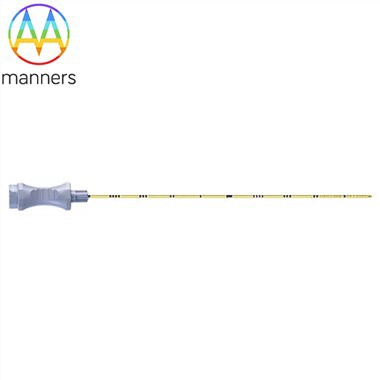
Refinement of consumable instrumentation forms the bedrock of this evolution. Legacy aspiration needles were often functionally simplistic and homogenous. Contemporary advanced needles showcase comprehensive optimizations in material science, structural design, and surface engineering. Premium offerings utilize lightweight titanium alloy shafts, enhancing puncture precision. Upgraded internal PTFE coatings effectively eliminate cellular adhesion and lumen occlusion, significantly improving specimen purity. Enhanced hub designs featuring integrated seals prevent air leaks, ensuring consistent aspiration efficacy. Concurrently, industry standards now mandate disposable sterile formats to preclude cross-contamination, coupled with diversified gauge specifications catering to individualized anatomical and pathological needs. This standardization of hardware performance lays the essential foundation for widespread technical adoption and precise procedural execution.
Multimodal image fusion navigation is shattering the constraints of traditional ultrasound guidance. Sole reliance on sonography often falters when confronted with dense breast parenchyma, post-surgical scar tissue, or diminutive occult lesions, compromising targeting accuracy. Next-generation FNAB platforms integrate ultrasound with mammography, MRI, or tomosynthesis datasets. Through sophisticated three-dimensional reconstruction and real-time spatial registration, these systems render previously indiscernible microlesions and suspicious loci visible. They facilitate meticulous pre-planning of insertion vectors, automatically routing needles away from hazardous structures like vessels, ducts, and pleural membranes. This empowers ultra-fine needles with "targeted precision sampling," vastly broadening the clinical envelope of FNAB and elevating success rates for minute lesion sampling and diagnostic accuracy to unprecedented levels.
AI-powered diagnostic augmentation represents a transformative industry trend. Conventional cytological interpretation remains heavily dependent on pathologist expertise, introducing subjectivity, variable error rates, and workflow inefficiencies. AI-driven cytology systems, trained on colossal repositories of digitized breast pathology images, can autonomously recognize cellular atypia, nuclear aberrations, and malignant phenotypic signatures. They expedite the generation of auxiliary diagnostic reports, stratifying lesions into benign proliferative, atypical, and malignant categories. This promises to substantially reduce diagnostic variability, democratizing high-level cytological expertise to primary care settings. Furthermore, AI algorithms can assist in preoperative pathway mapping, provide real-time intraoperative needle tip tracking, and facilitate post-procedural data analytics, ushering in an era of comprehensive, AI-augmented procedural guidance.
Integrated diagnostic workflows and grassroots penetration define the future trajectory. The forthcoming evolution of FNAB envisions seamless automation across the sampling-preparation-diagnosis continuum. Integration with microfluidic chip technology will streamline specimen handling: automating cellular enrichment, staining, and slide preparation, thereby curtailing laborious manual steps and expediting results. Concomitantly, leveraging its intrinsic virtues-low cost, ease of deployment, and minimal morbidity-FNAB is poised for continued decentralization into community hospitals and primary healthcare clinics. It is destined to become the quintessential enabling technology for population-based breast cancer screening programs. Underpinned by intelligent systems, standardized protocols, and integrated solutions, the venerable technique of FNAB is poised for sustained vitality, cementing its irreplaceable role within global frameworks for tiered breast healthcare delivery, accessible screening initiatives, and precision diagnostics.