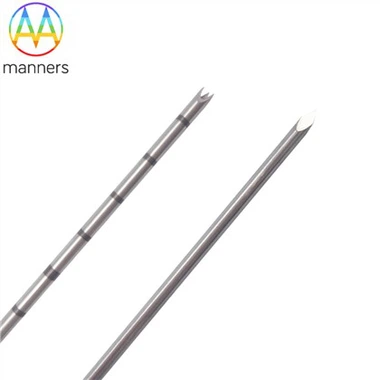
Global Industry Insights Into Core Breast Biopsy Needles
Jun 13, 2026
https://www.mayoclinic.org/tests-procedures/breast-biopsy/about/pac-20384812
Abstract:
With the continuous rise in global breast cancer incidence and growing awareness of early screening, the core breast biopsy needle market is undergoing rapid transformation. This article provides a comprehensive analysis of the industry from the perspectives of market size, competitive landscape, technological drivers, and emerging trends. It focuses specifically on the penetration of Vacuum-Assisted Biopsy (VAB) systems, the application of image fusion navigation technologies, and the market dominance of disposable consumables, offering industry participants a forward-looking perspective.
Main Text:
Globally, breast cancer has become the most prevalent malignant tumor among women. As the philosophy of "early detection, early diagnosis, and early treatment" takes root, the market demand for core breast biopsy technology-the diagnostic gold standard-is exhibiting steady growth. Consequently, the market for core breast biopsy needles and supporting equipment has emerged as a significant niche segment within the medical device industry.
Market Size and Growth Drivers
According to industry research, the global market for breast biopsy equipment and consumables has surpassed billions of dollars and is projected to maintain a Compound Annual Growth Rate (CAGR) of 5%–8% over the next five years. Key drivers of this growth include:
- Rising Incidence and Screening Penetration: Global population aging and lifestyle changes have led to higher breast cancer rates. Coupled with government-sponsored mammography screening programs, this has resulted in a surge of suspicious lesions requiring biopsy.
- Technological Advancement Expanding Indications: The adoption of advanced imaging technologies such as MRI and Digital Breast Tomosynthesis (DBT) has led to the discovery of more non-palpable and occult lesions. These often require more precise image-guided biopsies, driving demand for high-end biopsy needles.
- The Minimally Invasive Trend: Patient demand for cosmetic outcomes and lower trauma has led to a continuous decline in open surgical biopsy rates, establishing core needle biopsy as the absolute mainstream.
Competitive Landscape: Giants Lead, Innovators Break Through
The global market is dominated by several multinational medical device giants, including Becton Dickinson (BD), Hologic, Danaher (which owns Leica Biosystems), and Mammotome (part of Devicor Medical Products, formerly affiliated with Merck KGaA). Leveraging robust R&D capabilities, comprehensive product portfolios (ranging from manual needles to VAB systems), and global sales networks, these companies command the majority of market share.
- Hologic is renowned for its VAB systems (e.g., the Celero series), holding advantages in automation and sampling efficiency.
- BD possesses deep expertise in traditional spring-loaded biopsy guns, with its Magnum series known for reliability and cost-effectiveness.
- Mammotome is almost synonymous with vacuum-assisted excision, holding a unique advantage particularly in the management of microcalcifications.
Simultaneously, small and medium-sized enterprises focusing on specific technological innovations (such as MRI-compatible devices and robotic assistance) are actively seeking breakthroughs, attempting to build barriers in niche segments.
Technological Trends: Intelligence, Integration, and Personalization
- Continued Penetration of Vacuum-Assisted Biopsy (VAB): Compared to traditional spring-loaded core needles, VAB systems use negative pressure to draw tissue into the sampling notch for rotary cutting. This allows for the acquisition of larger, more intact specimens with higher diagnostic accuracy, making it particularly suitable for scenarios requiring complete excision of small lesions or localization clip placement. Its market share is steadily increasing.
- Image Fusion and Navigation Technology: Fusing images from different modalities (ultrasound, mammography, MRI) and combining them with electromagnetic or optical navigation systems enables precise targeting of complex lesions. This technology significantly improves the success rate for non-ultrasound-visible lesions while reducing procedure time and radiation exposure.
- Disposable Consumables Become Mainstream: Driven by zero tolerance for cross-contamination and operational convenience, single-use, high-quality core biopsy needles are gradually replacing reusable instruments as the market mainstream. This imposes higher requirements on material cost control and manufacturing precision.
- Artificial Intelligence (AI) Assistance: AI algorithms are beginning to play a role in preoperative planning-automatically identifying optimal puncture paths, predicting bleeding risks, and even providing real-time intraoperative提示 (prompts) of needle tip location to assist physicians in making superior decisions.
Conclusion
Looking ahead, the core breast biopsy needle industry will continue to evolve along the path of "greater accuracy, higher speed, enhanced safety, and improved comfort." Technological innovation is the core driver. Enterprises that deeply understand clinical pain points and provide holistic solutions (rather than单一的 single consumables) will stand out in the fierce market competition. For the Chinese market, the wave of domestic substitution is gaining momentum; local enterprises hold advantages in cost control and channel penetration but still need to catch up in core technology and brand influence. Ultimately, this game of technology and market competition will benefit breast cancer patients worldwide.