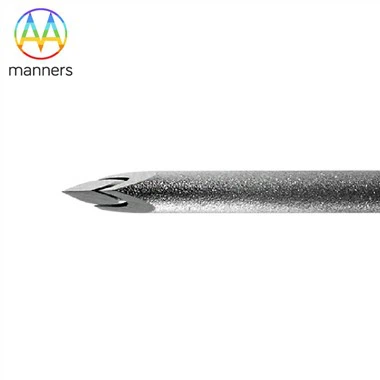
Gauge Selection Guide For Disposable Hypodermic Veterinary Needles
Nov 05, 2026
1. Pain Points of Improper Gauge Matching
Improper gauge selection is the most common error in veterinary injection practice. Many breeders only buy one universal gauge for all animals and drugs, which causes a series of adverse consequences. If the needle is too thick for small pets or newborn animals, it will tear skin and muscle, lead to bleeding, pain stress and poor wound healing. If the needle is too thin for viscous veterinary drugs, oil vaccines and high-concentration antibiotics, the injection speed will be extremely slow, the pressure inside the syringe will rise sharply, and needle blockage, hub separation and drug leakage often occur. Leakage directly reduces the actual intake dose of animals, resulting in insufficient antibody titer and vaccine immunization failure. Some technicians use thick needles for subcutaneous injection, mistakenly piercing blood vessels or deep muscle by accident, causing adverse reactions. In addition, mismatched needles are more likely to bend and break inside animal tissue, leaving needle fragments that need surgical removal. Many buyers also confuse rust problems with gauge parameters. They find that some needles rust quickly after opening, but they do not realize that thin-gauge needle tubes have thinner wall thickness, the passive film is easier to damage, and corrosion risk is higher when exposed to moisture and iron contact. The lack of systematic gauge classification knowledge makes it hard for users to select products accurately from the wide range of 12G to 32G specifications.
2. Material and Anti-Corrosion Principle of Stainless Steel Needles
Disposable hypodermic veterinary needles adopt stainless steel as main material. The anti-rust performance comes from chromium oxide passive film formed on the tube surface. Under sealed, dry and air-isolated storage, the passive film stays intact and effectively prevents oxidation and rusting, just like household stainless steel tableware. However, stainless steel cannot resist galvanic corrosion. When the needle touches iron metal, iron acts as the anode and corrodes preferentially, and rust will transfer and attach to the stainless steel needle surface after a period of contact. The thinner the needle wall (higher gauge), the smaller the safety margin of the passive film, so ultra-fine needles need stricter packaging and storage conditions. All products are produced under ISO9001:2015 quality system and pass SGS material inspection, controlling burr, tip smoothness and metal ion precipitation. The product belongs to injection and puncture medical instrument, and it is designed for single use. After contacting body fluid, the passive film is destroyed, so repeated use will accelerate corrosion and contamination. Customization service supports customers to put forward special tube wall thickness, bevel angle and hub structure requirements via 2D/3D drawings or samples, to solve the pain points of standard gauge cannot adapt to special drugs or equipment.
3. Classification by Gauge and Application Scenarios
The full gauge range covers 12G,14G,16G,18G,19G,20G,21G,22G,23G,25G,26G,30G,31G,32G. We can divide them into four groups. First, heavy-duty thick gauges: 12G,14G,16G. Large bore, high flow rate, suitable for adult cattle, horses and buffalo, for intravenous transfusion, viscous long-acting antibiotic injection and large-volume drug delivery. The thick tube wall resists bending when piercing thick hide. Second, mainstream livestock gauges: 18G,19G,20G,21G,22G. This is the most widely used group, for pigs, sheep, goats and adult poultry, covering intramuscular vaccination, routine treatment and blood sampling. It balances penetration resistance and wound size. Third, fine animal gauges:23G,25G,26G. Designed for subcutaneous injection of dogs, cats, young lambs and weaned piglets, minimize tissue tearing and pain stress. Fourth, ultra-fine micro gauges:30G,31G,32G. For neonatal puppies, kittens, laboratory rodents and low-pain insulin injection, the tiny puncture wound almost has no bleeding. Packaging is flexible, standard export carton as default, and customized packing can be arranged according to buyer demand.
4. Step-by-Step Operation Guide for Gauge Selection
First, confirm three core factors: animal species and weight, injection route (IM/SC/IV), and drug viscosity. For intramuscular injection, choose relatively lower gauge (thicker needle); for subcutaneous injection, select higher gauge (thinner needle). Oily, suspension and high-viscosity drugs must increase the bore size by one or two grades. Second, check needle packaging before opening. If the package is wet, scratched or exposed to iron surfaces during storage, discard it even if the gauge is correct, because rust risk has formed. Third, pre-test drug flow: draw the drug and push the plunger gently. If obvious resistance appears, replace with thicker gauge immediately instead of forcing injection. Fourth, control penetration depth matching gauge: thick needles for deep muscle, fine needles for shallow subcutaneous layer. Fifth, strictly implement single use. After injection, put into sharps container, do not reuse for the next animal even if the needle looks intact. Sixth, record the matching effect: after vaccination, track antibody detection results, and adjust gauge if leakage or immunization failure appears repeatedly.
5. Practical Experience from Veterinarians and Buyers
Practical frontline experience forms a set of simple matching rules. For beef cattle IM vaccination: 16G; dairy cow subcutaneous injection: 18G; finishing pig IM:18G; piglet SC:21G; adult cat routine injection:23G; kitten injection:25G. Many purchasing managers shared that they should not only purchase according to the gauge list, but also confirm the tube wall type. Thin-wall needles have larger inner flow diameter under the same outer gauge, which is very suitable for viscous drugs. Storage experience: ultra-fine needles of 30G–32G cannot be stored in iron boxes. Even short-time contact will cause rust spots, which are hard to be found before use and may bring hidden danger. For overseas distributors, prepare mixed-gauge packs for small veterinary clinics and separate bulk packs for large farms. Another easy mistake: judging needle quality by the thinness. A high-gauge needle is not better; the suitable one is the safest. Many clinics blindly pursue ultra-fine needles and frequently face needle blockage when using oily vaccines.
6. Summary
Gauge selection is the first critical step to exert the performance of disposable hypodermic veterinary needles. The 12G–32G complete specification system is built for different animal sizes, injection routes and drug properties. The stainless steel anti-rust characteristic is affected by gauge wall thickness, packaging and storage environment. Matching the right gauge can reduce animal stress, avoid drug leakage, lower needle breakage risk and guarantee stable vaccine effect. Combined with ISO9001 and SGS certification, standardized selection and operation can fully release the product value.
7. Prospect and Suggestions
As precise veterinary medicine and welfare breeding develop, segmented gauge demand will keep rising. It is suggested that suppliers make gauge comparison charts for distributors and end users, marked with applicable species and drug types. Buyers can use custom drawing service to develop special thin-wall needles for self-developed veterinary preparations. In the long run, veterinary welfare will promote popularization of fine-gauge low-trauma needles for companion animals. Users should establish internal gauge selection SOP, train farm operators and veterinary assistants to avoid random selection. When importing, verify that the stainless steel material report and SGS test document match the ordered gauge batch, to prevent material downgrade.
(Word count: 1302)
Article 3: Customization Service of Disposable Hypodermic Veterinary Needles
1. Pain Points of Standard Needles Cannot Meet Special Scenarios
Standard gauge needles (12G–32G) can satisfy most conventional farm and pet clinic demands, but a large number of professional users still face obvious pain points. Automatic continuous vaccination machines on large farms have special needle seat structures, while standard luer hubs cannot fit tightly, causing liquid leakage and needle dropping during high-speed continuous injection. Some special veterinary drugs, tissue sampling and minimally invasive puncture operations require non-standard bevel angles, special needle lengths or thin-wall structures that are not available in catalog products. Laboratory animal research institutions need micro needles with ultra-precise concentricity, and ordinary mass-produced needles have large tolerance, affecting experimental repeatability. Some regional buyers have special packaging requirements: private label, multi-language instruction, small retail boxes or anti-moisture inner bags for tropical high-humidity markets. Another common trouble is rust risk in customized batches. When custom needles are made with thinner tube walls, improper packaging design will make the passive film easy to contact air and moisture, and rust occurs once touching iron accessories. Many customers cannot describe the demand clearly, and only have physical samples without engineering drawings, which raises communication barriers between buyers and factories. In addition, customized products have high threshold for quality control, and uncertified manufacturers may cut corners on stainless steel material, leading to unstable anti-corrosion performance and failing ISO9001 and SGS standards.
2. Material and Anti-Rust Working Principle
The raw material of customized disposable hypodermic veterinary needles is medical stainless steel. The anti-rust core still relies on chromium oxide passive film. As long as the finished needle is sealed in moisture-proof packaging and isolated from air and water, rust hardly occurs. But customized products often adjust wall thickness, surface polishing and cutting process. If the polishing treatment is insufficient, micro scratches on the tube surface will destroy the passive film, forming rust starting points. Galvanic corrosion risk remains consistent: once stainless steel needle contacts iron for a long time, rust will spread to the needle surface regardless of customized shape. The production system follows ISO9001:2015, and each customized batch can apply SGS material test to verify metal composition and precipitation. Customization does not change the product attribute: it belongs to injection and puncture instrument for single use. After contacting animal body fluid, the surface protection layer is damaged, and repeated use is forbidden. The factory supports two customization paths: customers provide 2D/3D engineering drawings with dimension tolerance, concentricity, bevel and hub requirements; or customers send physical samples, and the factory conducts reverse engineering measurement, drawing confirmation and mold opening.
3. Classification of Customized Needle Projects
Customization can be divided into four major categories. First, structural customization: adjust needle length, bevel angle, single bevel or double bevel, thin-wall/ultra-thin-wall tube, hub shape, connector type to match automatic injectors, continuous syringes and special puncture devices. It can be developed based on any gauge from 12G to 32G. Second, performance customization: sharpening degree, surface silicone lubrication, surface polishing grade, to reduce piercing resistance and tissue damage. Third, packaging customization: standard export carton as baseline, support private label printing, multi-language instruction, independent blister pack, inner box, moisture-proof aluminum foil bag, quantity per pack and outer carton marking according to customer requirements. Fourth, special batch customization: mixed-gauge combination packs, special sterile cycle and batch labeling for research institutes and veterinary hospitals. Some customers combine multiple demands, such as custom thin-wall 21G needles with special hub and retail packing for local veterinary pharmacy sales. All customized schemes will confirm drawings and samples before mass production to avoid dimensional deviation.
4. Operation Guide for Custom Order Process
First, sort out demand information clearly. Users need to specify application scenario, target animal, injection route, matching syringe or automatic equipment, required gauge and special technical parameters. If there is a physical sample, send the sample and mark the modified points; if with drawings, provide 2D dimension drawing or 3D model with tolerance. Second, confirm technical feasibility with the supplier. The factory will evaluate stainless steel tube processing limit, mold cost, minimum order quantity and production cycle. Some ultra-special structures may have higher MOQ and longer lead time. Third, confirm pre-production sample. Check concentricity, sharpness, tightness with matching equipment, anti-rust packaging and marking after sample arrival. Test whether leakage, blockage or bending occurs during injection. Fourth, confirm packaging and certification documents. Clarify whether SGS report and ISO9001 certificate need to be bound to this customized batch, and confirm label content and language. Fifth, arrange trial batch production first. Do not directly place large orders. Use trial batch in actual work scenarios to verify stability, and feedback adjustment suggestions. Sixth, after mass production, implement storage management same as standard needles: keep dry, away from iron products, and use up before expiry.
5. Practical Experience of Customized Needle Users
Large intensive farms that adopt automatic vaccination machines have the most mature customization experience. Custom hubs perfectly lock on the needle seat, reducing the needle drop rate from more than 12% to below 1%. Laboratory animal research teams reflect that custom ultra-fine 31G and 32G needles with high concentricity greatly reduce the deviation of subcutaneous injection volume and improve experimental data consistency. Overseas distributors in tropical rainforest regions prefer customized aluminum foil independent packaging, which effectively reduces moisture invasion and rust complaints. A common pitfall shared by experienced buyers: over-customization will increase cost and delivery cycle. If standard gauge can meet the demand, do not blindly customize. Another point: customized thin-wall needles have thinner passive film, so warehouse management must be stricter, and iron storage racks are forbidden. Before signing the customization contract, confirm the material standard in writing, to avoid suppliers replacing ordinary steel instead of medical stainless steel after mold opening.
6. Summary
Customization service based on 2D/3D drawings or samples is an important supplement to standard disposable hypodermic veterinary needles. It solves the matching pain points of automatic equipment, special drugs, laboratory research and differentiated retail packaging. Customized products still follow the stainless steel anti-corrosion mechanism and single-use medical device rules. Full communication, sample confirmation and trial batch verification are the key links to guarantee customized quality. Combined with ISO9001 and SGS certification, customized needles can form differentiated competitive advantages for end users and distributors.
7. Prospect and Suggestions
In the future, veterinary equipment will develop toward automation and intelligence, so customized needle demand will grow steadily. Suppliers can build modular molds to lower MOQ and shorten sample cycle for small-batch custom orders. Buyers are suggested to reserve complete drawing and sample archives for repeat orders, and keep the material test standard consistent for each batch. For cross-border sellers, combine local veterinary regulatory requirements when customizing labels and packaging. It is also recommended to reserve a small number of standard gauge needles as backup, in case customized batches have delivery delays. When developing new customized needles, take rust resistance and packaging sealing as core assessment indicators, not only focusing on shape and dimension.