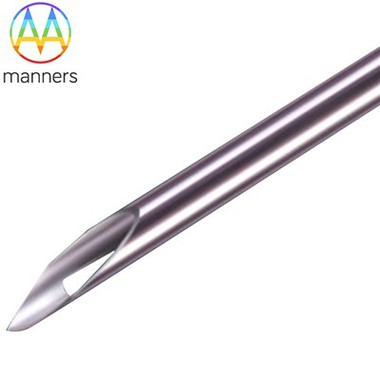
Biosecurity Value Of Disposable Hypodermic Veterinary Needles
Nov 05, 2026
1. Hidden Pain Points in Farm Injection Management
For large-scale livestock farms, repeated reuse of injection needles has long been a neglected high-risk link. Many breeders choose to reuse needles to cut procurement costs, which directly causes cross-transmission of blood-borne pathogens among pigs, cattle and sheep. Shared needles spread viral diseases, bacterial infections and mycoplasma, triggering batch disease outbreaks and heavy economic losses. Besides cross-infection, reused needles bring other obvious troubles: needle tips become dull after repeated piercing, tearing animal skin and muscle tissue, enlarging injection wounds and raising local abscess and inflammation rates. Many operators also encounter rust issues. Even stainless steel needles will rust after long-term contact with iron accessories, humid air and farm sewage. Rust fragments entering animal tissue cause chronic irritation, affect drug absorption and leave residues in meat products. Unstable sterile status also makes vaccine failure a frequent problem, and farmers cannot judge whether low immune effect comes from vaccine quality or contaminated needles. In addition, non-standard needle disposal creates occupational puncture risks for farm staff, bringing zoonosis exposure threats. All these pain points prove that disposable hypodermic veterinary needles are not a simple consumable, but a core component of farm biosecurity system.
2. Anti-Rust and Sterilization Principle of Stainless Steel Needles
The core raw material of qualified disposable hypodermic veterinary needles is medical-grade stainless steel. The anti-rust logic of stainless steel relies on a dense chromium oxide passive film formed on the metal surface. This film can isolate oxygen and water vapor, so the needle hardly rusts when sealed in independent packaging and separated from air and moisture. Just like daily stainless steel spoons and bowls, they stay bright and rust-free under dry storage conditions. However, this passive film is fragile. When the stainless steel needle touches iron parts, galvanic corrosion occurs. Iron has lower potential, and corrosion will spread to the needle surface gradually, forming visible rust spots even if the steel itself is good. The production process adopts gamma or ethylene oxide sterilization, and sealed packaging keeps the sterile environment until opening. The product passes ISO9001:2015 quality management system and SGS material testing, controlling metal precipitation, burr and tip sharpness within medical device standards. The whole design targets one-time use: after injection, the passive film is damaged by animal tissue fluid, body fluid and skin grease, so the needle cannot maintain anti-corrosion performance once unpacked. This principle explains why disposable design is necessary, instead of simply being a cost-driven choice.
3. Gauge Classification and Scenario Matching
The product covers complete gauge specifications from 12G to 32G, following the basic rule: higher gauge number means thinner needle outer diameter. Thick gauges including 12G,14G,16G are suitable for large livestock such as cattle and horses, for injecting viscous oil-based antibiotics, high-concentration nutrient preparations and large-volume fluid infusion. 18G,19G,20G,21G and 22G are mainstream general models, widely used in pig, sheep and goat routine vaccination, intramuscular injection and blood collection. Medium-fine gauges 23G,25G,26G apply to subcutaneous injection of dogs, cats and poultry, reducing tissue trauma. Ultra-fine gauges from 30G to 32G are customized for neonatal animals, laboratory animals and low-pain subcutaneous injection of pet clinic. Apart from standard sizes, the manufacturer supports custom development according to customers' 2D/3D drawings or physical samples. Customization covers needle length, hub structure, bevel angle, thin-wall design and special connector to match continuous injectors, automatic vaccination machines and special veterinary equipment. Packaging schemes are flexible, either standard export cartons or customized inner boxes, blister packs and labeled packs according to client requirements.
4. Standard Operation Guide for On-Site Injection
The first step is gauge selection before injection: confirm animal species, weight, injection route and drug viscosity. Thick, oily slow-release drugs cannot be delivered with ultra-fine needles, otherwise injection resistance will surge, causing needle blockage and drug leakage. Second, check packaging integrity: discard any needle with broken sealing, water stain or packaging deformation, because the sterile barrier has failed and rust risk rises. Take out the needle, install it tightly on the syringe luer hub and test smooth liquid flow before piercing. For intramuscular injection, penetrate vertically to the target muscle layer; for subcutaneous injection, lift the skin fold and insert the needle at low angle to avoid intradermal injury. After injection, withdraw the needle steadily and press the injection site gently. Never reuse the needle even once. After use, put used needles immediately into hard puncture-proof sharps container, do not discard together with ordinary farm garbage. After finishing batch injection, sort the waste and deliver it to professional medical waste disposal agencies. Operators must wear protective gloves to avoid accidental needle sticks.
5. Practical Experience Summarized from Farm Frontline
Many large pig farms have formed mature matching experience after switching to full disposable needles. First, unified gauge allocation: reserve 16G for sows, 18G for finishing pigs, 21G for piglets and 25G for pet dogs on the farm. Second, separate storage: place sealed needle cartons in dry, ventilated warehouses, away from iron racks, metal scrap and water pipes. Do not store needles on iron trays for long time, which will induce galvanic corrosion and rust. Third, batch management: record production batch and expiration date, implement first-in-first-out. Needles stored over 2 years will have aging packaging and higher failure probability. Fourth, cooperate with the supplier for custom packaging: independent single blister pack is better for mobile vaccination teams, while bulk polybag packing is cost-effective for fixed barns. A common mistake shared by veteran veterinarians: many people judge quality only by sharpness, ignoring that rust and sterile failure are more dangerous than blunt tips. Once rusty needles are used, the subsequent treatment cost of animal inflammation is far higher than the needle procurement expense.
6. Summary
Disposable hypodermic veterinary needles are simple in appearance but bear the core responsibility of farm disease prevention and control. Its stainless steel anti-corrosion mechanism, complete gauge matrix and one-time sterile design solve cross infection, rust pollution and tissue injury pain points brought by reused needles. Standardized operation and classified selection can maximize its value, lower the incidence of vaccine failure and animal abscess, and protect the occupational safety of veterinarians and breeders. It is not an optional consumable but a basic hardware input for standardized breeding.
7. Prospect and Suggestions
In the future, livestock breeding will raise higher requirements on food safety and traceability. It is suggested that breeding enterprises build a needle use ledger, bind batch information with vaccination records. Suppliers can expand safety needle designs with retractable sheaths to reduce needle stick injury. For overseas buyers, combine ISO9001 and SGS certification documents to meet regional veterinary device regulatory requirements. Customization service will become a competitive advantage, especially matching automatic vaccination equipment for large intensive farms. Farmers should balance cost and biosecurity, and avoid blind pursuit of low-price inferior needles with unstable stainless steel material and poor sealing.