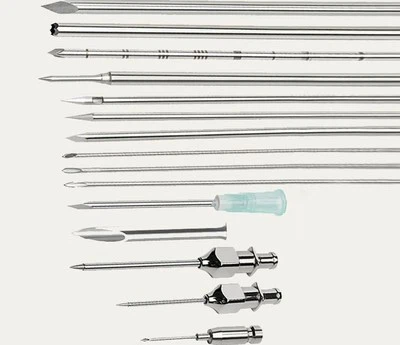
From Mosquitoes To Minimally Invasive Surgery: How Biomimetic Needles Are Reshaping The Medical Puncture Experience
Apr 12, 2026
From Mosquitoes to Minimally Invasive Surgery: How Biomimetic Needles Are Reshaping the Medical Puncture Experience
Introduction: The Century-Old Needle-Why Is It Undergoing a Revolution Today?
The hypodermic needle is one of the most fundamental and ubiquitous inventions in medical history. Since French physician Charles Pravaz invented the modern metal syringe in 1853, the basic form of this technology-a hollow, sharp tube-has remained virtually unchanged. Amidst over 16 billion injections administered globally each year, it bears the heavy responsibility of everything from vaccination to cancer therapy, yet it remains a source of fear for millions due to puncture pain, tissue damage, and limitations in operational precision.
However, as we enter the era of precision medicine with mRNA vaccines and immunotherapy, this century-old medical tool has finally reached its evolutionary moment. A revolution driven by biomimicry is drawing inspiration from insect mouthparts, ovipositors, and even parasitic attachment structures to redefine the meaning of the "needle."
I. The Mosquito's Mouthpart: A Revolution in Puncture Mechanics from "Pushing" to "Cutting"
The Physical Nature of Pain
The primary cause of pain in traditional hypodermic needle procedures lies in its puncture mechanism. The process for a standard bevel tip is essentially one of forced separation: the wedge-shaped tip does not "cut" tissue but instead squeezes collagen fibers laterally under immense pressure. This "blunt dissection" requires high insertion force and stretches the collagen network surrounding nociceptive nerve endings, triggering intense pain.
The Mosquito's Painless Wisdom
The mosquito's success lies in completely subverting this physical process. According to a review in Biomimetic Intelligence and Roboticsby UC Berkeley mechanical engineer Yichi Ma, the mosquito's proboscis is a precision puncture system optimized by hundreds of millions of years of evolution:
Micro-scale Serrated Structures: Unlike smooth metal bevels, the mosquito's proboscis tip is covered in micron-sized serrations. These serrations cut through tissue fibers layer by layer during penetration rather than pushing them aside. A 2020 Sino-US joint study confirmed that this design reduces insertion force by 27%-a significant decrease in puncture resistance in medical engineering terms.
Material Gradient Design: The mosquito's mouthpart features a unique mechanical gradient-soft at the tip and gradually stiffening towards the base. This allows the tip to conform to tissue deformation while the rigid section provides propulsion. Medically, this can be achieved through composite manufacturing, such as using biocompatible polymers at the tip and stainless steel or Nitinol (NiTi) alloys for the shaft.
Dynamic Puncture Strategy: Mosquitoes do not simply "push" their mouthparts in. They first stretch the skin slightly to reduce tension, then vibrate the proboscis at high frequency with micro-amplitudes during penetration. This "vibration-assisted insertion" disrupts static friction between the needle and tissue, a technique clinically achievable via integrated micro-piezoelectric actuators.
Clinical Value: Beyond Pain Control
The value of mosquito-inspired needles extends far beyond reducing injection pain; their advantages are particularly evident in precision biopsy:
Prostate biopsy is the gold standard for assessing male prostate health, but traditional biopsy needles often cause gland displacement due to high insertion forces, leading to sampling errors. A 2020 University of Michigan study showed that using low-insertion-force biomimetic needles reduced prostate displacement by over 60%. This translates to a significant improvement in biopsy accuracy-potentially a matter of life and death for the detection of early-stage small tumors.
In ophthalmic surgery, requirements for puncture precision are even more stringent. Procedures like subretinal injection require needles to pass through tissue layers less than 0.5 mm thick without damaging surrounding structures. The fine-cutting characteristics of mosquito-inspired needles make them an ideal choice.
II. The Wasp Ovipositor: An Engineering Breakthrough for Deep Puncture
Physical Challenges of Long-Needle Puncture
In tumor interventional therapy and deep tissue biopsy, needles often exceed 150 mm in length. These needles face a core engineering challenge known as Euler buckling-when a slender column is subjected to axial compression, it bends laterally. Clinically, this manifests as the needle "veering off course" within soft tissue or even fracturing due to excessive bending.
The traditional solution is to increase the needle diameter, which inevitably increases tissue trauma. This presents a classic engineering dilemma: strength, fineness, and flexibility cannot be achieved simultaneously.
The Wasp's Solution: Segmented Sliding Structure
The female wasp's ovipositor offers an exquisite solution. This "deep puncture system," one of nature's most precise, consists of three independently sliding valves resembling a retractable telescope. By controlling the alternating slide of these three valves, the wasp drills deep, straight channels into dense wood to precisely deposit eggs.
Scientists at TU Delft mimicked this structure using bundles of nickel-titanium alloy wires to create a "segmented puncture needle" measuring 200 mm in length with a diameter of 0.8 mm. Its working mechanism is as follows:
Three-Stage Alternating Advance: Section A advances while B and C provide radial support → Section B overtakes A → Section C overtakes B.
Continuous Support: At any given moment, at least two sections remain in contact with the tissue, providing anti-buckling support.
Curved Navigation Capability: By controlling the differential advancement distance of each segment, a controllable curved path can be achieved.
Clinical Applications: New Possibilities for Minimally Invasive Surgery
This biomimetic needle opens up entirely new possibilities for minimally invasive surgery:
Liver Tumor Ablation: Traditional radiofrequency ablation requires ultrasound-guided placement of a puncture needle into the center of the tumor. For deeply located tumors or those surrounded by major blood vessels, traditional straight needles struggle to reach them. The curve navigation capability of the wasp-inspired needle allows for percutaneous precision ablation while "bypassing" obstacles, avoiding open surgery.
Deep Brain Stimulation (DBS): DBS for Parkinson's disease requires precise implantation of electrodes into the subthalamic nucleus. Traditional surgery involves drilling a burr hole in the skull to implant a rigid guide needle. The wasp-inspired needle can navigate a curved path through a smaller bone opening, avoiding critical blood vessels and functional areas, thereby significantly reducing surgical risk.
Natural Orifice Transluminal Endoscopic Surgery (NOTES): In transoral or transrectal procedures, instruments must navigate narrow, tortuous lumens. The flexibility of the wasp-inspired needle makes it an ideal endoscopic aid.
III. Functional Evolution: From Passive Conduits to Intelligent Systems
Expandable Needles: A Stable Solution for Long-Term Indwelling
The clinical challenge with venous catheters (cannulas) lies in stability and safety during long-term indwelling. Traditional catheters rely on external dressings for fixation, making them prone to displacement due to patient movement, which increases the risk of phlebitis and infection.
Inspired by certain fish parasites, researchers have developed "distally expandable needles." Using temperature-responsive hydrogels or shape-memory alloys, the tip expands controllably once inside the blood vessel, forming an anchoring structure:
Physical Anchoring: The expanded structure increases contact area with the vessel wall, preventing slippage.
Bio-sealing: The expansion conforms to the inner wall, reducing blood leakage and bacterial invasion.
Drug Elution: The expandable body can be loaded with antimicrobial or anticoagulant drugs for localized sustained release.
Clinical trials show this design reduces indwelling-related complications by 40% and extends dwell time to over 7 days.
Surface Microchannel Needles: A Revolution in Large-Area Drug Delivery
Intradermal vaccination (e.g., BCG, rabies) requires forming a "bleb" in the dermis. Traditional techniques rely heavily on operator experience, resulting in high failure rates.
Inspired by the surface microstructures of Hemiptera insects (like bed bugs), scientists developed "surface microchannel needles." These needles feature complex networks of micron-scale grooves etched onto the surface. When fluid passes through, it forms a uniform liquid film along preset paths on the needle surface, achieving:
Large-Area Delivery: A single puncture enables uniform drug delivery across a 5–8 mm diameter area.
Dose Control: Precise control over fluid distribution via microchannel design.
Immune Enhancement: Intradermal delivery activates stronger immune responses, particularly suitable for vaccines.
In influenza vaccine clinical trials, intradermal administration using microchannel needles increased antibody titers by 2–3 times compared to traditional intramuscular injection.
IV. Industry Prospects: Value Restructuring of a Multi-Billion Dollar Market
Market Size and Driving Factors
According to WHO data, approximately 16 billion injections were administered globally in 2018. Calculated at 0.1–0.5 per needle, the market size ranges from 1.6to8 billion. However, this figure underestimates the potential value of biomimetic needles:
Premium Capacity: Traditional needles are highly standardized commodities with gross margins below 20%. Technology-driven biomimetic needles command gross margins of 60–80%. For instance, while traditional insulin pen needles cost about 0.30,"comfort"productswithsuper−lubriciouscoatingssellfor1.50.
Market Expansion: Approximately 25% of the global population suffers from some degree of trypanophobia (fear of needles), with 5% experiencing severe phobia. Biomimetic needles can convert this "treatment-avoidant" demographic into actual users. In diabetes care alone, this represents billions of incremental insulin needle units.
Value-Based Healthcare: In value-based payment systems, products that reduce complications and improve adherence command premiums. Biomimetic biopsy needles improve diagnostic accuracy, potentially saving hospitals tens of thousands of dollars by avoiding unnecessary surgeries.
Technical Barriers and Industrial Chain Restructuring
Manufacturing biomimetic needles involves precision micromachining, biocompatible materials, and microfluidic control, creating high barriers to entry:
Micro/Nano Manufacturing: Replicating mosquito serrations or etching microchannels requires sub-micron precision, necessitating advanced processes like laser micromachining, Focused Ion Beam (FIB), or micro-injection molding. Only a few global companies (e.g., Terumo, BD) possess this capability.
Materials Science: Development of gradient materials, shape-memory alloys, and stimulus-responsive hydrogels requires deep expertise. Temperature-responsive polymers from Asahi Kasei (Japan) and Nitinol technology from Medtronic (USA) form core patent barriers.
Clinical Validation: The clinical validation cycle for medical devices spans 3–5 years with costs ranging from millions to tens of millions of dollars, requiring both technical strength and clinical research capabilities.
Business Model Innovation
Biomimetic needles are spawning new business models:
Consumables + Services: Companies sell not just needles but also value-added services like puncture force monitoring and navigation software. Clearside Biomedical's suprachoroidal injection system derives its core value from its patented delivery pathway rather than the needle itself.
Data-Driven: Smart needles can monitor parameters like puncture force and tissue impedance in real-time. This data optimizes procedures and trains AI algorithms. BD is building the world's largest puncture database to support next-gen product development.
Ecosystem Collaboration: Needle manufacturers partner with pharmaceutical companies to develop "drug-device combination products." For example, insulin manufacturers collaborate with needle companies to develop "painless injection systems," sharing market revenue.
Conclusion: Humanism on the Tip of a Needle
The significance of biomimetic needles extends far beyond technological innovation. They represent a profound shift in medical engineering-from pursuing mere "functionality" to focusing on "patient experience." In this transition, the needle is no longer just a conduit for delivering drugs but a vessel carrying the humanitarian mission of reducing suffering, respecting dignity, and enhancing quality of life.
When we look back at medical history, the discovery of penicillin saved hundreds of millions of lives, yet the pain of injecting it became a collective memory for generations. The revolution in biomimetic needles reminds us that true medical progress exists both in grand breakthroughs that save lives and in tiny improvements that alleviate pain.
In the future, when children no longer cry from fear of injections, when chronic patients no longer evade treatment due to dread, and when deep-seated tumors can be cured through wounds the size of a needle tip, we will realize that this scientific exploration-which began with the mosquito's mouthpart and the wasp's ovipositor-ultimately tells an immortal story of how humanity learns with humility from nature and alleviates suffering with exquisite craftsmanship.