From Cleaner To Sculptor: The Evolution Of Orthopedic Shaver Blades And Their Central Role in Arthroscopic Minimally Invasive Surgery
Apr 28, 2026
From "Cleaner" to "Sculptor": The Evolution of Orthopedic Shaver Blades and Their Central Role in Arthroscopic Minimally Invasive Surgery
The arthroscopy article you shared vividly describes how this technology solves "big problems" through "small holes." Behind the significant advantages of "minimal surgical trauma" and "rapid recovery" lies a seemingly inconspicuous yet crucial tool that plays the role of the core executor-the Orthopedic Shaver Blade. It has long transcended its initial positioning as a simple "cleaner" of pathological tissue, evolving into a "tissue engineer" capable of performing precise "sculpting" and "shaping" within the microscopic space of the joint. It is the key factor determining whether arthroscopic surgery can progress from "seeing" to "curing well."
I. Functional Dimensionality Upgrade: The Paradigm Shift from "Excision" to "Restorative Shaping"
The design philosophy of early arthroscopic shaver systems was "efficient removal." The blade was seen as a high-speed miniature cutter, with the goal of physically removing "bad tissue" like hypertrophic synovium, torn meniscus fragments, and loose bodies. However, as the indications for arthroscopy vastly expanded and the philosophy of functional preservation deepened, the connotation of shaving underwent a fundamental transformation:
1. From "Total Synovectomy" to "Selective Synovial Ablation": In treating conditions like rheumatoid arthritis or pigmented villonodular synovitis, the goal is not to remove all synovium (which would affect joint lubrication), but to precisely ablate the thickened, hyperemic inflammatory synovial layer while preserving the underlying healthy secretory layer. This places extremely high demands on the selectivity of the blade. Modern shaver systems, through precisely adjustable rotational speed (RPM) and blades with different window designs, combined with the surgeon's "feel," achieve "targeted removal" of pathological tissue while preserving the physiological functional foundation of the joint.
2. From "Meniscectomy" to "Meniscectomy/Partial Meniscectomy": This is the most classic case of a paradigm shift. In the past, torn menisci were often treated with "subtotal resection." Today, wherever blood supply allows, the goal shifts to "repair." The Orthopedic Shaver Blade plays a dual role here as both the "preparatory team" and the "sculptor": First, it needs to precisely and stably resect unstable tear flaps, creating a fresh, viable wound bed. More crucially, it must then shape the remaining meniscus edge into a smooth, stable slope or curvature to restore its biomechanical functions of dispersing compressive stress and maintaining joint stability. Specialized curved meniscus blades, with their unique angled designs, allow surgeons to perform three-dimensional "sculpting" of the meniscus within the slit-like joint space-far beyond simple "cutting away."
3. As the "Vision Pioneer" and "Space Creator": In surgeries of anatomically complex joints like the shoulder, hip, and ankle, hypertrophic synovium and adhesive scar tissue often severely obstruct the view. The shaver blade first undertakes the task of the "pathfinder," efficiently and clearly removing these obstacles, creating a clear, spacious operational "stage" for subsequent core steps like rotator cuff repair, labral repair, or cartilage transplantation. Its efficiency directly determines the overall fluidity and duration of the surgery.
4. Assisting in Wound Bed Preparation for "Biological Healing": In anterior cruciate ligament reconstruction, bone tunnels must be created in the tibia and femur, and remnants cleared. The shaver blade (often combined with a burr) is used to precisely debride the tunnel openings, remove soft tissue, and "freshen" the bone bed that will contact the graft tendon, sometimes even performing "microfracture" stimulation to promote healing between the graft and bone. Here, its role is to create the optimal local microenvironment for biological integration.
II. Technological Core: A Precision System Tailor-Made for "Intra-Articular Fine Work"
To achieve the aforementioned complex functions, the modern Orthopedic Shaver Blade is the culmination of materials science, fluid dynamics, and precision manufacturing:
- The Pursuit of Material and Process Limits: Blade materials have evolved from traditional stainless steel to super-hard stainless steel, special alloys (e.g., tantalum coating), and even single-use polymer composites. The core challenge is balancing极致 sharpness (reducing tissue traction trauma) with极致 wear resistance (maintaining cutting efficiency over long procedures). Single-use blades, through precision injection molding, can achieve complex internal flow channels and anti-adhesion coatings, ensuring consistent performance while eliminating cross-infection risks.
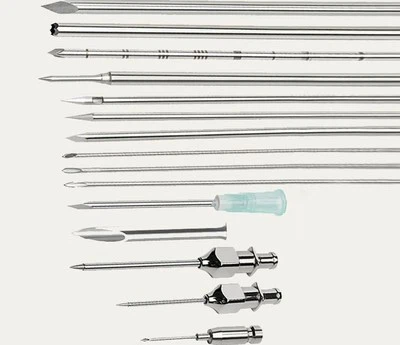
- A "Scenario-Based" Blade Family: No single blade can handle all scenarios. Consequently, a vast family has been developed for different tissues and procedures: Full-radius resectors for extensive synovectomy; Meniscus blades (various curvatures) for fine meniscal shaping; Debridement blades (small window, blunt edge) for operations near delicate areas like cartilage; Burrs for osteophyte removal and bone surface preparation; Radiofrequency ablation probes (often integrated into the same system) for hemostasis and soft tissue shrinkage. Each is the optimal engineering solution for a specific clinical problem.
- Fluid Dynamics: The "Guardian" of Clear Vision: The shaver system and irrigation system must work in perfect harmony. The precise design of the negative pressure suction channel inside the blade must strike a delicate balance between efficiently removing tissue debris and maintaining intra-articular fluid pressure for a clear visual field. Poor fluid dynamics lead to blurred vision and capsule collapse, halting the surgery. The side port positions and inner wall smoothness of the blade are the result of extensive fluid dynamics calculations to minimize clogging and turbulence.
III. The "Enabler" and "Definer" of Clinical Value
Advancements in shaver blade technology directly define the boundaries of arthroscopic surgical capabilities:
- The Foundation for Complex Surgery: Without efficient, precise, and safe shaving technology, current routine procedures like arthroscopic repair of massive rotator cuff tears, hip labral reconstruction, or ankle ligament repair would either be unfeasible or significantly less effective, forcing many patients to undergo much more traumatic open surgeries.
- The Pillar of Fast-Track Surgery: Precise shaving means less damage to healthy tissue, more complete lesion removal, and less postoperative hematoma. This directly supports early postoperative mobilization and significant pain reduction, serving as the key physical foundation for achieving "same-day surgery" and enhanced recovery after surgery (ERAS) protocols.
- The Material Embodiment of Surgical Philosophy: When a blade can precisely "sculpt" a meniscus rather than "resect" it, and can "clean" the subacromial space without "damaging" the acromion shape, the philosophy of arthroscopic surgery elevates from crude "lesion excision" to exquisite "functional structure repair and preservation." The Orthopedic Shaver Blade is precisely the critical tool that transforms this advanced minimally invasive philosophy from concept into reality.
Conclusion
Therefore, within the grand narrative of arthroscopy, the Orthopedic Shaver Blade has evolved from a single-function accessory into a "core precision terminal" that determines surgical success. Its development history is a continuous chronicle of innovation centered on "more precise, more efficient, safer, and smarter." In today's pursuit of极致 limits in minimally invasive surgery, the performance of the shaver blade directly defines the upper limit of skill a surgeon can achieve within the microscopic world of the joint. In the future, with the integration of intelligent sensing and robotic technology, it may evolve into a smart terminal capable of real-time feedback and adaptive adjustment. Yet, its core mission remains unchanged: to be the surgeon's most trusted "precision hand" for performing "major procedures" through "small holes."