Extension Of Hand, Eye And Mind: The Core Art And Science Of OPU Needles in Equine Ovum Pick-Up
Apr 29, 2026
Extension of Hand, Eye and Mind: The Core Art and Science of OPU Needles in Equine Ovum Pick-Up
In the equine OPU operating room, the ultrasonic screen serves as the eye, the operator's judgment as the mind, and the OPU needle traveling between the rectal wall and ovary as the most critical extension of the hand. Every advancement, retraction, start and stop is far from mechanical repetition, but a comprehensive craft integrating in-depth anatomical knowledge, real-time image interpretation, delicate tactile control and thorough device understanding. From the operator's perspective, this paper discusses core operational skills, practical challenges and optimized solutions for OPU needle application, illustrating its role as a vital bridge connecting subjective intention and objective procedural success.
I. Pre-Operative Calibration for Human-Device Integration: Building Reliability
Pre-procedural system preparation and inspection are essential before mare handling.
1. Ultimate Tip Inspection
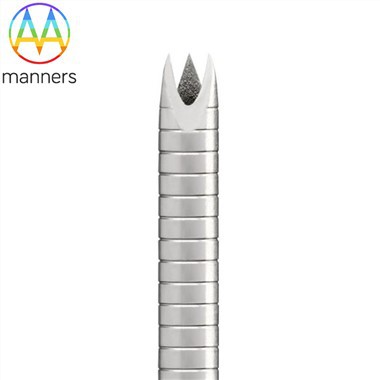
For reusable needles, microscopic examination for bent tips and burrs is mandatory after each sterilization. Even micron-level defects generate excessive resistance during tough follicular membrane penetration, causing tissue tearing rather than clean incision. For echogenic models, ultrasonic simulation fluid testing verifies visualization brightness and stable beacon function.
2. Silent Fluid System Testing
Connect the needle to the pump for blank simulated aspiration. Inspect instant stable pressure activation, crisp shutdown and no backflow from residual pressure. Smooth systems operate nearly silently; abnormal noise indicates pipeline leakage or valve malfunction. Operators must fully adapt to footswitch feedback and handle balance for intuitive manipulation.
3. Seamless Temperature Chain Management
Ensure full-process temperature control - including flushing fluid containers, incubation chambers, connecting tubes and needle handles - stably maintained at 37–38°C. Cold instruments and fluids trigger irreversible cold shock damage to fragile oocytes.
II. Intra-Operative Microscopic Craft: The Precision of Controlled Puncture
True operational challenges emerge once the needle enters living tissues under ultrasonic guidance.
1. Visualized Puncture Planning and Execution
- Trajectory Design: Operators reconstruct 3D anatomical positioning from 2D ultrasonic views, planning optimal routes with three principles: shortest access, major blood vessel avoidance and sequential follicle penetration. Echogenic tips clearly display the angle between the needle and ovarian capsule for fine adjustment, enabling near 90° vertical follicle entry to minimize tract length and follicular fluid leakage.
- Ballistic Control: Puncture relies on flexible wrist movement and intrinsic tip sharpness, rather than rigid arm force. Premium needles deliver a distinct penetration "pop" signaling successful intracavitary entry. Ideal positioning requires central tip suspension away from inner walls to prevent lumen blockage during aspiration.
2. The Golden Second of Negative Pressure Aspiration
Activate moderate negative pressure instantly upon confirmed intracavitary placement; delayed operation leads to tissue displacement and fluid leakage. Coordinate footswitch control with real-time ultrasonic observation, ceasing suction immediately once follicles fully collapse. Continuous aspiration of empty follicles increases unnecessary oocyte friction damage. Moderate low stable pressure (90–110 mmHg) preset by intelligent pumps balances efficiency and biosafety.
3. Controlled Flushing Rhythm for Dual-Lumen Needles
After primary aspiration and follicle collapse, inject 0.2–0.5 mL pre-warmed medium for slight follicle re-expansion without overpressure leakage, followed by secondary aspiration. A gentle flush-and-suction cycle effectively recovers residual wall-attached oocytes overlooked in initial collection.
4. Ballet-Style Multi-Follicle Puncture
Ovaries often contain asynchronous developing follicles. Adopt systematic sequencing (near to far, large to small) to avoid excessive probe movement and target loss. Smooth, limited intra-ovarian needle movement prevents transverse tissue tearing, resembling precise ballet manipulation.
III. Post-Operative Final Protection for Oocyte Transit
Oocyte risks persist after intracavitary aspiration until safe transfer to petri dishes.
1. Rapid Sample Transfer: Flush tubular contents into pre-warmed constant-temperature collection tubes immediately after unilateral ovarian harvesting to minimize prolonged oocyte exposure within narrow lumens.
2. Gentle Rinsing: Control flow velocity during sample transfer to avoid direct high-pressure water impact on fragile oocytes and cumulus complexes.
IV. Emergency Response for Special Clinical Scenarios
- Hemorrhagic Follicles: Cease operation immediately upon intra-follicular hyperechoic blood accumulation to prevent needle blockage and cross-sample contamination; high-performance needles enable rapid follicle switching for minimal losses.
- Viscous Follicular Fluid: Use dual-lumen flushing for fluid dilution and improved aspiration, or select slightly larger gauge needles with careful trauma risk assessment.
- Mobile Ovaries: Stabilize ovarian positioning via the rectal probe, relying on high-visibility echogenic tips for dynamic rapid precision puncture.
Conclusion
Successful equine OPU stems from perfect integration of operator proficiency and high-quality devices. The OPU needle is never a passive tool, but a core extension of tactile perception, visual judgment and operational logic. A well-designed, reliable needle accurately executes operational intentions and delivers clear visual and tactile feedback to support optimal decision-making. Mastery of needle characteristics differentiates ordinary technicians from specialized OPU practitioners. When professional techniques, premium instruments and rich experience align, harvesting viable genetic materials from valuable mares achieves maximum stability, efficiency and animal friendliness - embodying the exquisite balance of precision and practicality in modern equine reproductive medicine.