How Quincke Spinal Needle Manufacturers Balance Minimally Invasive Design And Clinical Operability
Aug 03, 2026
Manufacturers face a core design challenge: balancing minimal tissue trauma and operational stability when developing Quincke Spinal Needles. Ultra-fine needles reduce dural injury but bend easily; thick needles bring strong rigidity yet create larger puncture wounds. Reliable manufacturers rely on clinical data to optimize each gauge specification and form a scientific gradient product system represented by 22G 90mm.
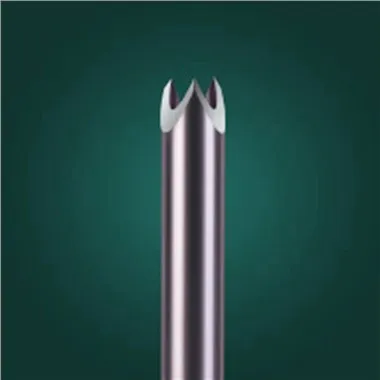
The 22G black-coded Quincke Spinal Needle is recognized as the balanced universal specification after repeated clinical verification. Its shaft rigidity effectively avoids frequent bending during routine lumbar puncture. The proper outer diameter controls dural incision size to lower the incidence of postdural puncture headache. This is why this specification becomes the best-selling product among most manufacturers.
For large-size 16G–19G products, manufacturers enhance tube wall thickness to improve penetration performance for difficult puncture scenarios such as ligament calcification and obese patients. Meanwhile, product manuals clearly mark applicable scenarios to prevent abuse in routine minimally invasive treatment. For ultra-fine 24G–27G needles, manufacturers optimize stainless steel alloy ratio to appropriately improve toughness and reduce bending probability within material limits.
Manufacturers also provide operation guidance as supporting materials. Combined with lumbar puncture clinical knowledge: adult average CSF volume is 150ml, renewed every about 8 hours. Extracting small-volume CSF will not cause damage to patients. Standardized operation and correct lateral "shrimp posture" are more conducive to successful puncture. Professional manufacturers attach standardized operation brochures inside packages to help medical staff use products correctly.
During product iteration, excellent manufacturers collect feedback from anesthesiologists and neurologists continuously. Feedback about puncture smoothness, CSF outflow speed and postoperative complications guides continuous optimization of tip grinding and tube wall parameters. Factories lacking clinical communication only copy fixed product designs and cannot realize iterative upgrading.
In market competition, manufacturers that achieve balanced product design gain long-term recognition from medical institutions. The graded gauge system enables hospitals to select matched specifications according to patient age, body shape and treatment purpose. Supported by stable manufacturing technology, Quincke Spinal Needle manufacturers deliver coordinated solutions of safety and operability for global lumbar puncture diagnosis and treatment.