Evolution Of Technological Innovation And Precision Manufacturing in Disposable Blood Collection Needles
Apr 16, 2026
Evolution of Technological Innovation and Precision Manufacturing in Disposable Blood Collection Needles
The evolution from the crude metal "bloodletting needles" of history to the highly sophisticated disposable blood collection needles of 2026 constitutes a history of microscopic innovation in medical devices. The core design philosophy of modern blood collection needles has undergone a complete transformation-from "bloodletting" to the "precise, safe, and comfortable acquisition of micro-diagnostic samples." Leading global manufacturers are continuously redefining the blood collection experience through the deep integration of material science, precision machining, and human-centric design.
The Revolution in Needle Tip Design: From "Penetration" to "Minimally Invasive Puncture"
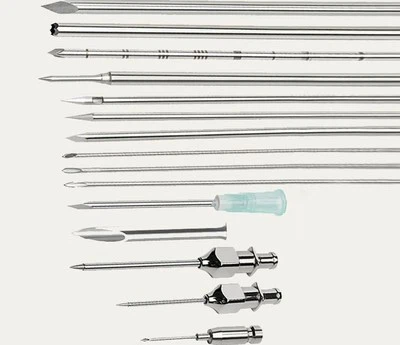
The needle tip is the key determinant of the puncture experience (pain level and tissue trauma). Modern blood collection needles have undergone tremendous innovation in tip design:
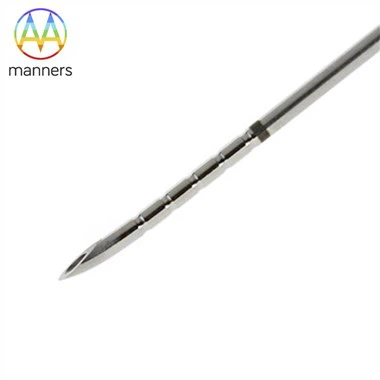
Triple-Bevel Tips and Laser Cutting: While traditional injection needles typically feature double-bevel tips, high-end blood collection needles (especially venous needles) widely adopt triple-bevel designs. Utilizing precision five-axis laser cutting technology, three extremely sharp cutting facets are formed. This design penetrates the skin with a smaller force and a sharper angle, significantly reducing pain and stimulation of nerve endings. Laser cutting ensures nanometer-level precision and consistency in tip geometry, eliminating burrs.
Lancet Puncture Technology: The technology for capillary blood sampling lancets (used for glucose monitoring) is even more diverse. Beyond traditional vertical puncture styles, there are sliding and oscillating tip designs. Sliding lancets create a small lateral motion during penetration, more effectively severing tissue fibers, thereby obtaining a larger blood volume with the same perceived pain level. Plating technologies (e.g., special lubricating coatings) further reduce puncture resistance.
Intelligent Evolution of Safety Devices: From "None" to "Passive Safety"
Preventing needlestick injuries has been the most significant technological advancement in blood collection needles over the past two decades. According to international standards (such as ISO 23908), safety devices have become standard equipment for venous blood collection needles.
Passive Safety Devices: This is the current mainstream direction, driven by regulations. After blood collection is complete, the device automatically and permanently locks or sheaths the needle tip via a spring, clip, or other mechanical structure, requiring no additional action from the operator. For example, some designs feature a shield that automatically pops out and locks upon withdrawal; others involve the needle tip being retracted and locked into the hub during withdrawal. This maximizes the elimination of needlestick risks caused by operator forgetfulness or error.
Active Safety Devices: Require the operator to manually trigger the safety mechanism (e.g., sliding a shield) after withdrawal. While they offer protection, their reliance on human action makes them slightly less safe than passive devices and they are gradually being replaced.
Integrated Safety Design: The safety mechanism is integrated into the needle device itself, eliminating extra assembly steps and simplifying clinical workflow.
The Science of Materials and Coatings: The Pursuit of Ultimate Comfort and Performance
Ultra-Thin Wall Stainless Steel Tubing: Needle tubes utilize medical-grade 304 or 316L stainless steel, drawn into ultra-thin wall tubes via advanced processes. This achieves a finer outer diameter (e.g., 33G lancets with a diameter of only ~0.20mm) while ensuring sufficient structural strength, thereby minimizing tissue damage and pain.
Ultra-Lubricious Hydrophilic Coatings: A layer of hydrophilic polymer (e.g., PVP) is coated onto the outer surface of the needle. The device is easy to handle when dry, and upon contact with tissue fluid, the coating instantly hydrates to form an extremely smooth lubricating layer. This drastically reduces puncture friction (by up to 70% or more), ensuring smoother insertion, further reducing patient discomfort, and minimizing damage to the vascular intima.
Application of Polymeric Materials: Hubs, sheaths, and safety device housings widely use medical-grade polymers such as Polycarbonate (PC), ABS, and Polypropylene (PP). These materials require excellent biocompatibility, chemical stability, and mechanical properties to ensure smooth operation and reliable triggering of safety mechanisms.
Precision Manufacturing and Full-Process Quality Control
Behind every high-quality blood collection needle lies a highly automated precision manufacturing system:
Fully Automated Production Lines: From stainless steel tube cutting, laser forming of the tip, high-precision assembly of the needle to the hub, installation of the safety device, to final cleaning, sterilization, and packaging-all are completed by automated equipment in Class 10,000 (ISO 8) or higher standard cleanrooms.
Machine Vision Online Inspection: High-resolution cameras deployed at key stations on the production line perform 100% online inspection of every needle's tip integrity, tube straightness, safety device position, and printed markings to ensure zero defects.
Electropolishing and Cleaning: After laser cutting, the needle tubes undergo electropolishing to remove microscopic burrs and achieve a mirror-smooth finish on both inner and outer surfaces. This reduces flow resistance (especially critical for venous needles) and cellular damage. This is followed by multiple stages of ultrasonic cleaning to thoroughly remove all processing residues and particles.
Sterilization Validation: Final products undergo validated sterilization processes (e.g., Ethylene Oxide or Radiation sterilization), followed by rigorous sterility testing and residual sterilant detection.
Future Technology Outlook
Painless/Micro-pain Technology: Researching the use of high-frequency micro-vibration or localized micro-heating to interfere with pain signal transmission, aiming for a "painless" or "micro-pain" experience during physical puncture.
Smart Collection and Blood Volume Sensing: Integrating miniature optical or pressure sensors to sense the volume of blood collected in real-time, automatically stopping the process once the preset volume is reached to prevent insufficient or excessive sampling.
Integrated Sample Processing: Integrating the blood collection needle with a micro-sample pre-processing unit (e.g., plasma separation, pre-filled anticoagulants) to achieve "collection-ready," simplifying the pre-analytical workflow.
Personalized Customization: Providing lancing devices with adjustable penetration depths based on patient skin thickness, age, and other factors to achieve personalized blood collection.
In 2026, the blood collection needle has completely shed the crude image of its historical prototype, the "bloodletting needle," becoming a technological crystallization that fuses cutting-edge materials, precision mechanics, biomechanics, and clinical needs. The goal of its continuous innovation remains centered on the three core dimensions of enhancing medical safety, improving patient experience, and ensuring testing quality.