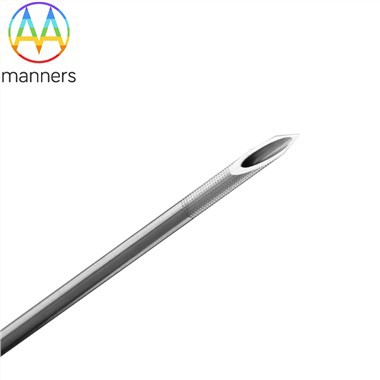
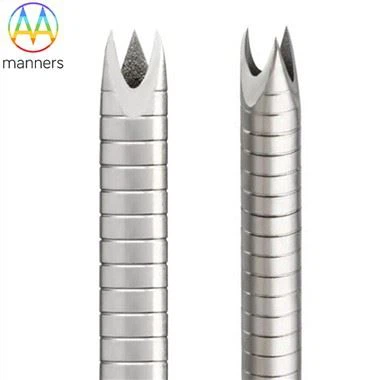
Drainage Cannula
Sep 13, 2026
Pain Point
Drainage devices deployed in nephrostomy, bile duct decompression, pleural effusion management, abscess drainage, and ventriculostomy must maintain uninterrupted fluid egress without clogging, collapsing, or eroding delicate surrounding tissues. Current solutions are fraught with limitations: polymer drains readily accumulate biofilm and clot material, leading to premature occlusion; stiff solid metal tubes traumatize mucosal surfaces and lack the compliance needed for patient comfort; braided drains fray over time and create imaging artifacts under fluoroscopy. Clinicians routinely express frustration over "blocked drains at 2 a.m." and "tip migration into parenchyma," both of which necessitate emergency re-intervention. The absence of a drainage cannula that harmonizes structural integrity, controlled flexibility, and optimized fluid dynamics represents a significant unmet need in interventional medicine.
Principle
Drainage cannula tubes employ a sophisticated lumen-plus-slot strategy. The continuous tube wall carries axial stiffness to resist buckling under tissue pressure, while laser-created side slots or radial windows enable multi-directional percolation of fluids without sacrificing shaft integrity. Cut density along the tube length directly controls flexibility gradients; slot geometry dictates suction, bile, or CSF flow characteristics. Nitinol integration adds kink recovery for dynamic anatomical environments, while 316L stainless steel provides essential chloride corrosion resistance for urine and biliary applications. The 0.012 mm minimum kerf width allows for intricate, precisely positioned drainage windows that maximize open area while preserving sufficient uncut bridges to maintain column strength and torsional stability during placement and removal.
Equipment Classification
- Side-Slot Drainage Cannula: 316L stainless steel for biliary and nephrostomy applications, featuring strategically placed lateral slots for optimal fluid egress.
- Radial-Window Drainage Cannula: Designed for CSF and ventricular drainage where controlled, multi-port fluid exit prevents tissue suction and occlusion.
- Continuous-Spiral Drain: Provides uniform softness for drainage in fragile, sensitive tissues requiring minimal mechanical irritation.
- Interrupted-Spiral Drain: Pushable drain configuration for deep cavity access where some axial rigidity is needed during advancement.
- Nitinol Drainage Cannula: Specifically engineered for tortuous abdominal and pelvic drainage paths where shape recovery prevents malposition.
Practical Guide
- Flow Engineering: Compute required flow rate from lumen inner diameter plus cumulative side-slot open area; validate with simulated bodily fluids, not just water.
- Structural Integrity: Avoid placing slots too close to the hub region, as this weakens torque transmission and may cause proximal failure during manipulation.
- Stress Mitigation: Round all slot termini to eliminate stress risers that could initiate fatigue cracking under cyclic loading.
- Surface Optimization: Passivate and electropolish all surfaces to minimize encrustation, biofilm adhesion, and thrombus formation.
- Functional Testing: Validate performance using simulated bile, urine, or CSF-not water alone-to account for viscosity, particulate content, and protein deposition effects.
Real-World Experience
A nephrostomy program achieved a 35% reduction in clog-related interventions after switching from conventional punched polymer drains to laser-cut 316L side-slot cannula tubes. In neurosurgery, a CSF drain utilizing radial windows positioned away from choroid plexus contact zones maintained long-term patency while minimizing tissue ingrowth and occlusion risks. These outcomes demonstrate that precision laser cutting can directly translate into improved patient outcomes and reduced re-intervention rates.
Conclusion
Effective drainage is simultaneously a fluid dynamics problem and a structural mechanics problem. Laser-cut cannula tubes uniquely solve both challenges within a single, elegantly engineered component-delivering reliable, long-term fluid egress without compromising mechanical performance.
Outlook & Recommendations
The integration of antimicrobial-coated laser-cut cannulas and imaging-friendly radiopaque marker windows will continue to expand. Procurement specifications should evolve to include open-area ratio, clot threshold, and kink radius as standard parameters, moving beyond simplistic length and French size designations toward performance-based criteria.