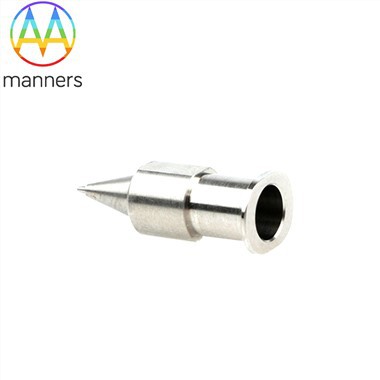
Access Cannula Tube
Sep 13, 2026
Pain Point
In modern interventional medicine, clinicians frequently require sustained, stable access to blood vessels, airways, or body cavities-not merely a single puncture. Standard hypodermic needles provide excellent penetration but cannot maintain access; polymer catheters offer flexibility but often collapse under torque or kink when navigating tortuous anatomical paths. This creates a critical dilemma in urology, peripheral vascular, neuro, and robotic surgery: the "cannula tube" is expected to simultaneously remain patent, resist kinking, transmit rotational force, accommodate instruments, and remain atraumatic to surrounding tissues. Off-the-shelf cannulas typically fall into two extremes-they either feel like stiff steel rods that traumatize vessel walls, or floppy plastic straws that collapse under minimal pressure. There is currently no reliable middle ground that balances pushability, trackability, and kink resistance in a single, manufacturable component. Furthermore, as minimally invasive procedures grow more complex, the demand for multi-functional access shafts that can integrate fluid pathways, electrical conduits, and mechanical articulation continues to outpace the capabilities of conventional extruded polymer tubing.
Principle
A cannula tube is fundamentally a thin-walled medical tube designed to remain in the body after an initial penetrating stylet is withdrawn. When manufactured from hypodermic-grade stainless steel or Nitinol stock and enhanced through precision laser cutting, it evolves into a structural access shaft with programmable mechanical properties. The base tube provides lumen patency and axial push; strategically placed laser cuts introduce graded flexibility without compromising the continuous load paths required for torque transmission. The proximal section typically remains mostly uncut to ensure secure hub connection and rotational control, while the distal section employs continuous spiral, interrupted spiral, or radial cuts to achieve trackability through curved anatomy. With processing capabilities spanning Ø0.20–20 mm and a minimum kerf width of 0.012 mm, a single cannula tube can effectively replace multilayer polymer + coil + braid constructions that are traditionally assembled from numerous discrete components. This geometry-driven approach transforms a simple access tube into a sophisticated mechanical device where flexibility, torque, and kink resistance are independently tunable parameters rather than mutually exclusive trade-offs.
Equipment Classification
- Straight Access Cannula: IV, arterial, and basic drainage applications using 304/316L stainless steel with light or no laser cutting for maximum simplicity and cost-effectiveness.
- Spiral-Cut Access Cannula: Vascular navigation and diagnostic endoscopy where uniform flexibility along the shaft is required for smooth tracking.
- Interrupted-Spiral Cannula: Stent/balloon access systems demanding a careful balance of push force proximally and compliant tracking distally.
- Radial-Cut Cannula: Steerable endoscopic channels and articulating tips that require localized bending while maintaining overall shaft rigidity.
- Nitinol Access Cannula: Neurovascular and peripheral tortuous access where superelasticity and kink recovery are paramount.
- Bespoke Cannula: Fully custom designs driven by 2D/3D drawings, capable of mimicking multi-lumen structures within a single laser-cut metal tube.
Practical Guide
- Define Access Duration: Distinguish between short procedural access (e.g., angiography) and extended dwell/indwelling applications (e.g., nephrostomy), as this dictates material selection and surface finish requirements.
- Material Selection: Use 304 stainless for brief procedures; specify 316L for urine, blood contact, or long-dwell scenarios due to superior chloride corrosion resistance.
- Zonal Design: Keep the hub connection zone uncut or minimally patterned to preserve torque transmission; implement a gradient of increasing cut density toward the distal tip.
- Liner Integration: Incorporate a PTFE inner liner if frequent instrument exchange is anticipated, to reduce friction and prevent particulate generation.
- Surface Finishing: Electropolish both ID and OD to remove laser burrs; passivate 300-series stainless to enhance biocompatibility and corrosion resistance.
- Validation Testing: Conduct kink resistance, torque decay, flow/pressure drop, and pull-out force tests using anatomically representative models before clinical evaluation.
Real-World Experience
In clinical urology, ureteroscopy access sheaths have historically forced surgeons to trade kink resistance for flexibility. A 316L interrupted-spiral cannula tube design reduced instrument "stick-slip" friction during exchanges and maintained suction flow even at 90° deflection angles-performance unattainable with traditional braided polymer sheaths. In robotic surgical platforms, radial-cut access cannulas provided cleaner tip articulation and more predictable force transmission than conventional polymer alternatives, enabling more precise tissue manipulation with reduced surgeon fatigue.
Conclusion
The cannula tube is far more than "the leftover tube after the needle comes out." It is the fundamental access architecture that determines the success or failure of an entire minimally invasive procedure. When engineered with precision laser cutting, it becomes an enabling technology that expands the boundaries of what is possible in interventional medicine.
Outlook & Recommendations
The rapid growth of single-use endoscopy and bedside robotics will drive laser-cut cannula tubes into high-volume production environments. Forward-thinking buyers should specify access function plus zonal mechanics rather than simply requesting an OD and gauge. ISO 13485 certification combined with demonstrable kerf control capability will increasingly separate serious, qualified suppliers from mere catalog resellers in the medical device supply chain.