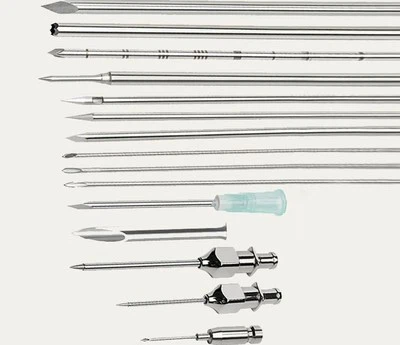
Disposable Blood Collection Needles: Evolution From Bloodletting Therapy To Precision Micro-Sampling And Future Outlook
Apr 16, 2026
Disposable Blood Collection Needles: Evolution from Bloodletting Therapy to Precision Micro-Sampling and Future Outlook
The concept of the "blood collection needle" spans a long historical river, evolving from the crude "bloodletting needles" of ancient times to the precision "micro-sampling tools" of today. In 2026, when we examine the Top 10 manufacturers and products in the disposable blood collection needle market, we are observing not just a medical device market, but a condensed history of the evolution of medical concepts, material science, and manufacturing processes. The core driving force remains the safer, more precise, and more humane acquisition of vital information.
Historical Retrospective: From "Balancing Humors" to "Diagnostic Cornerstone"
Historically, the "bloodletting needle" was a therapeutic tool based on the "humoral theory," used to "treat" fevers, inflammations, and various ailments by withdrawing large quantities of blood. These tools were often made of iron, bronze, or even gold and silver, varied greatly in length and diameter, and relied on rudimentary sterilization methods (boiling or flame sterilization), posing extremely high infection risks. This radical therapy, based on erroneous theories, was thoroughly discarded with the establishment of modern medicine.
The birth of the modern "blood collection needle" stemmed from advancements in bacteriology and pathology in the late 19th century, as blood became recognized as a crucial window for disease diagnosis. The invention of the vacuum blood collection tube system in the mid-20th century was revolutionary, standardizing, closing, and automating blood collection. The popularization of the "single-use" concept eradicated the risk of cross-infection. Since then, the role of the blood collection needle has completely transformed from a "therapeutic tool" to a "diagnostic tool."
Modern Landscape: Global Competition and Local Rise
The global disposable blood collection needle market in 2026 is a mature market co-dominated by international giants and local powerhouses.
International Leaders: Represented by companies like BD, Greiner Bio-One (VACUETTE), NIPRO, B. Braun, and Terumo. They hold the high-end market share through centuries of brand heritage, formidable R&D capabilities, global sales networks, and systematic solutions (e.g., BD's Vacutainer system). Their strengths lie in deep technical patents, stringent quality systems, and broad clinical recognition.
Chinese Local Leaders: Represented by companies such as Kangdelai (KDL), Weigao (WEGO), Hongda (HD), and Improve Medical. Rising rapidly over the past two to three decades, they have achieved a leap from following to running parallel with international standards through technology introduction, assimilation, and independent innovation. Their advantages include a deep understanding of the local market, flexible market strategies, a complete industrial chain, and significant cost-performance benefits. They not only dominate the domestic market but are also actively expanding overseas, becoming an indispensable force in the global supply chain.
Diversification and Specialization of Product Forms
Modern blood collection needles have evolved into a highly specialized product matrix to meet diverse scenario requirements:
Venous Blood Collection Needles: Paired with vacuum tubes, these are the mainstay of hospital labs. The core trends are full-scale safety (passive safety devices as standard) and ultimate comfort (ultra-smooth coatings, sharper tips).
Capillary Lancets: Used for fingerstick sampling, primarily targeting the blood glucose monitoring market. The competitive focus is on minimally invasive and painless technology (33G, 34G ultra-fine needles, rapid firing technology), operational convenience (adjustable depth, variable trigger force), and system integration with glucometers.
Arterial Blood Collection Needles: Used for blood gas analysis, these have higher technical barriers, emphasizing air-exclusion design and the precision of pre-heparinization.
Safety Butterfly Needles (Winged Sets): Specifically designed for children, the elderly, and patients with poor vascular conditions, featuring soft catheters for easier puncture and secure fixation.
Future Trends: Intelligence and Integration Beyond "Puncture"
Looking ahead, innovation in blood collection needles will extend beyond the mere function of "puncture," moving towards smarter and more integrated directions:
Intelligence and Data Connectivity: Smart lancing devices may integrate miniature sensors to record puncture time, site, and estimated pain level, syncing via Bluetooth with mobile health apps to provide continuous data for chronic disease management. They might even integrate optical sensors to preliminarily judge sample quality (e.g., hemolysis).
Microfluidics and POCT Integration: Blood collection needles could integrate with microfluidic chips to achieve "collection-separation-testing" integration. A drop of blood from a fingerstick could be analyzed directly on a connected microchip for rapid tests, greatly simplifying workflows for home, community, and emergency settings.
Personalization and Customization: Based on individual differences like skin thickness, age, and vascular conditions, lancing devices with adjustable penetration depths or customized needle parameters could realize truly personalized blood collection, maximizing comfort.
Fusion of Materials and Biotechnology: Exploring more biocompatible coating materials, or even smart coatings with pro-coagulant or antimicrobial functions, to promote rapid healing or prevent infection post-collection.
Sustainable Development: Exploring biodegradable or recyclable eco-friendly materials for manufacturing hubs and other components while ensuring safety and sterility, to reduce medical plastic waste.
Conclusion
From the terrifying iron needles of bloodletting to virtually imperceptible ultra-fine lancets; from the high-risk reuse of the past to absolutely safe, single-use sterile products; from crude empirical operations to precision manufacturing governed by strict global standards-the evolution of the disposable blood collection needle is a vivid footnote to humanity's journey from medical obscurity to scientific rigor, from extensiveness to precision. The Top 10 manufacturers of 2026 stand at the intersection of this historical legacy and technological frontier. Their competition is not just for market share, but over who can provide safer, more comfortable, and smarter blood sampling solutions for a patient-centered medical future. Ultimately, this race benefits every patient requiring a blood test and every healthcare worker performing the procedure worldwide.