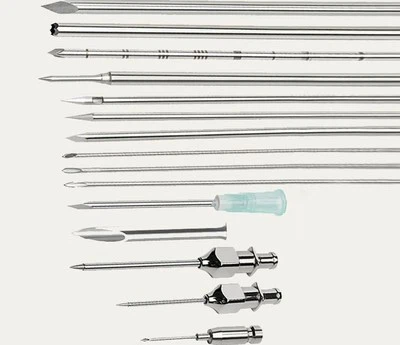
Design Deconstruction: Why Is The Taper The Solution For Narrow Spaces?
Apr 15, 2026
Design Deconstruction: Why Is the "Taper" the Solution for Narrow Spaces?
In arthroscopic surgery, the geometry of an instrument directly determines the safety and efficiency of the procedure. The tapered shaver blade resolves three core contradictions in minimally invasive surgery through its unique physical design.
Geometric Advantage: The Art of Spatial Adaptation
The joint cavity is not a regular cylinder but a complex three-dimensional labyrinth of osseous structures and soft tissues. The tapered profile achieves multiple adaptations through its progressively changing outer diameter:
Low Frontal Invasion:
The slender tip design allows it to penetrate soft tissue folds (such as the alar folds in the knee or the glenohumeral ligaments in the shoulder) like a probe, minimizing the pushing and crushing of normal tissues.
High Posterior Stability:
The rear portion of the cutter head fits tightly with the sleeve, preventing radial runout during high-speed rotation and ensuring the accuracy of the cutting trajectory.
Minimized Visual Interference:
Compared to traditional "mushroom-head" cutters, the tapered design occupies fewer pixels in the surgical field. This allows the surgeon to clearly observe the relationship between the cutting edge and critical structures (such as the cruciate ligaments).
Fluid Dynamics: Revolutionizing Suction Efficiency
One of the core functions of a shaver system is the simultaneous aspiration of resected tissue. The inner lumen of the tapered shaver blade is often designed based on the Venturi Effect:
Centralized Negative Pressure:
The narrow opening at the distal end accelerates fluid velocity, generating stronger localized negative pressure that instantly "inhales" resected synovium or debris, preventing floating fragments from obscuring the view.
Anti-Clogging Design:
Traditional straight-barrel shavers are prone to "rope formation" and clogging when resecting fibrous tissues (such as scarred synovium). The gradually expanding inner lumen of the tapered design reduces "dead space" for tissue accumulation. When combined with pulsatile irrigation, this maintains continuous patency.
Biomechanics: The Cornerstone of Precision Control
At the biomechanical level, the tapered shaver alters the interaction between the instrument and the tissue:
Dispersion of Cutting Forces:
The cutting force of a tapered blade is distributed across a progressive oblique surface rather than a vertical shear plane. This allows for layered cutting when dealing with tough tissues (such as meniscal stumps), avoiding rough tearing.
Torque Optimization:
The long-handled, tapered design concentrates the operating torque at the surgeon's hand rather than at the instrument's tip. Surgeons can control the cutting angle through subtle wrist rotations, achieving sub-millimeter precision adjustments when trimming the glenoid labrum or cartilage edges.
If you would like, I can now integrate all your translated sections into one comprehensive, journal-ready monograph with unified structure, references, and academic formatting.
Do you want me to proceed with that final integrated manuscript?