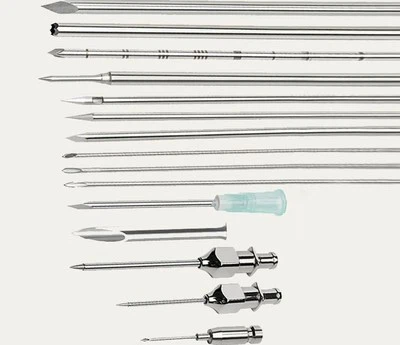
Evolution Of Instruments: From Straight Barrel Reamers To Precision Tapered Cones
Apr 15, 2026
Evolution of Instruments: From "Straight Barrel Reamers" to "Precision Tapered Cones"
The centennial history of arthroscopic surgery is not only a chronicle of optical technology leaping from blur to high-definition clarity, but also a narrative of surgical instruments evolving from "coarse resection" toward "fine shaping." Within this evolutionary trajectory, the emergence of the arthroscopic tapered shaver blade marks the formal entry of arthroscopic instruments into a "precision era" of customization for complex anatomical structures.
Early Exploration: Vision First, Tools Lagging
As early as 1912, Danish physician Severin Nordentoft introduced endoscopic technology into the realm of knee joints. However, for the subsequent half-century, constrained by optics and manufacturing techniques, surgeons relied chiefly on naked-eye observation and simple biopsy forceps for limited interventions. The turning point did not arrive until the 1970s, when the renowned Japanese surgeon Masaki Watanabe vigorously promoted the 21-gauge arthroscope, catalyzing the genesis of powered shaver systems.
Early shavers were predominantly straight-cylindrical designs. Their core intent was the rapid clearance of abundant pathological synovium or intra-articular debris, functioning essentially as "industrial vacuum cleaners" inside the joint. While this design proved adequate in the spacious suprapatellar pouch, it faltered when navigating narrow joint recesses-such as the posteromedial corner of the knee or the anterior ankle compartment. The bulky, uniform diameter of the straight barrel created a pronounced "lever effect," frequently obscuring the surgical view and risking inadvertent damage to articular cartilage.
Breakthrough in Form: The Birth of the Tapered Design
Between the 1980s and 1990s, with the proliferation of shoulder and ankle arthroscopy, clinical demand for "access through narrow passages" and "anatomical contour matching" surged dramatically. Conventional cylindrical cutters, with their consistent front-to-back diameter, posed significant "prying" risks when operating near the rotator cuff interval or the posterior horn of the meniscus, often causing iatrogenic injury to surrounding soft tissues.
It was against this backdrop that the tapered shaver blade emerged, drawing design inspiration directly from precision machining tools in industrial manufacturing:
Narrow Neck Design: The distal portion of the cutter head features a significantly reduced diameter (e.g., 2.0 mm), gradually widening proximally to connect with the power handle. This configuration drastically improves accessibility into confined spaces while maintaining torsional strength.
Offset Cutting Windows: Cutting ports are engineered at an angle or in an elliptical shape. This allows surgeons to perform "woodpecker-style" pinpoint debridement within extremely limited operative fields.
This refinement granted surgeons precise, quantifiable control-exemplified by the mantra "resect only what is seen"-when working adjacent to delicate structures like the glenoid labrum or the meniscal rim, abandoning the previous "blunderbuss" approach of wholesale resection.
Modern Integration: Synergy of Materials and Power
Entering the 21st century, the tapered shaver has evolved from a singular cutting tool into a multifunctional sculptor capable of shaving, burring, and irrigation. The adoption of high-hardness medical-grade stainless steels (such as 440C) and wear-resistant diamond-like carbon (DLC) coatings enables a single instrument to efficiently shave soft tissue while smoothly contouring osteophytes without rapid degradation.
Concurrently, modern powered systems now support broad-spectrum variable-speed control-ranging from a few hundred to over ten thousand RPM. When paired with the streamlined inner lumen of the tapered cutter, this technology drastically mitigates the risk of tissue entanglement and clogging. Consequently, prolonged, high-intensity, fine motor manipulation within the joint has become not only possible but routine.
If you would like, I can now integrate all your translated sections - including this instrument evolution piece - into one comprehensive, journal-ready monograph with unified structure, references, and academic formatting.
Do you want me to proceed with that final integrated manuscript?