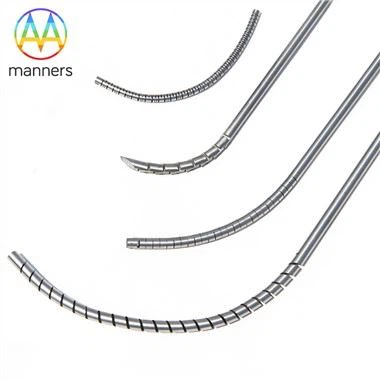
Decoding The Materials And Design Of Brachytherapy Needles
Jun 15, 2026
In the era of precision medicine, brachytherapy serves as an "invisible scalpel" against malignant tumors. The efficacy of this treatment relies heavily on a critical carrier: the brachytherapy needle. Far from being a simple tool, this needle is a masterpiece of material science and precision engineering. Its performance directly determines whether the radiation source can be delivered to the target lesion accurately and safely.
I. Material Selection: The Stringent Standards of Medical-Grade Materials
Brachytherapy needles must either be implanted long-term or penetrate through tissue, necessitating extremely strict material criteria. The mainstream materials are medical-grade stainless steel and titanium alloys.
- Stainless Steel: Renowned for its superior strength, rigidity, and cost-effectiveness. High-grade stainless steel (such as the 304 and 316L series) offers excellent corrosion resistance against bodily electrolytes, ensuring structural stability throughout the treatment cycle. Its hardness allows the tip to easily penetrate dense tissues (like fibrotic prostate tissue) without buckling.
- Titanium Alloys: As a premium option, titanium alloys offer superior biocompatibility and non-magnetic properties. This is crucial for patients requiring post-operative MRI (Magnetic Resonance Imaging) evaluations, as it prevents image artifacts. While titanium is lighter due to its lower density, it comes with higher processing difficulty and cost.
II. The Philosophy of Scale: Precise Matching of Length and Diameter
The length and diameter of the needle are not arbitrary; they are meticulously calculated based on anatomical pathways and dosimetric requirements.
- Length Grading: Ranging from short needles (e.g., 5 cm) for superficial skin cancers to long needles (exceeding 20 cm) for deep pelvic tumors. For instance, transperineal prostate brachytherapy typically utilizes 15–20 cm needles to ensure passage through the muscle layer directly into the gland. Precise length control ensures the applicator tip reaches the center of the target volume, avoiding a "near miss."
- Diameter (Gauge) Selection: Needle thickness is measured by "Gauge" (G); a higher number indicates a finer diameter. Clinical applications range from 14G to 21G.
- Large-Bore Needles (14G–16G): Suitable for implanting larger radioactive sources (e.g., Iodine-125 seeds) or injecting fillers. They offer better rigidity and are less prone to deviation.
- Fine Needles (18G–21G): Result in smaller trauma and less patient pain, ideal for high-precision, multi-needle implants such as interstitial gynecological brachytherapy. However, their flexibility demands higher technical skill from the operator to avoid bending.
III. Cutting-Edge Technology: Needle Tip Design and Functional Integration
Modern brachytherapy needle tips have evolved beyond simple beveled cuts.
- Triangular Pyramidal/Rhomboid Tips: These asymmetric designs effectively cut tissue rather than tearing it bluntly, thereby reducing bleeding and post-operative pain.
- Echo-Enhancing Coatings/Markings: During ultrasound-guided implantation, smooth metal surfaces create acoustic shadows. By adding micro-grooves or special coatings near the tip, brighter echo points are generated on the ultrasound image, assisting physicians in real-time tracking of the needle tip for millimeter-level precision.
- Anti-Puncture Protection Mechanisms: For scenarios involving implantation near vital organs, some needles feature blunt tips or retractable stylets that lock automatically upon reaching the predetermined depth, preventing overdosing or damage to posterior tissues.
Conclusion
Brachytherapy needles have long transcended the realm of ordinary syringes; they are precision instruments carrying the hope of life. From material selection and geometric dimensions to functional integration, every detail embodies the wisdom of engineers and medical experts. The goal is to deliver radiation energy to the enemy in the most controllable and safe manner possible, while maximizing the protection of healthy tissues.