Cross-Boundary Applications Of Microneedle Technology: Innovative Breakthroughs From Healthcare To Food Safety
Apr 16, 2026
Cross-Boundary Applications of Microneedle Technology: Innovative Breakthroughs from Healthcare to Food Safety
In 2026, microneedle technology is no longer confined to traditional medical and cosmetic fields; it is rapidly expanding into cross-boundary applications such as diagnostic monitoring and food safety, demonstrating astonishing innovative potential. This transformation from a "diagnostic and therapeutic" tool to a multifunctional platform marks a new stage of development for microneedle technology.
Revolutionary Breakthroughs in Diagnostic Monitoring
In the field of diagnostic monitoring, microneedle technology enables real-time monitoring of biomarkers-such as blood glucose, inflammatory factors, and tumor markers-via interstitial fluid extraction. With sensitivity as low as 1 ng/mL, it can replace traditional blood draws and is suitable for managing chronic diseases like diabetes and cardiovascular conditions. Researchers have even developed self-calibrating, multi-index monitoring systems, providing novel tools for personalized medicine.
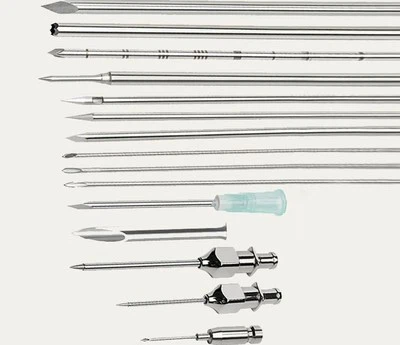
Microneedles demonstrate unique advantages in biofluid sampling. Solid microneedles (stainless steel, hard resin) utilize mechanical strength to create pores, collecting interstitial fluid or capillary blood via negative pressure/capillary force. Swellable microneedles (methacrylated hyaluronic acid, gelatin) rely on hydrogel swelling to adsorb interstitial fluid; adding osmotic agents like maltose can increase sampling volume by 1.5 times. Hollow/porous microneedles utilize internal channels/pores to extract fluid via capillary force/negative pressure, with 3D printing enabling complex structural fabrication.
The integration of microfluidic technology further enhances sampling efficiency. Paper-based microfluidics leverage fiber capillary forces for efficiency, while chip-based microfluidics combine with negative pressure to achieve large-volume collection and precise quantification. For instance, a 3D-printed hollow microneedle array integrated with a chip extracted 18 μL of interstitial fluid from rabbit ears within 5 minutes. Commercial products like TAP Micro Select and Tasso Mini-Class II FDA-cleared devices-enable minimally invasive, painless capillary blood collection (20–900 μL), supporting at-home sampling and lab testing.
Intelligent Progress in Therapeutic Applications
In the therapeutic realm, microneedle technology is evolving toward intelligence and responsiveness. In diabetes treatment, smart responsive microneedles can dynamically release insulin based on blood glucose levels. In vaccination, microneedles directly target skin immune cells, achieving immunogenicity comparable to intramuscular injection with easier storage. Furthermore, microneedles are being used for local chemotherapy in tumors, immunotherapy, regeneration of diabetic foot ulcers, and targeted drug delivery for ophthalmic diseases.
The photothermal microneedle system developed by teams from Peking Union Medical College Hospital represents the latest progress in this field. The system consists of two parts: the microneedle tips are loaded with lidocaine, a commonly used local anesthetic; the backing layer encapsulates MXene material-a 2D transition metal carbide with excellent near-infrared absorption and biocompatibility-which efficiently converts near-infrared light into localized heat. Experiments show that under 808 nm near-infrared irradiation, the microneedle patch heats up to 50°C (within a safe range) in half a minute and maintains this temperature for 2 minutes, facilitating rapid drug diffusion. In a rat plantar incision model, activation by near-infrared light produced an anesthetic effect within 5 minutes, lasting up to 60 minutes, equivalent to traditional injectable anesthesia.
Innovative Applications in Food Safety
The cross-boundary innovation of microneedle technology has extended to food safety. Researchers have developed porous microneedle patches capable of rapidly detecting moisture content in meat and nitrite levels in food without sample pretreatment, enabling convenient on-site screening. This application breaks the traditional boundaries of microneedle technology, showcasing its immense potential in rapid detection.
The working principle of porous microneedle patches involves puncturing the sample surface to extract trace liquids via capillary action. These liquids then react with built-in detection reagents, with results output via color changes or electrical signals. This method offers advantages such as minimal sampling volume, rapid detection, simple operation, and no need for complex pretreatment, making it particularly suitable for on-site rapid screening.
Innovative Breakthroughs in Material Science
Innovations in microneedle materials provide the foundation for cross-boundary applications. Hydrogel microneedles, made from cross-linked hydrophilic polymers, swell upon insertion to form channels for long-acting, controlled release-ideal for chronic disease management and wound healing scenarios requiring sustained drug delivery. The application of smart materials like thermo-sensitive, pH-responsive, and enzyme-responsive hydrogels enables microneedles to intelligently regulate drug release in response to environmental changes.
The use of biodegradable materials such as hyaluronic acid, collagen, and chitosan improves the biocompatibility and safety of microneedles. These materials degrade and are absorbed in vivo, eliminating the need for removal, thereby reducing secondary trauma and infection risks. Meanwhile, the integration of nanotechnology allows microneedles to carry nanodrugs, enhancing drug stability and targeting capability.
Technology Integration and System Innovation
Microneedle technology is deeply converging with other advanced technologies to form multifunctional integrated systems. Integration with microelectronics has led to wearable microneedle devices capable of real-time monitoring and feedback control. Combining with IoT technology enables telemedicine and health management, while integration with artificial intelligence optimizes treatment plans through big data analysis.
A review by Xu Chenjie's team at City University of Hong Kong pointed out that wearable microneedle devices are reshaping the healthcare monitoring ecosystem. Globally, nine representative companies are布局 (active) in this field, and nine related clinical trials are registered on ClinicalTrials.gov, indicating strong research enthusiasm and translational potential. These integrated wearable microneedle devices enable continuous physiological monitoring, providing novel solutions for chronic disease management and health surveillance.
Future Outlook and Challenges
The cross-boundary application prospects of microneedle technology are vast, yet challenges remain: performance requirements vary significantly across application fields, necessitating targeted optimization; cross-boundary applications require interdisciplinary collaboration, integrating knowledge from medicine, materials science, and electronic engineering; regulatory policies must adapt to new technological developments to ensure safety and efficacy; cost control and mass production are also critical considerations for industrialization.
In the future, with advancements in material science, manufacturing processes, and smart technologies, microneedle technology will play a vital role in more fields. From personalized medicine to intelligent health monitoring, and from food safety to environmental detection, the cross-boundary applications of microneedle technology will continue to expand, making greater contributions to human health and quality of life. Simultaneously, standardization and normalization efforts will accelerate, propelling microneedle technology from the laboratory toward large-scale commercial application.