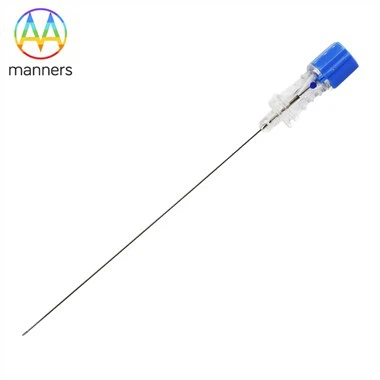
Core Value And Role Evolution Of Brachytherapy Needles In Modern Multidisciplinary Cancer Treatment
May 24, 2026
As a "Trojan horse" that delivers radiation energy directly into tumors, brachytherapy needles have expanded their clinical applications from traditional gynecological tumors to multiple areas including prostate, breast, head‑and‑neck and skin cancers, becoming an indispensable precision weapon in modern multidisciplinary comprehensive cancer treatment. Through continuous technological iteration, manufacturers enable brachytherapy needles to precisely address various clinical scenarios ranging from radical curative treatment to palliative symptom relief, greatly enriching radiation oncologists' tactical options and profoundly reshaping the treatment landscape of numerous cancers.
In prostate cancer treatment, brachytherapy needles play a pivotal role in radical cure and function preservation. For early‑stage low‑risk prostate cancer, permanent seed implantation (e.g., Iodine‑125) can serve as a standalone radical therapy. Under real‑time ultrasound guidance, multiple fine needles (typically around 18G) are precisely perineally inserted into the prostate via templates, with radioactive seeds distributed inside as planned. Radiation continuously targets tumors, while organs‑at‑risk such as the rectum and bladder receive low doses due to sharp dose fall‑off characteristics, maximally preserving patients' urinary continence and sexual function. For intermediate‑ and high‑risk patients, High‑Dose‑Rate (HDR) after‑loading therapy acts as a boost to external beam radiotherapy. High‑activity radioactive sources (e.g., Iridium‑192) are delivered into the prostate through temporary interstitial needles for fractionated high‑dose irradiation, further improving local control rates.
In gynecological oncology, particularly for locally advanced cervical cancer, brachytherapy serves as the cornerstone of radical radiotherapy. Traditional intracavitary applicators (e.g., triple‑channel tubes) often yield suboptimal dose distribution for eccentric, large tumors or those involving parametrial tissues. In such cases, interstitial brachytherapy achieves highly conformal dose distribution by directly inserting multiple treatment needles into tumors. Treatment needles enable high‑dose regions to precisely cover every corner of irregular tumors while maximally protecting normal tissues such as the bladder and rectum, significantly boosting local control rates and reducing complications.
For patients with early‑stage breast cancer after breast‑conserving surgery, Accelerated Partial Breast Irradiation (APBI) offers an innovative option. A single balloon catheter or multiple interstitial needles are placed around the tumor resection cavity intraoperatively, enabling precise delivery of high‑dose radiotherapy shortly after surgery. This technique narrows the irradiation field from the whole breast to the tumor bed periphery and shortens treatment duration from weeks to days, delivering superior cosmetic outcomes and quality of life while ensuring therapeutic efficacy.
Brachytherapy needles also demonstrate outstanding performance in head‑and‑neck cancers, soft‑tissue sarcomas, skin cancers and other conditions. For postoperative residual, recurrent or inoperable lesions, image‑guided insertion of treatment needles into tumor regions for interstitial irradiation delivers extremely high local doses to lesions while well‑protecting surrounding vital nerves, blood vessels and bones. For superficial skin cancers such as basal‑cell carcinoma, specialized surface applicators or interstitial needles for contact or interstitial therapy achieve excellent cosmetic results and cure rates.
Furthermore, brachytherapy needles possess unique value in palliative care. For severe pain caused by cancer bone metastases, or metastatic lesions inducing compressive symptoms in critical sites such as vertebrae and pelvis, internal irradiation via implanted radioactive seeds effectively relieves pain, controls local tumor growth and improves patients' quality of life.
Therefore, products from brachytherapy needle manufacturers essentially provide the radiation oncology community with a highly flexible and precise "local dose‑sculpting toolset". Such tools translate the advantages of physical dosimetry into clinical benefits for tumors of different sites and stages. Spanning multiple phases of cancer care, brachytherapy needles are used for curing early‑stage cancers, alleviating advanced‑stage symptoms, preserving vital organ functions and enhancing patients' quality of life. By continuously optimizing needle rigidity, sharpness, specification diversity and compatibility with image navigation and 3D‑printed templates, manufacturers keep expanding the application boundaries of this technology, turning brachytherapy needles into an increasingly sharp and accurate "invisible scalpel" against tumors in the era of precision medicine.