Core Medical Definition And Essential Attributes Of Subcutaneous Injection
Aug 19, 2026
https://en.wikipedia.org/wiki/Hypodermic
Pain Points Clinical and primary medical scenarios widely suffer from ambiguous cognition of subcutaneous injection definition, leading to non-standard operation and compromised treatment efficacy. Most frontline medical staff and ordinary patients confuse subcutaneous injection with intradermal, intramuscular, and intravenous injection due to vague professional definition boundaries. Misjudging the anatomical target layer often results in incorrect puncture depth, misplaced drug delivery, and abnormal absorption speed. Many grassroots medical operations randomly replace subcutaneous injection with intramuscular injection for convenience, causing excessive drug absorption, sharp fluctuations in blood drug concentration, and adverse physical reactions. Meanwhile, the lack of standardized definition popularization leads to inconsistent scenario adaptation standards. Blind operation based on empirical judgment instead of professional definition further induces local induration, swelling, drug waste and other minor complications, restricting the standardized development of basic clinical medication.
Working Principle Medically defined, subcutaneous injection is a standardized parenteral administration technique that delivers small-dose sterile medications, vaccines, and biological agents into the subcutaneous adipose and loose connective tissue beneath the dermis and above the muscle layer. Different from other injection routes, its core operational principle is based on the physiological characteristics of subcutaneous tissue with sparse capillary distribution and slow blood circulation, achieving sustained, stable and mild drug absorption. This administration route avoids gastrointestinal first-pass metabolism of oral drugs, eliminates the rapid efficacy fluctuation of intravenous injection, and reduces the strong tissue irritation of deep intramuscular injection. As a transitional and balanced medication method, subcutaneous injection features slow onset, long drug duration, high safety and low trauma, which is uniquely suitable for chronic disease maintenance, public health vaccination and local adjuvant treatment.
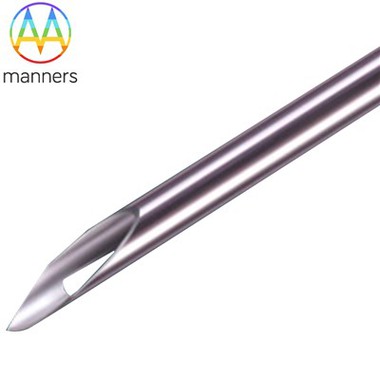
Equipment Classification Standard subcutaneous injection implementation relies on graded professional hypodermic needles, and different needle materials and functional designs match the basic definition attributes of subcutaneous medication. First, stainless steel hypodermic needles: the most mainstream conventional model, with outstanding structural strength, durability and corrosion resistance, stable puncture performance, suitable for daily routine subcutaneous drug delivery and universal vaccination scenarios. Second, nickel-chromium alloy needles including Inconel and Monel materials: with ultra-high corrosion and oxidation resistance, adapted to special chemical reagent subcutaneous injection and high-stability medical environments that conventional materials cannot withstand. Third, medical-grade plastic hypodermic needles: single-use sterile design, completely cutting off cross-contamination risks, widely applied in large-scale public health vaccination and outpatient routine subcutaneous injection. Fourth, glass hypodermic needles: with absolute biological inertness, no chemical reaction with high-purity biological agents, dedicated to special precision subcutaneous medication scenarios. Fifth, siliconized coated hypodermic needles: ultra-low surface friction, minimizing subcutaneous tissue extrusion damage and puncture pain, optimized for long-term repeated subcutaneous injection treatment.
Practical Operation Guide All subcutaneous injection operations must be standardized based on professional medical definition and supporting needle equipment characteristics. Firstly, clarify scenario applicability strictly according to definition: apply subcutaneous injection for small-dose drugs, vaccines and biological preparations that are unsuitable for oral administration and require stable sustained efficacy. Secondly, implement precise needle matching: select siliconized coated needles for long-term chronic disease subcutaneous medication such as insulin; adopt disposable plastic needles for large-scale crowd vaccination; use standard stainless steel needles for routine therapeutic drug delivery. Thirdly, standardize puncture parameters: control the injection angle at 30 to 45 degrees, strictly limit the needle tip in subcutaneous adipose tissue, and avoid penetrating into deep muscle tissue to prevent definition deviation. Fourthly, regulate drug delivery speed: push the liquid medicine evenly and slowly to ensure full diffusion in loose subcutaneous tissue and avoid local drug accumulation. Finally, complete standardized disinfection and one-time needle disposal to ensure sterile and safe operation.
Practical Experience Global primary care and public health practice fully verifies that standardized operation based on accurate subcutaneous injection definition can stabilize clinical efficacy and reduce adverse reaction rates below 1%. Compared with oral medication, subcutaneous injection avoids gastrointestinal irritation and metabolic loss, improving drug utilization efficiency. Compared with intramuscular and intravenous injection, its superficial micro-trauma characteristics bring lower pain, fewer complications and higher patient compliance. Long-term chronic disease medication data shows that standardized subcutaneous administration is the safest and most adaptable route for daily maintenance treatment. Graded hypodermic needle matching further standardizes the implementation of subcutaneous injection definition attributes, realizing the organic unity of clinical safety, efficacy and comfort.
Summary and Sublimation Subcutaneous injection has a clear and authoritative medical definition, definite anatomical positioning and unique pharmacological advantages, which is an irreplaceable core basic administration method in modern parenteral medication system. Its essential characteristics of slow absorption, stable efficacy and minimal trauma form the core boundary distinguishing it from other injection routes. Supported by diversified graded hypodermic needle equipment, subcutaneous injection covers full scenarios of chronic disease treatment, public health prevention and clinical adjuvant therapy, laying a standardized and solid foundation for precise and humanized basic medical services.
Future Suggestions The future development of subcutaneous injection industry focuses on definition unification and scenario refinement. First, promote global unified medical definition and operational boundary standards for subcutaneous injection to eliminate cognitive and operational differences. Second, formulate exclusive hypodermic needle matching specifications for different subcutaneous medication scenarios and drug types. Third, fully popularize low-friction siliconized needles to further reduce subcutaneous trauma and postoperative adverse reactions. Fourth, develop sustained-release subcutaneous delivery technologies combined with new needle equipment to optimize long-term medication efficacy.