Core Applications And Value Evolution Of OPU Needles Throughout The Full‑Cycle Of Assisted Reproduction
May 24, 2026
As a critical interface linking the in‑vivo and in‑vitro stages in Assisted Reproductive Technology (ART), the OPU (Ovum Pick‑Up) needle has long transcended its role as a simple "ovum extraction tool". Serving as a precision conduit carrying hope and life, it plays a multi‑dimensional and indispensable role across the entire workflow from ovarian stimulation to embryo transfer, as well as in broader reproductive health management. Through continuous technological iteration, manufacturers enable OPU needles to precisely address diverse scenarios ranging from routine In‑Vitro Fertilization (IVF) to complex fertility preservation, greatly expanding the boundaries of reproductive medicine and profoundly reshaping the life trajectories of countless families.
Cornerstone of In‑Vitro Fertilization (IVF) Cycles
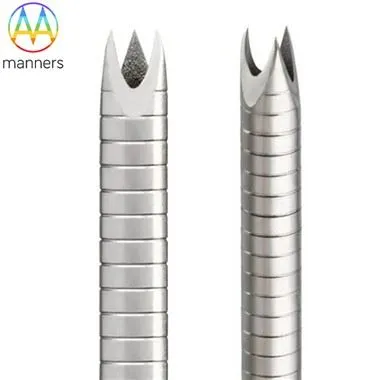
In routine IVF treatment, OPU surgery functions as a pivotal transitional step. Following approximately 10‑14 days of ovarian stimulation, multiple follicles mature. Under ultrasound guidance, the OPU needle is used for transvaginal puncture to aspirate the Oocyte‑Cumulus‑Complex (OCCC) from each follicle. The efficiency and quality of this step directly determine the number of fertilizable oocytes available for subsequent procedures, forming the primary material basis for IVF success rates. Manufacturers continuously optimize needle designs - such as enhancing tip sharpness to reduce tissue trauma and refining side‑port geometry to improve ovum retrieval rates - with the fundamental goal of maximizing the yield of each puncture and providing embryologists with abundant, high‑quality oocytes.
Guardian of Fertility Preservation
Advancements in oncology treatment and evolving social attitudes have driven growing demand for fertility preservation. For young female cancer patients scheduled to receive chemotherapy, radiotherapy or pelvic surgery, retrieving oocytes or ovarian cortical tissue via OPU technology for cryopreservation prior to treatment has become a vital method of preserving future fertility potential. In such scenarios, OPU needle application must account for patients' special physical conditions and urgent treatment timelines. Ovum retrieval may occasionally be performed off‑cycle or with insufficiently mature follicles (i.e., In‑Vitro Maturation, IVM). This imposes higher requirements for gentle manipulation by OPU needles to minimize damage to immature follicles. To meet this human‑centric medical need, manufacturers have developed thinner, less‑traumatic needle variants.
Key Component in Egg Donation Cycles
During egg donation programmes, healthy donors undergo ovarian stimulation before ovum retrieval via OPU surgery. An efficient, safe and minimally invasive retrieval process not only safeguards donor health and comfort but also directly influences recipients' chances of obtaining viable embryos. Consequently, OPU needles for donation cycles particularly emphasise smooth manipulation, complete aspiration and rapid postoperative donor recovery. Needle designs enabling quick, thorough aspiration of follicles of all sizes, alongside minimally invasive features that maximally reduce bleeding and discomfort, are especially critical here.
Management of Complex Reproductive Endocrine Disorders
Women with Polycystic Ovary Syndrome (PCOS) often have numerous small ovarian follicles accompanied by anovulation. Oocyte retrieval for PCOS patients during IVF poses significant challenges: excessive follicle numbers, combined with potentially fragile ovarian tissue, raise risks of Ovarian Hyperstimulation Syndrome (OHSS). Many reproductive centres adopt thinner‑gauge OPU needles (e.g., 19G) paired with low‑negative‑pressure aspiration to address this issue. Fine‑gauge needles significantly reduce puncture‑related ovarian injury and bleeding, lowering the incidence and severity of postoperative OHSS. Similarly, for patients with endometriosis (especially chocolate cysts), ultra‑precise manipulation is required when retrieving oocytes near or within cysts to avoid cyst rupture‑induced contamination or adjacent tissue damage, demanding both superior needle control precision and skilled clinical technique.
Platform for Scientific Research and Technological Progress
OPU needles also serve as essential tools for basic and clinical research in reproductive medicine. In follicular physiology studies, researchers use OPU techniques to obtain oocytes or follicular fluid at specific developmental stages for analysis of hormone levels, metabolomics or gene expression. Routine oocyte manipulation using OPU needles is required for developing novel culture or oocyte‑activation technologies. Furthermore, OPU technology acts as a core method in animal reproduction (e.g., breeding high‑quality livestock varieties). These research applications drive manufacturers to develop increasingly precise, specialised needle variants, such as ultra‑fine needles for micromanipulation or custom cannulas for targeted research sample collection.
Future Outlook: From Ovum Retrieval to Comprehensive Intervention
With technological development, the role of OPU needles may further evolve. For instance, "multi‑functional single‑needle applications" may emerge, combining intra‑follicular perfusion (e.g., injecting agents to improve oocyte quality) or ovarian tissue biopsy alongside ovum retrieval. Looking further ahead, smart OPU needles integrated with real‑time microscopic imaging or biosensing technology may enable instant assessment of oocyte maturity or follicular microenvironment during puncture.
In essence, products from OPU needle manufacturers deliver a robust "germ‑cell acquisition and management system" to the reproductive medicine community. This system safely, efficiently and minimally invasively converts hormonally stimulated follicular development into viable oocytes for laboratory use. OPU needles run through the full spectrum of clinical practice, from routine infertility treatment and fertility preservation to disease management and cutting‑edge research. By refining every detail of needle design, manufacturers continuously enhance the efficiency and reliability of this "bridge to life". This enables reproductive clinicians to obtain higher‑quality gametes with minimal trauma, ultimately advancing Assisted Reproductive Technology toward greater safety, efficiency and humanisation and fulfilling the parenthood dreams of more families.