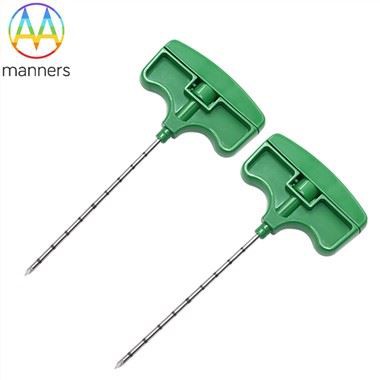
Clinical Linkage: Clinical Application Considerations Of AVF Cannulation Needles And Vascular Access Preservation For Patients
Jun 04, 2026
https://www.kidney.org/sites/default/files/Fistula%20Bulletin.pdf
Within the closed-loop hemodialysis pathway, arteriovenous fistula (AVF) cannulation needles serve as the direct physical linkage connecting patients' intravascular lifelines to the extracorporeal circulation equipment. Their clinical application goes far beyond simple needle penetration and withdrawal; it constitutes a refined practice governing therapeutic efficiency, patient safety and long-term fistula survivability. Every step spanning needle selection, standardized puncture execution and intra-dialysis monitoring profoundly impacts dialysis adequacy and patients' quality of life.
Needle Selection: Individualized and Strategic Decision-Making
Standard AVF cannulation needles feature thin-walled stainless steel construction, with mainstream sizes ranging from 15G to 17G (17G corresponds to an inner diameter of 1.19 mm). Size selection is determined by comprehensive clinical assessment:
- Required blood flow rate: High-flow dialysis (>350 mL/min) generally calls for larger-bore needles such as 15G or 16G to cut flow resistance, achieve target perfusion, lower shear stress exerted on red blood cells and minimize hemolysis.
- Vessel anatomical conditions: Newly matured, narrow-caliber or deeply positioned fistulas are matched with smaller-size needles (e.g., 17G) to ease cannulation difficulty and mitigate vascular wall trauma. Well-developed fistulas with robust blood flow can accommodate larger gauges to maximize dialysis efficiency.
- Tip geometry and bevel configuration: Beyond conventional standard-bevel needles, reverse-bevel alternatives are commercially available. With the bevel oriented away from the skin entry site, reverse-bevel designs theoretically reduce the risk of inadvertent posterior vascular wall perforation. Needles with lateral side ports or customized flow channels fabricated via five-axis laser cutting disperse incoming bloodstream and alleviate ostium adhesion against vessel lining, particularly suitable for high-flow settings or vessels prone to suction-induced wall apposition.
Cannulation Technique: Adherence to Precision and Aseptic Protocols
Proper puncture technique forms the primary defense for fistula preservation, anchored by two core cannulation regimens: rope-ladder cannulation and buttonhole cannulation; localized repeated cannulation must be strictly avoided.
- Rope-ladder cannulation: Puncture sites shift slightly longitudinally along the fistula vessel with each treatment, distributing mechanical insult evenly across the usable vascular segment to prevent focal vessel wall weakening and aneurysm formation induced by repetitive localized piercing.
- Buttonhole cannulation: A fixed connective tissue-lined subcutaneous tract is established through repeated cannulation at identical entry sites. The procedure requires proficient nursing practitioners to maintain consistent puncture position, insertion angle and depth. Once the buttonhole tract matures, patients experience diminished puncture pain and reduced post-dialysis oozing, rendering this method internationally recommended.
- Aseptic management: Rigorous pre-procedural skin disinfection, full sterile barrier precautions and standardized hand hygiene for operators are critical to stave off fistula-related bloodstream infections, most notably Staphylococcus aureus infection, a major contributor to fistula abandonment and fatal adverse outcomes.
Prevention and Management of Complications: Functional Role of Cannulation Needles
AVF needle usage is directly or indirectly associated with multiple procedural complications:
- Post-cannulation bleeding and hematoma: Primarily caused by improper puncture maneuvers, inadequate compression hemostasis or underlying coagulopathy. Sharp tips manufactured via precision grinding and skillful cannulation reduce vascular laceration risk. Appropriate post-dialysis compression - controlled to retain palpable fistula thrill with adequate pressing duration - is clinically imperative.
- Vascular wall injury and intimal hyperplasia: Repeated blunt cannulation, unintended intra-lumen tip displacement or suction-mediated wall adhesion persistently damages vascular endothelium; endothelial injury acts as the initiating trigger for progressive intimal hyperplasia and subsequent vessel stenosis. Deployment of premium sharp needles plus stable intra-vascular needle fixation is central to prevention.
- Thrombosis formation: Poor surface finish stemming from insufficient electrolytic polishing, sluggish blood flow leading to stasis or inherited hypercoagulable states may precipitate thrombus deposition around the needle tip or inner cannula lumen. Side-port needle designs homogenize local flow velocity, suppress turbulent eddies and reduce the likelihood of platelet activation and clot formation.
- Blood recirculation: Excessively short separation between arterial withdrawal needle and venous return needle or insufficient extracorporeal flow causes partially purified blood to be immediately re-aspirated into the arterial line, compromising dialysis clearance. A minimum inter-needle spacing of 5 cm plus sufficient blood flow constitutes the core preventive measure.
Patient Education: Empowerment for At-Home Self-Monitoring
Clinical nurses are tasked with training patients to palpate fistula thrill/pulsation and auscultate vascular bruits. Following needle removal post-dialysis, patients learn standardized compression hemostasis and self-monitor for persistent oozing or hematoma development. Instructions include avoiding heavy lifting, blood pressure measurement and tight constrictive accessories on the fistula-bearing limb. Immediate medical consultation is mandated for diminished/lost thrill or local erythema, swelling, warmth and tenderness.
Conclusion
Clinical deployment of AVF cannulation needles represents a systematic clinical discipline. Medical staff should regard such devices not merely as basic piercing instruments but fully comprehend the hemodynamic and biocompatibility principles embedded in their design, master refined puncture techniques and acquire proficiency in complication prevention and intervention. Premium-grade AVF needles, engineered for superior sharpness, ultra-smooth luminal surfaces and optimized structural design, lay a robust technical foundation for clinical practice. Together with standardized clinical expertise, these high-performance devices safeguard patients' indispensable hemodialysis vascular lifelines.