Definition And Functions: The Indispensable Lifeline Of Dialysis Vascular Access
Jun 04, 2026
https://www.kidney.org/sites/default/files/Fistula%20Bulletin.pdf
Definition and Functions: The Indispensable Lifeline of Dialysis Vascular Access
Introduction
In the field of renal replacement therapy, maintenance hemodialysis serves as a vital life-sustaining intervention for patients with end-stage renal disease. Establishing and sustaining an efficient, safe vascular access is an essential prerequisite for unimpeded hemodialysis delivery. Autologous arteriovenous fistula (AVF) is regarded as the gold-standard dialysis access owing to its superior service life, low infection incidence and relatively limited complication rates. The AVF cannulation needle acts as the exclusive physical bridge linking the in-vivo AVF vasculature to the extracorporeal hemodialysis circuit. Its definition, structural design and functional performance directly govern dialysis efficacy as well as patients' safety and comfort. This article elaborates on the medical definition, core functionalities and irreplaceable clinical value of AVF cannulation needles.
I. Medical Definition and Technical Specifications
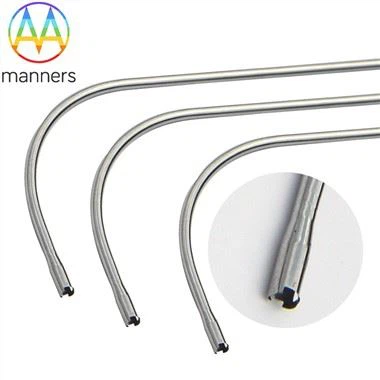
An AVF cannulation needle is a single-use sterile medical device engineered exclusively for arteriovenous fistula puncture. Its formal medical definition encompasses the following core attributes: a large-bore hollow stainless steel cannula with sufficient structural rigidity to penetrate thickened, arterialized venous walls and withstand the high volumetric blood flow required during dialysis. Distinct from conventional intravenous infusion needles, AVF needle design reconciles two fundamental conflicting requirements: first, enabling rapid, atraumatic cannulation to minimize procedural pain and vascular injury; second, maintaining unobstructed high-flow perfusion to prevent vascular wall collapse or ostium adhesion induced by negative suction, alongside reduced thrombotic propensity.
In terms of dimensional criteria, a standard 17G needle features an inner diameter (ID) of approximately 1.19 mm and an outer diameter (OD) of roughly 1.45 mm. Such comparatively oversized bore dimensions are engineered to accommodate therapeutic blood flow ranging from 200 to 400 milliliters per minute. The typical shaft length of around 25 mm facilitates stable intraluminal placement without excessive dead space and residual blood pooling. Tip geometry and sharpness constitute critical design parameters; well-calibrated tip construction enables smooth penetration under minimal puncture force, alleviating endothelial damage, conserving precious native vasculature and prolonging fistula lifespan.
II. Core Functions and Therapeutic Roles
Over each four-hour dialysis session, paired AVF needles perform two differentiated pivotal functions that determine overall dialysis adequacy.
- Blood withdrawal (Arterial limb): One cannula, termed the arterial needle, is inserted proximally near the fistula anastomosis to draw waste-laden systemic blood out of the patient into the dialyzer tubing under regulated suction. A major design challenge is mitigating vessel wall collapse or intimal adhesion triggered by excessive negative pressure. Advanced configurations incorporate auxiliary lateral ports fabricated via precision laser micromachining to disperse inflow, cut localized flow velocity and suction force, and sustain uninterrupted blood extraction.
- Blood reinfusion (Venous limb): The second venous needle is placed at a distal fistula segment to safely and steadily return purified blood post-dialyzer clearance back into systemic circulation. Designed to tolerate positive return pressure, venous cannula geometry eliminates turbulent or jet-like flow to lessen mechanical shear trauma against vascular endothelium.
A minimum separation of 5 centimeters between arterial and venous puncture sites is mandatory to avoid blood recirculation, a phenomenon wherein already cleansed blood is immediately re-aspirated and compromises dialysis clearance. Accordingly, proficient cannulation technique paired with robust needle design is equally indispensable.
III. Core Clinical Value and Patient Benefits
The clinical significance of AVF cannulation needles extends far beyond basic puncture instrumentation. First, they constitute the physical foundation of adequate dialysis. Consistent, sufficient blood perfusion underpins the elimination of uremic toxins and excess body fluid, with needle bore geometry and inner surface smoothness directly dictating hydrodynamic resistance. Second, these devices help preserve long-term vascular access survival. Every cannulation inflicts minor vascular trauma; premium, optimally engineered AVF needles minimize endothelial injury, local inflammatory response and subsequent intimal hyperplasia - a decisive advantage for patients receiving 2–3 weekly punctures spanning multiple years or even decades. Third, needle design profoundly shapes patients' treatment experience and quality of life. Ultra-sharp tips reduce puncture-associated pain; ultra-smooth luminal surfaces paired with biocompatible medical-grade 316L stainless steel lessen tissue drag and long-term adverse complications; dependable mechanical performance also eases patient apprehension and anxiety surrounding regular dialysis.
Conclusion
In summary, an AVF cannulation needle is precisely defined as a high-precision medical device purpose-built for safe and efficient hemodialysis cannulation of native arteriovenous fistulas, complying with strict hemodynamic and biomechanical benchmarks. It forms an indispensable intermediate link connecting patients' vasculature and blood purification equipment across the full dialysis workflow, with its design and manufacturing quality governing dialysis adequacy, long-term access patency and patient comfort. Driven by ongoing advances in material science, precision machining and personalized medicine, the technical connotation of AVF cannulation needles continues to evolve, while their core mission remains the lifelong protection of patients' vascular lifelines.