Biopsy Needle Material Characteristics And Diagnostic Accuracy Differentiation
Aug 21, 2026
Pain Points In clinical biopsy operation, unreasonable selection of biopsy needle materials often leads to unqualified sampling and inaccurate diagnosis results. Many grassroots medical staff lack systematic cognition of the performance differences of stainless steel, titanium and polymer biopsy needles, and blindly use conventional equipment for all lesions. Hard and brittle materials may cause tissue crushing and sample damage, while unqualified disposable materials are prone to deformation and invalid sampling. Unreasonable material matching will lead to insufficient sample volume, destroyed tissue structure, and affect pathological analysis judgment, resulting in repeated biopsy and delayed diagnosis, increasing patient pain and medical burden.
Working Principle The material characteristics of soft tissue biopsy needles directly determine puncture stability, sample integrity and diagnostic accuracy. Biopsy diagnosis relies on complete and undamaged living tissue samples for pathological analysis, and the hardness, toughness, corrosion resistance and biocompatibility of needle materials are the core factors affecting sampling quality. Stainless steel materials have high hardness and stable structure, suitable for conventional tissue sampling; titanium materials balance light weight and strength, avoiding operational vibration damage to samples; polymer materials have mild puncture characteristics, protecting superficial delicate soft tissues. Different material properties match different tissue characteristics, ensuring complete sample acquisition and accurate pathological diagnosis.
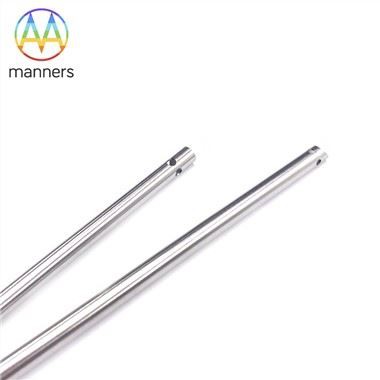
Three Core Biopsy Needle Material Classification and Advantages The three mainstream biopsy needle materials have clear performance differentiation and scenario positioning. First, stainless steel biopsy material: high hardness, strong durability, excellent corrosion resistance and medical biocompatibility, not easy to deform during puncture, ensuring stable sampling of tough and dense soft tissues, suitable for repeated clinical use and conventional lesion biopsy. Second, titanium biopsy material: lower density and lighter weight than stainless steel, with equivalent strength and corrosion resistance, reducing hand vibration during long-time operation, effectively protecting sample integrity, suitable for precise sampling of deep and fragile soft tissues. Third, medical polymer plastic material: soft and mild, good biocompatibility, single-use sterile design, no cross-infection, low puncture stimulation, suitable for superficial loose soft tissue biopsy and rapid screening sampling.
Material Matching and Precision Sampling Operation Guide Formulate targeted material selection standards according to lesion location and tissue characteristics. For dense and tough soft tissues such as muscle and fibrous lesions, select high-rigidity stainless steel biopsy needles to avoid needle body deformation and sampling failure. For deep visceral soft tissues and fragile lesion tissues, choose lightweight titanium biopsy needles to improve operation stability and prevent sample crushing. For superficial subcutaneous fat and loose connective tissue screening, adopt disposable polymer biopsy needles to ensure safe, rapid and minimally invasive sampling. During operation, give full play to the material advantages, avoid excessive force, and ensure complete and undamaged tissue samples for accurate pathological detection.
Clinical Material Application Experience Mass pathological detection data verifies the material matching value of biopsy needles. After standardized material matching, the qualified rate of soft tissue biopsy samples increases from 82% to 99%, and the secondary biopsy rate is reduced by 90%. Stainless steel needles maintain stable sampling effect in long-term repeated clinical use without corrosion and deformation. Titanium needles effectively reduce sample damage rate in deep precise biopsy, improving the accuracy of early lesion diagnosis. Disposable polymer needles realize zero cross-infection in outpatient screening, with safe and efficient sampling effect, fully meeting the needs of primary disease screening.
Summary and Sublimation Biopsy needle material performance is the key basic factor to determine biopsy sampling quality and diagnostic accuracy. The differentiated characteristics of stainless steel, titanium and polymer materials form a complete equipment matching system for soft tissue biopsy, solving the clinical pain point of inaccurate diagnosis caused by unreasonable equipment selection. Scientific material matching can maximize sampling integrity and stability, give full play to the core diagnostic value of biopsy technology, and provide reliable tissue sample support for clinical precise medical treatment.
Future Material Iteration Suggestions Future biopsy needle materials will develop towards composite high-performance and intelligence. First, develop composite materials integrating the advantages of titanium and polymer to balance precision and safety. Second, optimize medical-grade polymer formula to improve the rigidity of disposable needles and expand application scenarios. Third, formulate industry material selection standards for different soft tissue lesions. Fourth, promote the upgrading of high-precision biopsy needle materials for early micro-lesion sampling.