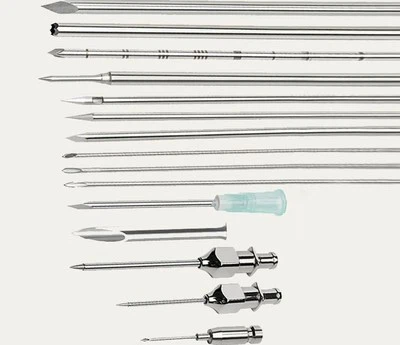
Arteriovenous Fistula Needle: The Precision Engineering And Clinical Application in Protecting The Lifeline
Apr 09, 2026
Arteriovenous Fistula (AVF) Puncture Needle: The Precision Engineering and Clinical Application in Safeguarding the "Lifeline"
The Arteriovenous Fistula (AVF) serves as the "lifeline" for hemodialysis patients. The stability of its function relies not only on favorable vascular conditions and diligent patient self-management but is also inextricably linked to the critical instrument used in each dialysis session-the Arteriovenous Fistula (AVF) Puncture Needle. This is far from an ordinary injection needle; it is a precision medical device engineered to meet the demands of high-flow extracorporeal circulation, withstand repeated punctures, and maximize protection for the fragile vascular access. This article will provide an in-depth analysis of the design philosophy, technological evolution, and core clinical role of the AVF puncture needle, elucidating how it has become an indispensable component in the long-term maintenance of the fistula.
I. The Core Mission of the AVF Puncture Needle: Striking a Balance Between "Efficient Dialysis" and "Vessel Protection"
The core design objective of the AVF puncture needle is to resolve a seemingly paradoxical set of requirements: to establish a stable extracorporeal circulation pathway capable of providing a high blood flow of 300-400 mL per minute, while simultaneously minimizing trauma to the vascular endothelium to prevent complications such as stenosis, thrombosis, and aneurysm formation, thereby extending the lifespan of the fistula.
Limitations of Traditional Steel Needles: The traditional steel needles (typically 15-17G) used in the past, while capable of establishing access, possessed a rigid structure. During the prolonged 4-hour dialysis session, subtle patient movement could induce a slight "piston-like" motion of the needle within the vessel, resulting in continuous friction and micro-cutting of the vascular intima. This mechanical injury is a significant initiating factor for intimal hyperplasia, luminal stenosis, and ultimately, occlusion.
The Response of Modern AVF Needle Design: To address these challenges, modern AVF puncture needles have undergone a series of engineering optimizations in materials, structure, and surface finishing, evolving from a "traumatic tool" towards a "protective conduit."
II. Precision Engineering: How AVF Puncture Needles Achieve "High Flow, Low Damage"
An exceptional AVF puncture needle is a synthesis of materials science, fluid dynamics, and biocompatibility design.
Cannula Material and Structure: Unifying Strength and Biocompatibility
Medical-Grade Stainless Steel: The mainstream material, providing the necessary rigidity and strength to ensure precision at the moment of puncture. To reduce long-term irritation to the vessel wall, high-end cannulas employ an ultra-thin wall design, achieving a smaller outer diameter for a more minimally invasive puncture while maintaining the required internal lumen.
Needle Tip Geometry: Utilizes multi-bevel grinding technology (e.g., a tri-bevel tip) to create an extremely sharp puncture point. This allows penetration of the skin and vessel wall with minimal resistance and tissue deformation, reducing patient pain, creating a cleaner puncture wound, and minimizing the risk of oozing.
Core Innovation: Side Holes and Flow Channel Design-Keys to Flow Enhancement and Hemodynamic Optimization
This is the most distinctive feature differentiating AVF needles from ordinary puncture needles, directly impacting dialysis adequacy and patient safety.
Purpose of Side Hole Design:
Enhancing Effective Blood Flow: In addition to the main distal opening, multiple side holes (typically 2-3) are added to the side wall of the needle cannula. If the main opening temporarily apposes the vessel wall due to patient position or vessel morphology, the side holes serve as alternative inlets, ensuring continuous, stable blood aspiration and preventing dialysis machine alarms and treatment interruptions due to insufficient flow.
Optimizing Hemodynamics, Reducing Thrombosis Risk: Aspiration through a single end hole can create a high-shear vortex zone at the needle tip, potentially activating platelets. A multi-side-hole design disperses the aspiration force, allowing blood to enter the needle more smoothly, significantly reducing local turbulence and the risk of clotting.
Reducing Wall Apposition and Intimal Damage: The presence of side holes reduces the requirement for the needle tip to be perfectly centered in the vessel lumen at all times. Even with slight apposition, blood can still enter via the side holes, minimizing mechanical scraping of the intima caused by repositioning the needle.
Advanced Manufacturing Processes: Leading manufacturers, such as Manners, employ 5-axis precision laser machining technology to create the side holes and flow channels. This technology enables:
Extremely High Machining Precision and Consistency: Ensures uniform size, shape, and edge smoothness for every side hole, free of burrs, thus avoiding new sources of turbulence or red blood cell damage.
Complex Internal Flow Channel Design: Allows for the engraving of micro-helical grooves inside the needle lumen to guide blood flow in a more hemodynamically favorable, laminar pattern, further reducing resistance and blood trauma.
Surface Engineering: Ultimate Smoothness for Unimpeded Flow
The inner and outer walls of the needle cannula undergo electropolishing to a mirror-like finish. This not only minimizes puncture resistance and patient discomfort but, more importantly, reduces the adhesion of blood components (especially platelets and fibrinogen) to the needle wall, lowering the risk of intraluminal thrombosis, and lessens secondary injury to the puncture tract upon needle removal.
III. Clinical Puncture Practice: The Integration of Needle, Technique, and Practitioner
Even the most sophisticated needle must be paired with standardized technique to realize its protective potential.
Selection of Needle Gauge: Should be individualized based on fistula maturity, vessel diameter, and blood flow. Common gauges are 16G, 15G. The principle is to "use the finest needle that meets the flow requirement." An overly large needle increases vascular damage, while an overly small one may cause vessel collapse and intimal injury due to high aspiration forces.
Coordination with Puncture Technique:
Puncture Angle: A 30°-45° insertion angle is recommended. This angle facilitates a clean cut by the needle bevel and allows for the smooth subsequent advancement of the cannula.
"Rope-Ladder" or "Buttonhole" Cannulation Technique: Regardless of the method, the precision of the needle must be leveraged to achieve systematic rotation of puncture sites, preventing aneurysm formation from repeated punctures in the same area. The design of side-hole needles provides greater tolerance for this practice.
Tactile Sensation and Judgment During Puncture: Experienced nurses can preliminarily assess the success of the puncture and the ideal positioning of the needle tip through the "loss of resistance" feel as the needle enters the vessel and the smoothness of blood flashback. The characteristically stable blood return of a side-hole needle serves as positive feedback.
Monitoring During Dialysis: Nurses must continuously observe the puncture site connection for any oozing and ensure a good thrill is present. If blood flow suddenly drops, after ruling out other causes, needle tip apposition should be considered. In such cases, the side-hole design can often maintain a baseline flow, buying time for adjustment.
Needle Removal and Hemostasis: The needle should be removed gently and swiftly. After removal, apply fingertip pressure 0.5-1 cm proximal to the skin puncture site (i.e., over the vascular puncture point), not directly on the skin needle hole. Pressure should be sufficient to achieve hemostasis while still allowing a faint thrill to be palpated-a critical detail for preserving AVF function. Needles with a side-hole design, often associated with a more regular puncture tract, typically contribute to more efficient and safer hemostasis.
IV. Future Outlook: The Intelligent Evolution from "Puncture Tool" to "Monitoring Platform"
In the future, the role of the AVF puncture needle may evolve further. "Smart needles" integrating micro-sensors are already in the proof-of-concept stage. These could enable real-time monitoring of local temperature at the puncture site, tissue pressure, or even hemodynamic parameters, providing data for the early warning of infection, hematoma, or stenosis. Concurrently, with advancements in technologies like 3D printing, fully individualized, custom-fitted needles for ultra-high flow requirements or特殊 vascular anatomy are becoming a possibility.
Conclusion
The Arteriovenous Fistula puncture needle is the precise bridge connecting the patient's lifeline to modern dialysis technology. Its evolution from a simple hollow steel needle to today's high-tech product integrating side-hole flow dispersion, laser-precision machining, and mirror polishing profoundly reflects the advancement in the hemodialysis field's treatment philosophy: "patient-centered, with a core focus on protecting vascular access." Selecting a scientifically designed, meticulously manufactured needle, paired with standardized, professional cannulation technique, is the cornerstone of every successful dialysis session and a long-term investment in, and careful guardianship of, the patient's precious "lifeline." In hemodialysis therapy, the needle may be small, but its role is vast; the object may be minute, but its responsibility is immense.