Puncture Needles and Endoscopic Biopsy Needles: A Full-Cycle Solution from Basic Access Establishment to Precision Targeted Biopsy
Apr 09, 2026
Puncture Needles and Endoscopic Biopsy Needles: A Full-Cycle Solution from Basic Access Establishment to Precision Targeted Biopsy
Puncture needles are fundamental tools in interventional medicine and endoscopic diagnosis and treatment, with their core function being to establish a safe, precise initial pathway from the body surface or natural lumens to the target site. However, clinical tasks vary greatly-from simple vascular or body cavity puncture to complex biopsies of deep tissues (such as the pancreas or lymph nodes)-leading to vastly different requirements for the "needle." This article aims to systematically analyze the design logic, application scenarios, and technological evolution of general-purpose puncture needles and specialized endoscopic biopsy needles, clarifying their complementary and synergistic relationship in the continuum of medical procedures, from "establishing access" to "obtaining a diagnosis."
I. General-Purpose Puncture Needles: The "Pioneer Engineers" of Access Establishment
The core mission of general-purpose puncture needles is to efficiently and minimally traumatically penetrate tissue barriers, creating an initial working channel for subsequent procedures (such as guidewire introduction, drain placement, drug injection). Their design choice directly determines the success and safety of access establishment.
1. Structure and Types: A "Trident" Choice Based on Clinical Scenarios
One-Piece Needles: Consist of a single metal tube with a cutting bevel. This is the classic "working needle," designed for simplicity, efficiency, and one-step completion. Under ultrasound or X-ray guidance, the needle bevel provides good directional control. They are commonly used for vascular puncture, superficial cyst aspiration, and local anesthesia. Their limitation is that once the needle is removed, the channel closes immediately, precluding long-term indwelling.
Two-Piece Needles: Comprise an outer cannula and an inner stylet. This is the "scout and engineer" combination for navigating complex anatomy. The inner stylet (often solid or beveled) provides the initial penetration force. Upon reaching the target location (e.g., vascular lumen, fluid collection), it is withdrawn, leaving the hollow outer cannula as a stable working channel. Its advantage lies in preventing clogging of the lumen by soft tissue or thrombus, making it particularly suitable for puncturing deep, small-caliber targets, such as in percutaneous transhepatic cholangiography or transjugular intrahepatic punctures.
Sheathed Puncture Needles: These are the "bridge-building engineers" for achieving "indwelling access." Typically referring to intravenous cannulas, their plastic outer sheath remains in the vessel after successful puncture by the metal introducer needle, becoming a temporary conduit for infusion or medication administration. Their core value is transforming a one-time puncture action into a reusable, stable interface, greatly enhancing patient comfort and nursing efficiency.
2. Specifications and Selection: Data-Driven Precise Decision Making
Gauge: Measured in "G." The counterintuitive rule must be remembered: The larger the number, the smaller the outer diameter. For example, a 21G needle (outer diameter ~0.82mm) is much finer than an 18G needle (outer diameter ~1.27mm).
Fine Manipulation (e.g., small vessel puncture, pediatric patients): Choose a higher G number (e.g., 22G, 21G).
High-Flow Requirements (e.g., rapid infusion, drainage of viscous fluid): Choose a lower G number (e.g., 18G, 16G).
Length: Should be individualized based on patient body habitus, puncture depth, and target location. "Long enough" is more critical than "short enough"; a needle that is too short cannot reach the target and is a common cause of procedural failure and complications. For obese patients or deep-seated targets, a long needle is a necessity.
Connection and Manipulation: Standard Luer lock hubs ensure reliable connection to syringes and connecting tubing. A winged design significantly optimizes the operator's hand control and stability during fine adjustments of needle tip angle and depth.
II. Endoscopic Biopsy Needles: The "Microsurgical Snipers" of Precision Diagnosis
When the therapeutic goal advances from "establishing access" to "obtaining pathology," general-purpose puncture needles become inadequate. At this point, endoscopic biopsy needles take the stage as specialized instruments. Their design core shifts from "passing through" to "entering, cutting, and retrieving"-they are the "final 100-meter" precision tool enabling endoscopic technology to achieve accurate diagnosis.
1. Core Mission and Design Philosophy
Endoscopic biopsy needles are specialized for performing targeted puncture sampling of submucosal lesions in the digestive tract wall or adjacent organ masses (such as the pancreas, lymph nodes) under endoscopic ultrasound or direct visualization. Unlike general-purpose needles that prioritize a "smooth channel," biopsy needle design revolves around "tissue acquisition efficiency and quality."
2. Technological Evolution: A Paradigm Leap from "Cell Aspiration" to "Tissue Cutting"
Fine Needle Aspiration (FNA) Needles: The early standard. Obtain cytological specimens via high negative pressure aspiration for cytological diagnosis. However, they cannot acquire tissue architecture information, limiting their diagnostic value for lesions requiring immunohistochemical subtyping or genetic testing, and they are highly dependent on rapid on-site cytological evaluation.
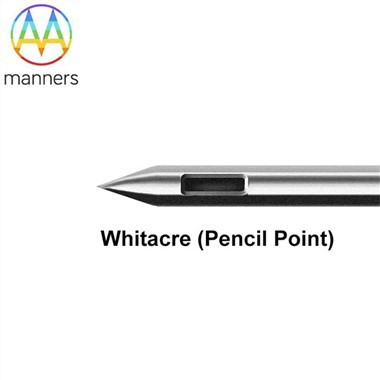
New-Generation Biopsy (FNB) Needles: Represent a generational leap in technology. Aim to obtain intact tissue cores through revolutionary needle tip geometry design.
Fork-tip / Crown-tip (Franseen) Needles: The needle tip is designed with multiple fork-like or crown-shaped cutting edges. During puncture, these sharp cutting surfaces act like miniature punches, efficiently and completely "cutting out" a cylindrical tissue core, rather than "scraping" cells. This dramatically increases the success rate of obtaining high-quality histological specimens.
Core Value: The obtained intact tissue cores can be used for routine pathology, immunohistochemistry, and high-throughput gene sequencing, forming the cornerstone for promoting precise tumor classification and personalized therapy.
3. Application Scenarios: Bridging the Macro View and the Micro World
Diagnosis of Pancreatic Solid Lesions: The "main battlefield" for endoscopic biopsy needles. Enables accurate pathological diagnosis and molecular subtyping of suspected pancreatic cancer, neuroendocrine tumors, etc., without open surgery.
Staging of Mediastinal/Abdominal Lymph Nodes: Crucial in tumor staging.
Characterization of Submucosal Tumors: Such as the diagnosis of gastrointestinal stromal tumors.
III. From Puncture to Biopsy: Tool Synergy in the Clinical Pathway
A complete minimally invasive diagnostic and therapeutic process is often a relay race involving both types of needle instruments:
Access Establishment Phase: Use general-purpose puncture needles (e.g., sheathed needles) to establish vascular or percutaneous access, placing a sheath to build the "gateway" for endoscopic or interventional device entry.
Targeted Diagnosis/Therapy Phase: Advance the endoscope through the established access. Upon identifying the target lesion, switch to a specialized endoscopic biopsy needle to perform precise tissue sampling under real-time imaging guidance.
For example, in Endoscopic Ultrasound-Guided Pancreatic Biopsy:
Step 1 (Access): The endoscope itself establishes "access" via natural lumens (e.g., stomach, duodenum).
Step 2 (Diagnosis): After the pancreatic lesion is located by the ultrasound at the endoscope's tip, the specialized biopsy needle is advanced through the endoscope's working channel, penetrates the intestinal wall, reaches the pancreatic lesion, and completes sampling. Here, the biopsy needle is the ultimate precision instrument executing the micro-sampling task after macro-access has been established.
Conclusion
Puncture needles and endoscopic biopsy needles represent two closely linked, functionally progressive key segments in the spectrum of minimally invasive medical devices. General-purpose puncture needles are the engineering foundation for creating access, their value lying in reliably and safely "reaching" the target. Endoscopic biopsy needles are the surgical extension for achieving precise diagnosis, their value lying in efficiently and faithfully "acquiring" tissue. Understanding their respective design logic, applicable boundaries, and synergistic relationship is essential knowledge for clinicians and procurement personnel to optimize treatment plans and enhance patient outcomes. From establishing life-sustaining pathways to unveiling the essence of disease, this large-and-small, first-and-last pair of "needles" collectively forms the solid foundation of modern precision medicine.