A Complete Guide To Bone Marrow Puncture: The Two-Needle Minimally Invasive Procedure
Aug 27, 2026
Bone marrow puncture and biopsy serve as irreplaceable core examinations in the screening, definite diagnosis, curative effect monitoring, and prognostic evaluation of hematological diseases. Many patients feel intimidated by the term "bone marrow extraction", assuming it is a highly traumatic, painful, and high-risk complex surgery. In fact, a standard complete bone marrow examination clinically relies on only two precise needle insertions: one anesthetic needle for pain relief and one specialized bone marrow needle for sample collection.
Previous chapters have covered the physiological functions of bone marrow, applicable examination scenarios, and pathological diagnostic values. This article focuses on practical, patient-centered knowledge closely related to your medical experience. Professional analysis, equipment selection, and treatment planning are undertaken entirely by medical staff. In contrast, intraoperative cooperation, postoperative recovery, and risk prevention depend fully on active and standardized patient participation. A thorough understanding of the entire procedure can effectively relieve preoperative anxiety, avoid coordination errors, reduce postoperative complications, and ensure a safer and smoother examination process.
Bone marrow puncture is a minimally invasive outpatient procedure that requires no hospitalization or general anesthesia and follows mature, standardized clinical protocols. Before the examination, medical staff will inform patients of preoperative precautions. Emptying the bladder beforehand is an essential basic preparation, which effectively prevents positional restrictions, muscle tension, and involuntary body movement caused by urinary retention, thereby ensuring accurate puncture placement. The entire procedure typically takes approximately 20 minutes and is performed in an independent sterile operating room with clean environments and professional equipment to minimize infection risks. Most patients only require local anesthesia. For extremely sensitive individuals, highly anxious patients, or those with low pain tolerance, mild sedation may be administered to further improve comfort during the procedure.
Standard Complete Procedure of Bone Marrow Puncture and Biopsy
The whole process consists of clear, progressive steps. Patients only need to follow three key principles - keep still, breathe steadily, and communicate timely - to cooperate successfully with the examination.
01. Adjust and stabilize body position
After entering the operating room, patients will be instructed to lie on their side or prone. These positions fully expose the posterior superior iliac spine, the most commonly used puncture site in clinical practice. This bony area features a flat surface, abundant red bone marrow, and fewer superficial blood vessels and nerve distributions, offering the highest safety and sampling success rate while effectively avoiding damage to internal organs, blood vessels, and nerves.
02. Expose the puncture area and relax mentally and physically
Patients need to loosen their belts to fully expose the unilateral hip puncture area. The entire operation is standardized and sterile, requiring no embarrassment or tension. The most critical task for patients is to overcome fear and remain completely stationary throughout the procedure. Most intraoperative discomfort, puncture deviation, and sampling failure result from involuntary body movement and muscle tension. Slow, even deep breathing relaxes the lumbar and gluteal muscles, relieves physical stiffness and anxiety, and is essential for improving intraoperative comfort and ensuring puncture accuracy.
03. Precisely locate the puncture site
After stabilizing the body position, the doctor will press and palpate bony landmarks to determine the optimal needle entry point based on clinical experience. Accurate preoperative positioning avoids superficial blood vessels, nerves, and thin bony areas, minimizing trauma, bleeding, and pain from the start and laying a solid foundation for subsequent anesthesia and puncture.
04. Perform sterile disinfection and establish a sterile surgical field
Once the site is confirmed, the skin around the puncture area will be disinfected extensively and layer-by-layer with iodophor to eliminate superficial pathogens thoroughly. The medical staff will then wear sterile gloves and lay a sterile drape with an opening to expose only the puncture site, forming a closed sterile operating environment. As an invasive procedure, strict sterile protocols prevent superficial skin bacteria from invading bone marrow tissue, effectively avoiding postoperative local infection and inflammation and ensuring maximum medical safety.
05. First Needle: Local anesthesia to block pain sensation
This is the only stage with noticeable pain during the entire examination. Clinically, lidocaine is used for layered local anesthesia, infiltrating the skin, subcutaneous tissue, and periosteum sequentially. The periosteum is rich in nerve endings and the most sensitive to pain. Patients will experience a brief, sharp stinging pain as the needle penetrates the skin and infiltrates the periosteum, which lasts only a few seconds.
It is crucial to remain completely still without twisting, dodging, or sitting up. The puncture area will quickly become numb after the transient stinging. Any movement during anesthesia may cause offset and incomplete anesthesia, leading to persistent distending pain and tenderness during subsequent puncture and sampling and significantly increasing discomfort. Maintaining steady breathing and relaxation allows patients to enter a nearly painless operational state shortly after the momentary discomfort.
06. Second Needle: Insert bone marrow needle to penetrate the outer bone layer
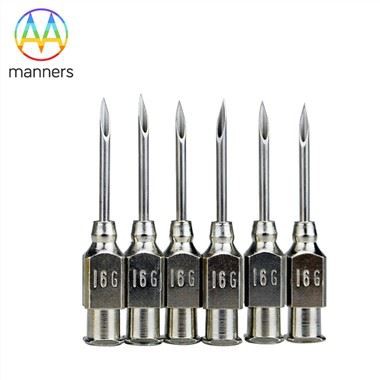
After the anesthesia takes effect, the core sampling procedure begins with the insertion of the second needle - a specialized hollow, rigid bone marrow biopsy needle. Different from ordinary injection needles, this sturdy medical needle is designed to penetrate the hard cortical bone and reach the deep red bone marrow cavity.
No sharp stinging pain will be felt during needle advancement, but a continuous sense of pressure and soreness is normal and more noticeable in patients with harder bone texture. There is no need for fear or resistance. Patients must inform the doctor immediately if severe stabbing pain, radiating numbness, or unbearable soreness occurs. The medical team will promptly adjust the needle angle and pressure to avoid abnormal tissue damage.
07. Extract bone marrow fluid for liquid sample collection
When the needle accurately reaches the cancellous red bone marrow cavity, the inner stylet is removed, and a syringe is attached for bone marrow fluid aspiration. This stage brings the most unique physical sensation: a transient rapid pressure and cramp-like distending feeling caused by instantaneous negative pressure changes, which lasts only 2 to 3 seconds and disappears immediately.
This discomfort stems from rapid intramedullary pressure fluctuation rather than organic damage and requires no excessive concern. Taking a deep breath during aspiration effectively relieves physical stress responses. Clinically, only 1 to 2 mL of bone marrow fluid is collected according to testing requirements. This micro-volume sampling causes no damage to bone marrow function or human hematopoietic capacity and will never "consume vital energy" as misunderstood by the public.
08. Collect bone marrow core biopsy tissue for solid specimen sampling
Following fluid aspiration, the same bone marrow needle is slightly adjusted for solid core tissue biopsy. Unlike liquid bone marrow fluid, the biopsy obtains intact bone marrow core specimens that directly reflect bone marrow structure, cellular distribution, fibrosis degree, and lesion infiltration. This procedure provides critical pathological evidence for precise hematological disease classification, cancer staging, and treatment efficacy evaluation.
During core sampling, the doctor gently twists and vibrates the needle to ensure an intact, unbroken bone core. Patients may feel mild compression and transient vibration, with occasional brief stinging pain - all normal intraoperative reactions. Remaining completely stationary ensures high-quality specimen collection.
09. Intraoperative hemostasis and procedure completion
After all sampling is finished, the bone marrow needle is withdrawn rapidly. The puncture site is compressed continuously for hemostasis, disinfected, covered with sterile dressings, and compressively bandaged. Local compression effectively seals the needle tract and reduces the risks of subcutaneous bleeding, bruising, and swelling, marking the completion of the entire minimally invasive examination.
Core Postoperative Precautions for Bone Marrow Puncture (In-Depth Version)
Postoperative recovery directly determines the incidence of complications. Standardized nursing ensures rapid recovery without aftereffects, while careless care may lead to bruising, swelling, infection, and other adverse conditions. Strictly follow the guidelines below:
1. Strict water prohibition on the wound to prevent infection
Do not take showers or wash the body within 24 hours after the procedure to avoid direct water flushing on the puncture wound. All water contact activities, including bathing, swimming, and hot spring soaking, are prohibited within 48 to 72 hours. The needle tract requires approximately 72 hours for initial closure and repair. Premature water exposure allows external bacteria to invade the unhealed wound, causing local redness, swelling, inflammation, and infection and prolonging the recovery period.
2. Disclose medication history in advance to prevent bleeding risks
Mild subcutaneous bruising and swelling are common benign postoperative reactions and usually resolve spontaneously within 1 to 2 weeks. However, patients with low platelet counts or abnormal coagulation function face significantly higher risks of aggravated bleeding and swelling. Those taking aspirin, anticoagulants, or blood-activating medications must truthfully inform medical staff before the procedure. Doctors will evaluate coagulation status in advance and adjust operative and hemostasis protocols to avoid persistent bleeding complications.
3. Treat mild postoperative discomfort rationally and avoid excessive worry
Mild soreness, distension, and tenderness at the puncture site within 2 to 3 days after surgery are normal repair reactions of minimally damaged bone and soft tissue and will gradually subside with tissue healing. Do not press or rub the wound frequently, and avoid strenuous bending, weight-bearing, and severe lumbar torsion to reduce local traction stimulation. Seek immediate medical re-examination if persistent severe pain, continuous wound bleeding, purulent swelling, or fever occurs.
4. Standardize postoperative travel and escort to ensure safety
Although bone marrow puncture is minimally invasive, intraoperative positional fixation, local anesthesia, and physical stress may cause temporary fatigue, reduced concentration, and slowed reaction speed. Therefore, patients are prohibited from driving, riding, or traveling long distances alone after the procedure. A family member, friend, or professional caregiver must accompany the patient home to eliminate potential travel safety hazards, which is a mandatory clinical safety regulation.
Conclusion
In short, the seemingly intimidating bone marrow examination is essentially a standardized minimally invasive two-needle procedure: one needle for anesthesia and pain control, and one needle for pathological sampling. It features minimal trauma, short duration, controllable pain, and high safety, causing no damage to hematopoietic function or permanent aftereffects. Most preoperative fears stem solely from cognitive misunderstandings. With adequate procedural understanding, active medical cooperation, and standardized postoperative nursing, patients can complete the examination smoothly and obtain critical pathological evidence for precise diagnosis and individualized treatment of hematological diseases.