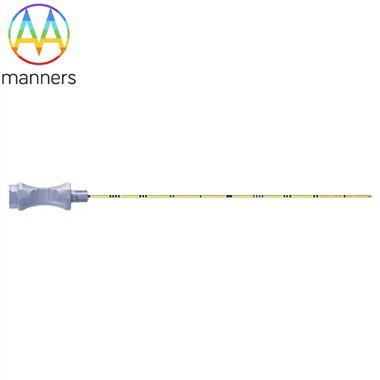
15 Gauge 25mm Intraosseous Needle Global Regulatory Compliance
Nov 20, 2026
Pain Point
Cross-border sales of intraosseous puncture instruments face fragmented regulatory requirements across different markets. The 15 Gauge 25mm intraosseous needle is classified as an invasive injection and puncture instrument, so compliance failures will block customs clearance, hospital tender approval and clinical use. Many small manufacturers produce the needle without complete technical files, risk analysis, biocompatibility records or notified-body certification. Distributors and overseas medical buyers struggle to confirm whether extended-length intraosseous devices meet local standards. Obese-patient-focused extended intraosseous needles also lack dedicated regulatory guidance in some regions, creating uncertainty for importers and end users.
Working Principle
The physiological working mechanism of the 15 Gauge 25mm intraosseous needle follows standard intraosseous access principles: marrow venous plexus acts as a non-collapsible vascular route. Its 25 mm total length, 20 mm safe skin-cortex depth and 5 mm in-bone safety buffer are designed for patients with thick soft tissue. The 15G stainless steel cannula provides mechanical stiffness and high infusion flow. Regulatory rules aim to verify that this design does not introduce unacceptable risks when used within its intended indication: emergency vascular access for critically ill patients with up to 20 mm overlying soft tissue. Compliance covers material safety, mechanical performance, sterilization validation, labeling, instructions for use and post-market surveillance.
Device Classification
Regulatory classification varies by jurisdiction, but the 15 Gauge 25mm intraosseous needle generally falls under injection and puncture surgical instruments. It is categorized as a single-use invasive emergency consumable. Product variants include standard catalog versions and custom models built from customer 2D/3D drawings or samples. Insertion method is manual rotary; packaging options are standard export cartons or custom sterile packs per buyer requirements. Regulatory scope covers raw stainless steel qualification, mechanical testing for bending and penetration force, biocompatibility, ethylene oxide or alternative sterilization validation and labeling translation for destination markets.
Practical Operation Guide
Clinicians using this device in regulated healthcare systems must follow the approved IFU. Confirm the patient meets the intended indication: critical illness, failed peripheral venous access and estimated skin-to-cortex depth ≤20 mm. Select the proximal tibia as the preferred site. Perform antisepsis, stabilize the limb and advance perpendicularly with controlled rotation until cortical penetration. Stop insertion immediately after loss of resistance. Remove stylet, aspirate marrow, flush saline to exclude extravasation, secure the needle and begin infusion. Check the outer packaging label for expiry date and batch number. Report adverse events through local medical device vigilance channels as required by regulation. Avoid contraindicated bone sites.
Real-World Clinical Experience
Global distributors report that compliance documentation is the most frequent bottleneck for cross-border supply of the 15 Gauge 25mm intraosseous needle. Some suppliers can produce the hardware but cannot deliver complete technical construction files, risk analysis or clinical evaluation reports. Extended-length intraosseous needles are sometimes scrutinized more heavily than standard needles by regulators, because their special indication for obese patients requires clear intended-use documentation. Importers also note that IFU translation errors and missing labeling information often trigger customs detention. Working with manufacturers that maintain pre-built compliance files for major markets greatly reduces market access delays.
Summary & Reflection
Global regulatory compliance is a foundational requirement for commercializing the 15 Gauge 25mm intraosseous needle. Its extended length and targeted indication for patients with thick soft tissue add extra documentation burdens compared with conventional intraosseous needles. Compliance is not a one-time certification task; it continues through labeling control, batch release, vigilance and post-market feedback. Buyers should prioritize suppliers that can provide complete technical documentation matching target market requirements, rather than focusing only on unit price.
Outlook & Recommendations
Manufacturers of the 15 Gauge 25mm intraosseous needle should maintain modular technical files adaptable for different global markets. They should clearly document the intended use for patients with skin-to-cortex depth ≤20 mm in all compliance submissions. Distributors should confirm certification coverage before tender bidding and import. Regulators may gradually release specific guidance for extended intraosseous devices as obesity-related difficult access cases rise. Suppliers should retain flexible custom manufacturing while keeping all custom variants within the same compliance framework and validated sterile packaging. Harmonized global standards for intraosseous devices will simplify cross-border emergency supply chains in the future.