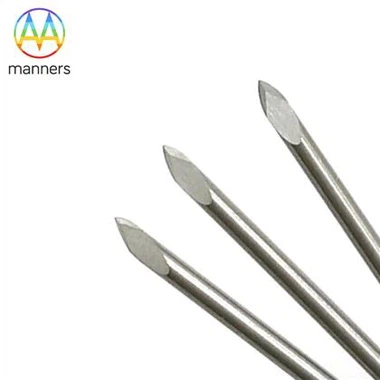
What are the matters needing attention after liver cancer particle puncture needle surgery
Jan 06, 2023
The incidence of liver cancer is very high in China, and many patients find it is already late stage and lose the opportunity of surgery. Some tumors are very large, or combined with portal vein tumor thrombus, even if the effect of hepatic artery chemoembolization is not very obvious; In addition, bile duct obstruction caused by tumor compression can only be temporarily relieved by stent placement. Then what measures should be taken to treat such liver cancer? Ni Hong, Department of Interventional Therapy, Tianjin Medical University Cancer Hospital
Iodine-125 particle implantation may be appropriate for such patients. It is a new advanced in vivo radiation therapy technology newly launched in recent years. By developing low energy radionuclides into tiny particles, the micro-radioactive source can be implanted into the tissue invaded by the tumor, or into the lymphatic channel or lymph node where the tumor metastases under the guidance of B-ultrasound or CT according to the results of the TPS plan. Continuous low-dose radiation is emitted from a completely sealed radioactive source so that the tumor tissue can receive the maximum amount of continuous irradiation, which can inhibit, destroy and kill tumor cells to the maximum extent, while the surrounding normal tissue is not damaged or only slightly damaged. This three-dimensional radioactive particle implantation therapy system is a kind of brachytherapy for tumor and cancer. In the specific operation, radioactive particles should be loaded into the implantation gun, guided by CT and special puncture rack, and the puncture needle should be inserted into the required position of tumor body. The needle core is then removed, the particles are pushed into the tumor with a propeller, and the process is repeated so that the radioactive particles implanted into the tumor are evenly distributed in three dimensions.
Iodine 125 particle implantation has a wide range of indications, including: breast cancer, lung cancer, esophageal cancer, etc.; Digestive tract tumors: liver cancer, pancreatic cancer, gastric cancer, bile duct cancer, rectal cancer, etc. Genitourinary system tumors: prostate cancer, cervical cancer, endometrial cancer, vaginal cancer, etc. Head and neck tumors: tongue cancer, nasopharyngeal cancer, maxillary sinus cancer, parotid gland cancer, oropharyngeal cancer, tonsil cancer, etc. In addition, primary cases that cannot be resected, such as massive liver cancer, nasopharyngeal carcinoma, etc.; Or postoperative recurrence difficult to reoperate, such as multiple metastatic tumors of the lung; Patients do not want radical surgery, such as thyroid cancer, endometrial cancer, cervical cancer, uterine fibroids, etc. The radiation emitted from the radioactive source has a certain energy, it can destroy the cell tissue, thus causing harm to the human body. When a person is exposed to large amounts of radiation, symptoms such as dizziness, weakness, loss of appetite, nausea, vomiting and other symptoms can lead to physical damage and possibly death. But when a person is exposed to only a small amount of radiation, there is generally no discomfort or harm. Iodine-125 implants rarely cause permanent damage to people. Iodine 125 particles produce irradiation for about 120 days.
Iodine-125 particle implantation can distribute the particles evenly and three-dimensional throughout the tumor according to the shape of the tumor, so that all tumors can get a dose of radiation with radical curative effect, which is the advantage of this treatment. At the same time, compared with external irradiation, the rays must pass through the skin and through certain normal tissues to reach the tumor. Particle implantation protects the surrounding healthy tissue and minimizes the side effects of treatment.