


Understanding Endoscopes: Components, Evolution, and Applications
Sep 07, 2024
Endoscopes are indispensable tools in modern medicine, allowing healthcare professionals to view and treat internal organs through natural openings or small incisions. Their development has significantly advanced over the past two centuries, enhancing their functionality and precision.
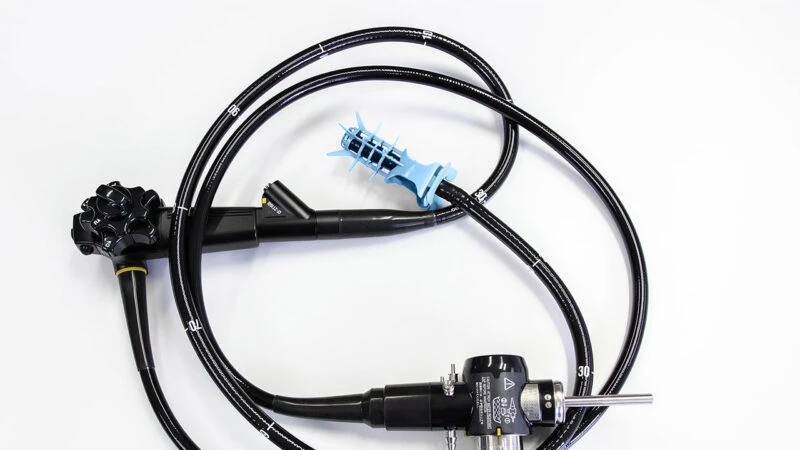
▲ An image of an endoscope
Ⅰ Historical Evolution of Endoscopes
The journey of endoscope development began in the early 19th century. The earliest endoscopes were rigid and used candlelight for illumination. The evolution of endoscopes is marked by several key milestones:
-
Rigid Endoscopes (1806-1932): The initial design was a rigid tube with a light source at the end, allowing for limited flexibility and image quality.
- Semi-Flexible Endoscopes (1932-1957): These introduced some degree of flexibility, making it easier to navigate through internal passages.
- Fiber Endoscopes (1957 onwards): The introduction of optical fibers revolutionized endoscopy by allowing more flexible and clearer imaging.
- Electronic Endoscopes (1983 onwards): The advent of electronic technology enabled high-definition imaging and LED lighting, providing detailed and vibrant images.
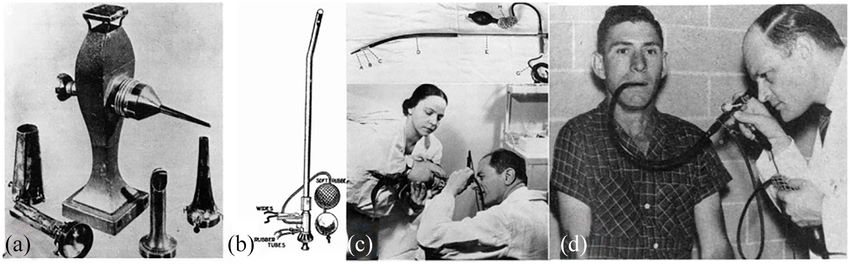
▲ The evolution of endoscopes
Ⅱ Components of Medical Endoscopes
A typical medical endoscope consists of several critical components:
- Endoscope Body: Includes the optical system with the objective lens, image transmission elements, eyepiece, and lighting components. The endoscope's body is often encased in a protective sheath for added durability.
- Image Display System: Comprising CCD sensors, a display monitor, and a computer for image processing, this system enhances image clarity and detail.
- Lighting System: Utilizes xenon lamps, halogen lamps, or LEDs to provide illumination. Proper lighting is essential for clear visualization of internal structures.
- Artificial Pneumoperitoneum System: Involves a CO2 insufflation machine to maintain abdominal pressure during laparoscopic procedures, ensuring optimal visibility.
- Fluid Pressurization System: Includes various pumps for inflating body cavities, facilitating surgical procedures.

▲ The components of an endoscope
Ⅲ Classification of Endoscopes
Endoscopes are categorized based on several criteria:
1.By Material:
- Rigid Endoscopes: Durable and fixed in shape.
- Fiber Endoscopes: Includes both soft and rigid types, utilizing optical fibers for image transmission.
- Electronic Endoscopes: Available in soft and rigid forms, featuring advanced electronic components.
2. By Function:
- Digestive Tract Endoscopes: Includes esophagoscopes, gastroscopes, duodenoscopes, and colonoscopes.
- Respiratory System Endoscopes: Includes laryngoscopes and bronchoscopes.
- Abdominal Cavity Endoscopes: Includes laparoscopes for minimally invasive surgeries.
- Biliary Tract Endoscopes: Includes cholangioscopes for examining bile ducts.
- Urological Endoscopes: Includes cystoscopes and ureteroscopes.
- Gynecological Endoscopes: Includes hysteroscopes for examining the female reproductive organs.
- Joint Endoscopes: Includes arthroscopes for inspecting joints.
3. By Application:
- Laparoscopic Surgery: For minimally invasive abdominal procedures.
- Electrosurgical Endoscopy: For procedures requiring electrical dissection.
- Sinus Endoscopy: For examining nasal sinuses.
4. By Viewing Angle:
- Rigid Endoscopes: Offer various viewing angles, such as 0°, 12°, 30°, and 70°, tailored to different surgical needs.

▲ Different types of endoscopes
Ⅳ Structure of Endoscopes
1. Rigid Endoscopes: Consist of a metal tube housing an optical system with objective lenses, image relay systems, and eyepieces. The rigid design ensures precision and durability.
2. Fiber Endoscopes:
- Soft Fiber Endoscopes: Utilize optical fibers to transmit images, offering flexibility and maneuverability.
- Hard Fiber Endoscopes: Feature a rigid body with optical fibers and channels for instruments.
3. Electronic Endoscopes:
- Soft Electronic Endoscopes: Include a flexible insertion tube, bending section, and control unit with imaging sensors.
- Hard Electronic Endoscopes: Comprise a rigid structure with integrated optical and lighting systems.
Ⅴ Advantages of Endoscopes
Endoscopes offer numerous benefits that have transformed medical diagnostics and treatment:
- Efficiency: They reduce examination time and enable rapid image capture.
- Storage: Capable of recording and storing images for detailed analysis and comparison.
- Image Quality: Provides high-resolution, true-to-color images with options for magnification, enhancing diagnostic accuracy.
- Multi-User Viewing: Allows simultaneous viewing by multiple healthcare professionals, facilitating collaborative diagnosis and education.
Ⅵ Clinical Applications and Benefits
Endoscopes play a crucial role in clinical settings by enabling minimally invasive procedures that reduce patient discomfort and recovery time. Their ability to provide clear, real-time images enhances diagnostic accuracy and surgical precision. Furthermore, endoscopes support teaching, research, and collaborative case discussions, making them an invaluable tool in modern medicine.
In summary, endoscopes have evolved from simple rigid tubes to advanced electronic devices with high-definition imaging capabilities. Their diverse applications across various medical fields highlight their significance in enhancing patient care and surgical outcomes.


